
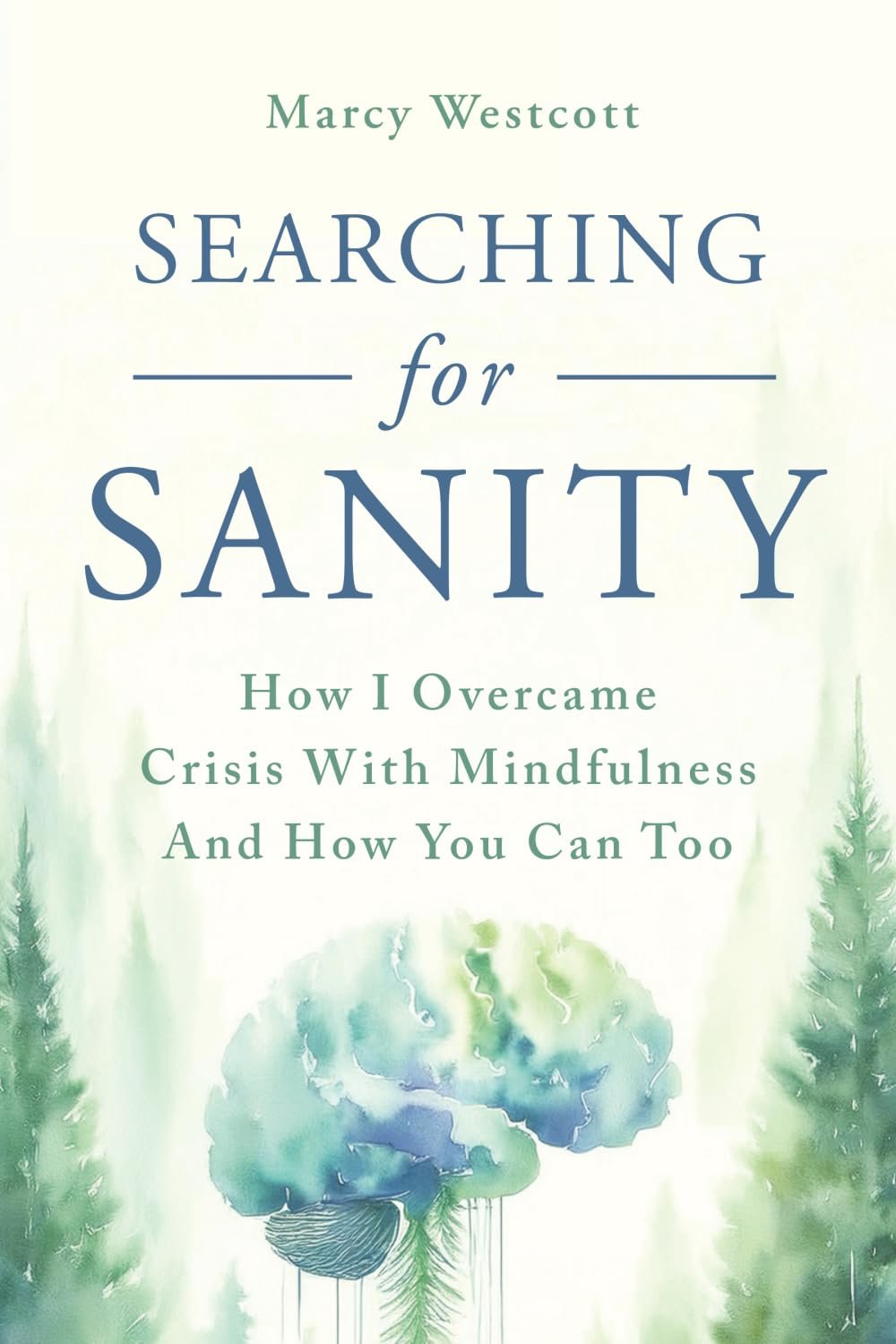
SEARCHING for SANITY
Meditation teacher Marcy Westcott blends memoir and self-help to explore her personal response to burnout and crisis.
Books worth discovering. Authors worth knowing.
Meditation teacher Marcy Westcott blends memoir and self-help to explore her personal response to burnout and crisis.
Marcy Westcott relates her own experiences of work stress and later crises alongside reflection on mindfulness and meditation.
A memoir born from the pressure to keep functioning
Marcy Westcott’s *Searching for Sanity* approaches mindfulness through a first-person account of strain and recovery rather than through a promise that calm can be achieved on command. The author has described leaving a demanding corporate career after years of relentless work, then encountering meditation through a yoga class. In later interviews she links the book to a series of crises in 2023 and explains how practices she had adopted changed the way she responded. Those statements are part of her lived account, not controlled scientific proof that one practice will work equally well for everyone. The book’s appeal lies in its effort to connect personal experience with practical reflection at a moment when many readers feel that chronic urgency has become their default state. The subtitle, *How I Overcame Crisis With Mindfulness And How You Can Too*, is an invitation, but it also invites a question. What does it mean to overcome a crisis? A change in circumstances, a change in symptoms and a change in one’s relationship to fear are different outcomes. The author’s public explanation centers on the last of these as well as the relief she personally reports. That creates a helpful way to read the book: as a narrative of one individual’s decisions and interpretation, accompanied by practices readers can evaluate for themselves, rather than as a universal prescription or a substitute for professional assessment.
The difference between a practice and a cure
The strongest editorial reason to approach this book thoughtfully is its proximity to health-related claims. Westcott speaks openly in interviews about insomnia, anxiety, physical symptoms and periods of burnout. She credits meditation with helping her, but a responsible reading keeps that attribution attached to her own experience. Some people find mindfulness exercises supportive; others need medical treatment, therapy, environmental change or a combination of approaches. No testimonial can establish that meditation cures a condition. That distinction does not make the memoir irrelevant. It makes its potential value more precise: giving readers a language for noticing distress and considering one tool among many. Westcott’s book is described in author interviews and a detailed published review as a hybrid of memoir and self-help. The reviewer discusses exercises accompanying chapters and reports themes of self-inquiry, meditative practice and managing an internal critical voice. That format can matter for readers who do not want abstract instruction detached from the texture of ordinary life. A practical suggestion may feel different after hearing the circumstances that led someone to adopt it. But presentation is not verification. An effective reader can take what is useful, question what is too sweeping and continue to seek the support appropriate to their own life.
The voice in the room that never stops talking
An especially memorable concept in commentary on *Searching for Sanity* is the author’s name for her critical inner dialogue: the “Bad Roommate.” This image gives a familiar phenomenon a concrete shape. Many people experience repetitive self-judgment, anxious rehearsal or the sense that they must respond to every thought as though it were an urgent command. A metaphor can help create a little distance from that automatic identification. It does not make thoughts disappear, and it should not be taken as a diagnostic technique, but it can offer a starting point for discussing self-talk without shame. The book’s larger concern appears to be the movement from constant reaction toward a more deliberate relationship with attention. That can mean noticing the difference between an immediate emotion and the choice made after it. Such language sounds simple, but its daily practice can be difficult. The gap between knowing that one ought to slow down and actually having room to do so is especially large for people facing financial strain, caregiving demands or unsafe workplaces. A useful reading of Westcott’s story should not imply that all distress is a personal failure to meditate. Structural pressures are real, and individual practices do not remove them by themselves.
What a crisis narrative can and cannot teach
One of the book’s distinctive selling points is that the author reports using mindfulness during difficult events after she had already made meditation part of her routine. The narrative arc allows readers to consider preparedness, repetition and the ordinary work of maintaining a habit before it is tested. That is not proof that following an identical schedule will produce identical resilience. It does suggest a more modest and sustainable question: what practices, people and routines might help someone recognize their needs earlier and respond with a little more care? The answer may vary greatly between readers. Memoir also requires attention to perspective. The author knows the meaning that particular events hold in her life; readers encounter those events through her selections and recollections. That perspective is precisely what gives personal narrative its interest, but it differs from independent reporting or clinical evidence. A thoughtful feature should celebrate candor without turning testimony into a general rule. Westcott’s public background as a meditation instructor helps explain the lens she brings, while also making it important to distinguish the role of teacher from the role of physician or licensed mental-health professional.
A workable way to approach the exercises
Readers may benefit from treating any prompts as invitations to experiment gently, not tests of discipline. A short moment of attention, an honest observation about what is tiring, or a conversation with a trusted person can all be considered without demanding that a particular practice produce peace immediately. Those are reader approaches, not representations of the book’s exact numbered exercises. If a technique increases distress, it is sensible to stop and seek suitable support. For people living with trauma or serious symptoms, professional guidance may be especially important. The book is a companion to reflection, not a guarantee of symptom relief. Another constructive reading question is whether the book gives sufficient space to setbacks. Personal-change narratives often look smoother in retrospect than they felt at the time. Readers can resist comparing their messy present with another person’s completed story. The lasting usefulness of a memoir about calm may be less about copying the conclusion and more about observing how the narrator learns to make different choices under pressure. That places agency in the realm of practice, not perfection, and leaves room for many different kinds of recovery.
Who should consider Searching for Sanity
This is a plausible fit for adults interested in first-person accounts of workplace exhaustion, meditation and the effort to live with greater awareness. It may appeal to readers who prefer memoir-driven self-help to a manual of detached instructions, particularly those who want prompts for reflection. Readers seeking formal clinical guidance, treatment protocols or guaranteed health outcomes should not expect the book to serve that role. The subject can be emotionally close to home; anyone in acute distress should prioritize appropriate personal and professional support. Its most promising contribution is a candid framework for considering attention and response during hard periods, not a universal formula for overcoming hardship.
About Marcy Westcott
Marcy Westcott describes herself as a meditation and mindfulness teacher. A faculty profile published by Feast for the Soul records training through the McLean Meditation Institute, and interviews discuss her transition from corporate work to teaching. Her book brings that personal and professional perspective to a memoir/self-help format; health experiences discussed publicly remain her own account.
About the book.
Mindfulness memoir / personal-development self-help. Marcy Westcott relates her own experiences of work stress and later crises alongside reflection on mindfulness and meditation. Research-based editorial feature, not a firsthand review.
Sponsored book feature. Research-based commentary using verifiable published sources, not a claim of a complete firsthand reading. Cover placeholders await the owner’s Python automation.
Found a book worth opening?
Books worth discovering. Authors worth knowing.
Return to the Journal →