
The Wordless Book
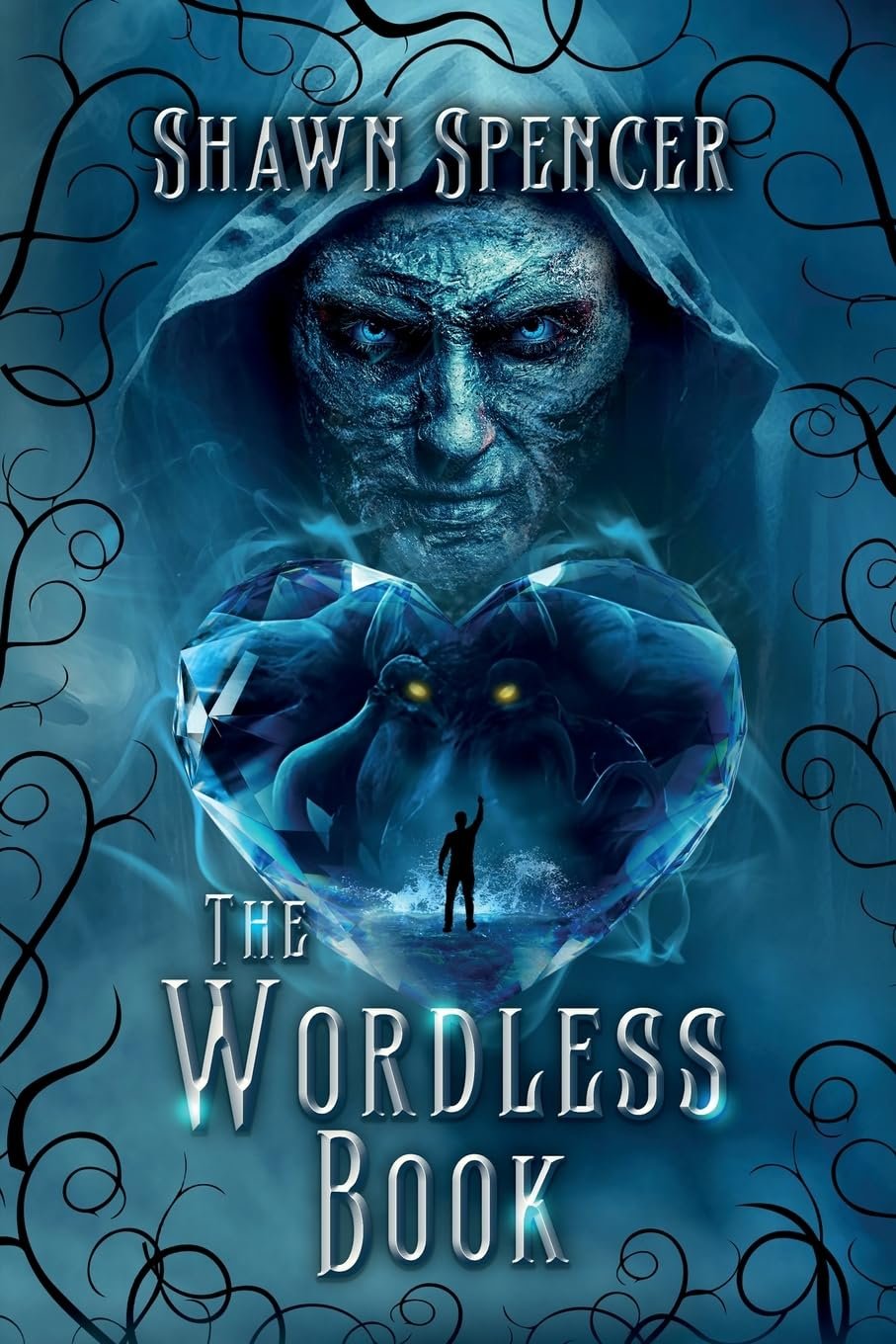
A mysterious book at Camp Wolf Creek opens the way for a Fire Reaper and turns a summer refuge into a survival ordeal.
Books worth discovering. Authors worth knowing.
A mysterious book at Camp Wolf Creek opens the way for a Fire Reaper and turns a summer refuge into a survival ordeal.
S.
A Camp Legend With Terrible Consequences
Summer camp stories often begin with a harmless warning about something hidden in the woods. The children repeat it around a fire, laugh at the dark and return to cabins that seem perfectly safe. Shawn Spencer’s *The Wordless Book* takes that familiar atmosphere and makes the legend a physical threat. At Camp Wolf Creek, Emma Moon discovers a mysterious book she should never have opened. The published synopsis says the discovery releases a Fire Reaper, an entity capable of unleashing destructive forces and trying to free terrifying allies. What had been an ordinary place of games and routine becomes the site of spreading forest fires, evacuations and a struggle to survive.
The book is identified by its author and bookseller pages as a dark fantasy or supernatural horror novel. That hybrid description helps explain the setup. Horror turns on the characters’ vulnerability and the sudden loss of a safe world; fantasy introduces artifacts, otherworldly beings and powers that may offer a means of resistance. The title has an intentionally provocative contradiction: a book described as wordless can still contain consequences far greater than any ordinary written message. Its danger is not that a reader understands the contents, but that opening it can open something else. The premise links curiosity with the frightening realization that not every discovery can be undone.
Emma, Robert and Jessica Against the Fire
Public descriptions identify the people left close to the danger. Emma’s discovery triggers the crisis. Robert Lee, a camp caretaker, and his fiancée Jessica remain when much of the camp evacuates, facing a threat that requires something beyond ordinary emergency planning. A broken fire orb gives Robert an ability to manipulate fire, according to the listed synopsis. This changes the shape of the conflict. Fire is not merely the environmental hazard forcing people out of the woods; it may also become a tool for resistance. But a gift born inside the same catastrophe is unlikely to be uncomplicated. The official materials leave the costs and long-term consequences of this power for readers to discover.
That arrangement offers a useful thematic tension: people are forced to rely on forces they do not understand. Robert does not begin as a practiced mythic warrior. He is presented as someone connected to the camp and responsible for the people within it. Emma is both the person whose act releases the threat and one of the people endangered by it. Jessica must navigate the emergency alongside them. These roles invite questions about responsibility, courage and whether a mistake should define a person forever. A reader can see those pressures in the premise without needing to claim knowledge of every scene or the resolution.
The Landscape Becomes the Monster
Forests in adventure fiction usually provide mystery and shelter at once. They can hide a refuge, disguise a path or allow someone to escape pursuit. In *The Wordless Book*, wildfire makes the environment itself unstable. Smoke changes visibility. The possibility of ordinary rescue narrows as the flames spread. A supernatural opponent who manipulates or draws strength from fire intensifies that unease because conventional rules of physical danger no longer suffice. The threat is both immediately recognizable and fantastically distorted. Readers understand why a burning forest is dangerous even before they try to imagine an entity that may weaponize it.
The author site includes descriptions of a sinister figure called the Fire Reaper and an otherworldly space associated with cursed powers. Those details position the book on the darker side of fantasy adventure. The supernatural is not merely a decorative system of spells; it imposes danger on people who did not volunteer for a heroic quest. The appearance of creatures and magic can create action set pieces, but the human scale remains important. A single child’s decision to examine an object leaves a small group struggling to protect one another. That grounded emotional thread is what can prevent an escalating catalogue of monsters from becoming impersonal.
A Debut With an Action Storyteller’s Instinct
Spencer’s official site describes him as a U.S. military veteran, martial artist and storyteller. Such biographical facts do not automatically prove anything about the quality or technique of a novel. They do, however, provide context for a writer drawn to discipline, physical danger and endurance. *The Wordless Book* is presented as a debut with an adventure-horror emphasis, and its promotional materials repeatedly highlight movement, survival and high stakes. Readers who like the boundary where dark fantasy meets a slasher-style chase may find that combination worth exploring. The story is less obviously aimed at someone seeking a gentle camp mystery or a quietly supernatural family drama.
There is also something compelling about a story that begins not with a villain’s grand pronouncement but with an object picked up in an ordinary place. Physical books usually represent learning, imagination or comfort. Here a book is a portal to peril. Yet that reversal does not necessarily make curiosity itself the enemy. Fiction about forbidden objects often tests the judgment of the people who handle them, and the judgment of those asked to repair the damage afterward. The premise therefore invites readers to consider how care and courage are expressed after an irreversible mistake rather than simply before it.
Why This Kind of Horror Endures
The camp setting is a durable horror landscape because it separates people from familiar forms of support. It joins the excitement of an unfamiliar place with dependence on temporary caretakers and rules. When the rules fail, characters have to decide quickly whom to trust and how to protect the vulnerable. *The Wordless Book* sharpens that premise through mythic scale. A fire orb, a reaper and entities beyond the camp suggest that the threat reaches into a larger cosmology. But the immediate task remains legible: survive, keep others alive and prevent the fire-born danger from spreading further.
The novel’s marketing includes praise from readers and reviewers. Those reactions can point to its intended audience but should not be mistaken for independent verification of the entire work. More reliable for this feature are the consistent plot elements repeated on the author’s site and major book listings: Camp Wolf Creek, Emma, Robert, Jessica, the forbidden book and the Fire Reaper. They supply a coherent outline without forcing invented revelations into the record. Readers can decide whether the promise of escalating supernatural peril fits their preferences on that basis.
The most interesting question is not simply what waits inside the book. It is what the people left outside it become when ordinary knowledge stops helping. Robert must face an unexpected power. Jessica must contend with a rapidly transformed environment. Emma must live through the consequences of discovery. Whether the resolution proves triumphant, tragic or complicated is for the novel to show. As an introduction, *The Wordless Book* offers an arresting collision between childhood-camp familiarity and elemental horror. Its setup suggests the particular thrill of seeing people who expected an ordinary summer forced to learn the impossible rules of survival.
Readers might also notice the tension between Robert’s ordinary responsibility as a caretaker and the extraordinary role forced on him by the fire orb. Those are not interchangeable kinds of competence. Looking after a camp relies on experience, preparation and care; confronting supernatural beings demands decisions when preparation no longer applies. The transition can sharpen a story’s sense of vulnerability. Readers who enjoy survival tales may find that the first form of responsibility makes the second emotionally intelligible. The characters’ task is not to become mythical heroes overnight but to keep acting for one another after circumstances have pushed them far beyond any job description.
About the book.
At Camp Wolf Creek, Emma Moon opens a dangerous book and releases a Fire Reaper. Robert Lee and his fiancée Jessica face forest fires, monsters and the consequences of a fire orb that gives Robert powers.
Editorial book feature, not paid sponsorship. Independent research-based commentary using publicly available descriptions and author material, not a claim of first-hand full-text review. The cover placeholder will be resolved by the owner’s publishing automation.
Found a book worth opening?
Books worth discovering. Authors worth knowing.
Return to the Journal →