
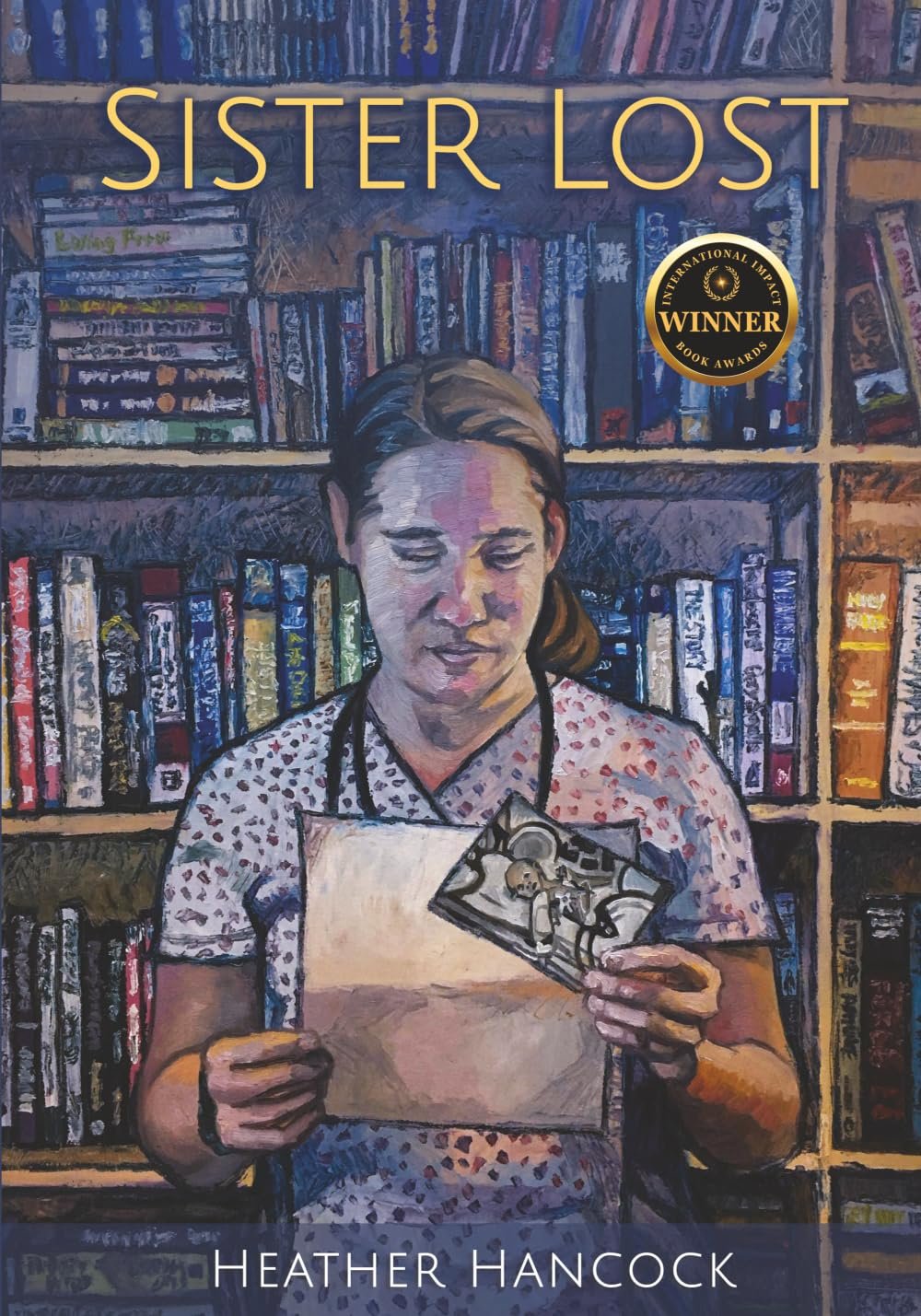
Sister Lost
An inheritance reveals a buried family tragedy and sends the solitary Claire Langstrom toward an uncertain search for reconciliation.
Books worth discovering. Authors worth knowing.
An inheritance reveals a buried family tragedy and sends the solitary Claire Langstrom toward an uncertain search for reconciliation.
H.
The Inheritance That Changes a Family Story
Family histories are rarely complete. They are shaped by what people remember, what they choose to say, and what seems too painful to discuss. In Heather Hancock’s *Sister Lost*, an inheritance becomes the event that unsettles an established understanding of the past. The published synopsis introduces Claire Langstrom as a loner by choice. A bequest in her grandmother’s will reveals family secrets and a historical tragedy, setting Claire on a journey that may lead toward redemption. That is a compelling starting point because a will can distribute more than property. It can also place responsibility, uncertainty and long-delayed knowledge into the hands of someone who did not ask for them.
The novel is described by its author as Christian contemporary fiction, and the published outline frames Claire’s search through an evocative contrast between someone despised and someone rejected. The precise identities and eventual resolution are matters for the novel, not this preview. What can be discussed is the emotional structure: a person who has chosen distance is called into a story that seems to demand connection. Claire’s self-imposed solitude may have protected her from difficult relationships, but an uncovered family history threatens to make avoidance impossible. The tension lies in what she might owe to people she barely knows and how much truth she is prepared to carry.
When Silence Becomes an Inheritance
A secret within a family is not simply missing information. It can shape relationships for generations while remaining unnamed. Children grow up with unexplained estrangements. Ordinary celebrations may have gaps nobody discusses. Someone’s reputation may be passed down without the events that produced it. The grandmother’s bequest in *Sister Lost* introduces exactly this kind of possibility, although readers should not presume details the public synopsis does not provide. The larger literary interest is in how the past continues to exert pressure on people who have never been told the whole story. Discovering a fact may explain a relationship while simultaneously requiring someone to reconsider their own identity.
Claire’s position as a reluctant investigator is different from that of a police detective. She cannot automatically demand records, compel testimony or detach herself from what she discovers. The evidence of a family tragedy may be emotionally charged in ways that an external mystery would not be. A revelation can reshape one’s understanding of relatives who seemed familiar, and a search for one person may force an uncomfortable conversation with another. Such stories appeal to readers who enjoy mystery braided with psychological and ethical questions. The central discovery matters because of what it could require Claire to do, not merely because an old secret might be sensational.
Redemption Without an Easy Shortcut
The official description specifically names redemption as part of Claire’s journey. In a faith-informed novel, that word can carry both spiritual and interpersonal meanings. It may suggest forgiveness, transformation, making amends or the possibility of a relationship no longer determined entirely by past harm. Yet redemption is not the same as erasing what happened. A responsible treatment of family conflict should leave room for accountability, boundaries and grief. The most interesting question is often whether people can act differently after learning the truth, even when they cannot repair every consequence of older decisions.
Hancock’s Christian approach supplies an identifiable moral vocabulary, but knowing the genre should not tempt readers or commentators to predict a tidy conclusion. The synopsis itself ends with a question about whether Claire’s search will conclude in joy or sorrow. That uncertainty deserves to survive an introductory feature. Literature that includes faith can still explore confusion, suffering and disappointment rather than resolving them with an instant lesson. Readers drawn to restorative stories may appreciate the prospect of hope without assuming that the characters’ wounds disappear because a larger meaning is possible.
A Voice Formed by Persistence
Hancock’s official website identifies *Sister Lost* as her debut Christian contemporary novel and notes its International Impact Book Award recognition. It also describes her longstanding love of books, her work in poetry and the obstacles she has faced while living with cerebral palsy. These are facts she has chosen to discuss publicly about her experience. They provide a meaningful background to her commitment to writing, but should not be treated as proof that particular scenes in the novel are autobiographical. Fiction creates its own world. Respecting the distance between a writer’s life and her characters allows both to be taken seriously.
Her author biography places faith at the center of her creative practice, and that helps explain why a story about hidden injury and the possibility of restoration would fit her stated interests. For readers, the relevant connection is artistic rather than diagnostic: writing can be a way to examine vulnerability, perseverance and choices under pressure. The book’s identified themes are not exclusive to any one community. People who have felt isolated by family history may recognize Claire’s predicament even if they approach questions of forgiveness through a different worldview.
What a Reader Brings to the Search
A family-secret novel often asks the audience to make judgments before every relevant fact has emerged. Readers may sympathize immediately with Claire or assume that a relative has acted badly. Yet the whole premise suggests how incomplete understanding can be. One useful way to approach such fiction is to distinguish an explanation from an excuse. Learning why a family member concealed something does not automatically make the concealment right, but it can complicate the story of what that person feared. Likewise, recognizing the pain behind estrangement does not mean the people involved must reconcile on a timetable convenient to the reader.
There is a quieter question alongside the mystery: what happens when a solitary person becomes responsible for someone else’s story? Claire’s bequest does not appear to be an ordinary windfall. It opens an ethical task, asking her to decide whether to remain apart or respond to the human history she has inherited. The available book description offers enough to locate that struggle, but not enough to name its final stages. Holding back spoilers also preserves the choice at the center of the reading experience: follow the clues, confront the consequences, and ask whether truth changes what is possible.
Readers interested in contemporary Christian fiction, family drama and emotionally grounded searches for reconciliation will find *Sister Lost* a natural title to consider. Hancock’s website and the matching book synopsis support those expectations. They do not justify claiming that every question is answered neatly or that the text has been reviewed firsthand for this feature. What emerges reliably is a narrative about an inherited secret that interrupts isolation and points toward the difficult labor of making sense of a divided family. The most durable promise in such a premise is not certainty, but the possibility that someone will finally choose to look.
There is also a reason the grandmother’s will is such an effective storytelling device. A person who has died cannot be questioned in the way Claire might wish, and the documents or objects left behind can never supply the emotional texture of a complete conversation. The search may therefore involve interpreting fragments and listening to people whose memories differ. Many readers will recognize this tension from their own families, even if their histories contain no comparable secret. An inheritance may make the past unavoidable without making it transparent. That helps explain why a story about family truth can remain compelling long after the initial revelation has occurred.
About the book.
Claire Langstrom is a self-chosen loner whose grandmother leaves a bequest exposing family secrets and a historical tragedy; her quest becomes a search for the rejected and a possibility of redemption.
Sponsored book feature. Independent research-based commentary using publicly available descriptions and author material, not a claim of first-hand full-text review. The cover placeholder will be resolved by the owner’s publishing automation.
Found a book worth opening?
Books worth discovering. Authors worth knowing.
Return to the Journal →