
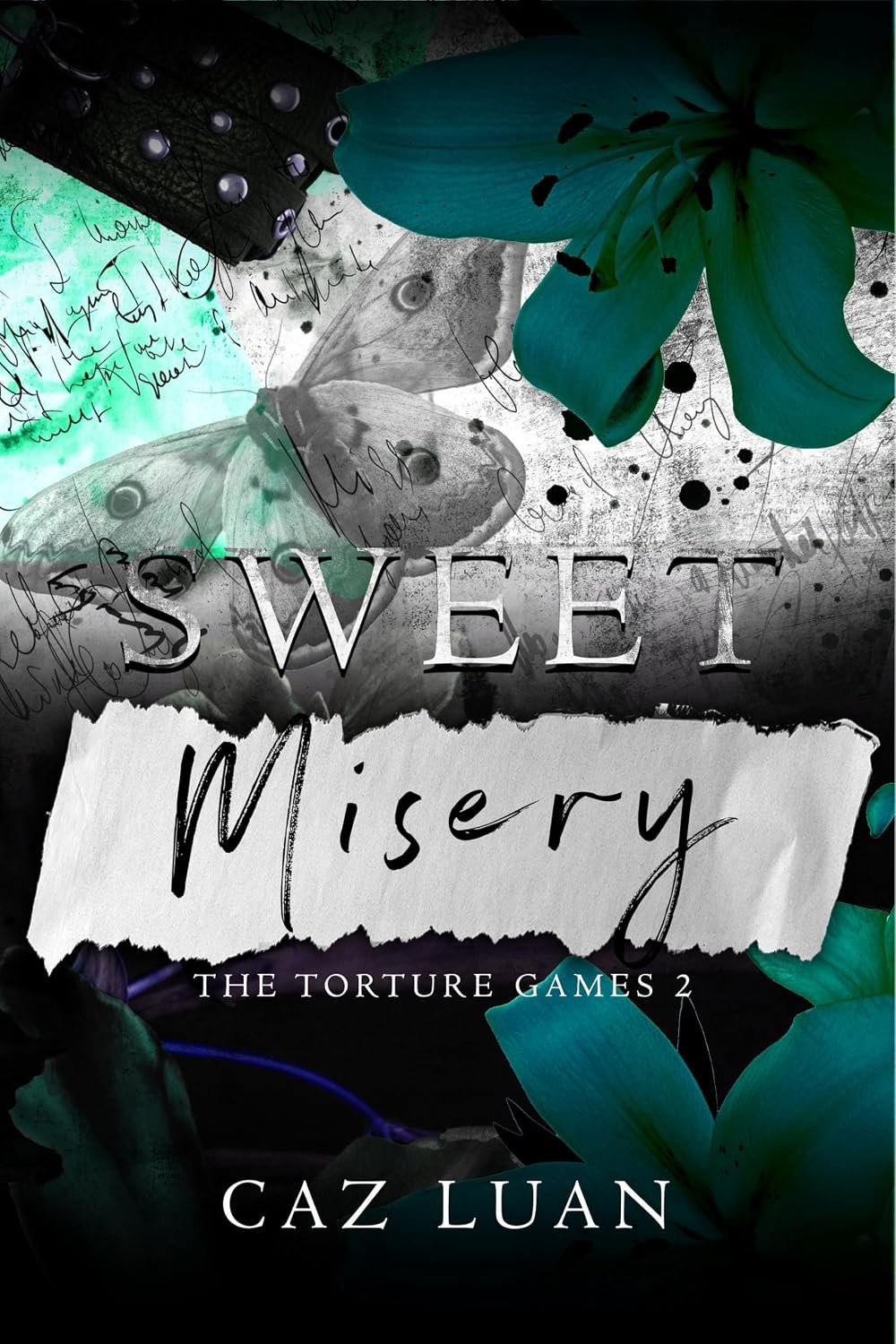
Sweet Misery
Naz Adams returns from a violent confrontation with her past determined to reclaim agency, even as Griffin Maxwell expects reconciliation.
Books worth discovering. Authors worth knowing.
Naz Adams returns from a violent confrontation with her past determined to reclaim agency, even as Griffin Maxwell expects reconciliation.
C.
A Dark Romance That Begins After the Damage
Caz Luan’s Sweet Misery returns to Naz Adams and Griffin Maxwell in the second Torture Games installment. The published synopsis begins from a disturbing position: Naz has been trapped, harmed and confronted by a past she tried to escape. Rather than describing rescue as an immediate happy ending, the book presentation centers her decision to save herself. She wants revenge, but also redemption, and those two objectives are not necessarily compatible. That conflict provides the emotional engine of the new story. The question is not only whether danger can be overcome, but what remains of someone’s identity after the immediate threat changes form.
Readers should approach Sweet Misery as adult dark romance, not as a conventional comforting love story. Its official presentation includes coercive danger, emotional scars, enemies-to-lovers dynamics and morally ambiguous behavior. The precise content and boundaries deserve examination through the retailer’s current notices before purchase. Describing dark romantic fiction responsibly requires maintaining the distinction between a narrative that investigates obsession and a relationship model suitable for real life. Fiction can make destructive behavior dramatically compelling without making it advice.
Naz Adams Refuses the Role Assigned to Her
The available description says Naz has spent years running from a monstrous figure in her past. When that history returns to disrupt the present, she changes tactics. Her aim is no longer simply survival through evasion; she wants to settle old scores. She is described as colder, more calculating and less willing to offer others the version of herself they expect. That shift matters because readers often encounter trauma survivors in stories primarily as people needing protection. This premise instead emphasizes anger and strategic agency, while leaving open whether her choices will provide the restoration she seeks.
The tension between vengeance and recovery is an old literary question with particular force in dark romance. Revenge promises direction and temporary control; recovery may require accepting uncertainty, ambiguity and the limits of what can be repaired. Naz’s intentions, as described, invite readers to ask whether justice and emotional release can ever be the same achievement. The novel, rather than the promotional synopsis, must supply an answer. What the public details establish is that she refuses to return quietly to the role someone else designed for her.
Griffin Maxwell and the Problem of Possession
Griffin expected Naz to come back into his arms. Instead he encounters someone transformed by violence and determined to act independently. The book description presents him as trying to make her see what he believes is the truth about their relationship. This introduces a second source of conflict beyond the adversaries in Naz’s past: two people disagreeing about whether they still understand each other. A romantic bond can become especially fraught when one partner believes shared history entitles them to prescribe the other’s emotional future.
Griffin is positioned within a world where trust creates vulnerability and affection can be deployed as leverage. That premise can produce compelling psychological suspense because even a tender gesture may have two possible readings. Is it care, strategy, desperation or control? Readers of morally gray romance often relish precisely this ambiguity. The important editorial qualification is that Griffin’s beliefs are his character’s beliefs, not independently validated moral truths. The narrative’s dramatic charge emerges from the gap between what each character wants and what the other may freely choose.
The Work of a Second Installment
Series fiction carries particular obligations. Sweet Misery is labeled book two, and the public account assumes the reader knows something of Naz and Griffin’s earlier experiences. It begins after significant emotional and physical harm, when the consequences of previous conflicts are still active. That makes this book different from a first encounter romance where the primary puzzle is whether attraction will develop. Here the puzzle concerns what attraction means after trust has been tested, altered or apparently destroyed.
A later installment can intensify stakes without needing to make every event more spectacular. Emotional continuity is often more meaningful than escalation alone. When someone who was once frightened becomes formidable, the shift affects allies as well as enemies. When a lover expects reconciliation and instead faces resentment, the relationship must be renegotiated. Readers new to Torture Games may want to begin with the earlier book to understand those dynamics. The public synopsis does not establish every backstory detail, so this feature avoids inventing a recap of the first volume.
Revenge, Redemption and the Cost of Trust
The book’s published framing explicitly places revenge and redemption side by side. It also asks whether Naz’s fractured sense of self can be saved and at what cost. These terms create different kinds of suspense. Revenge looks outward toward a person or system blamed for injury; redemption suggests an inward reckoning about what one’s choices have made possible or impossible. A story may pursue both while showing the friction between them. That friction is more interesting than an automatic promise that love will erase old damage.
The setting is described as a world in which love can be a weapon. That is a strong signal for readers looking for power contests, fraught loyalties and unsettling emotional stakes. It is also a useful reminder that chemistry and safety are separate qualities. In real life, coercion and injury deserve to be recognized clearly. In fiction, readers may explore such dynamics at a distance, deciding what they find provocative, troubling or persuasive. The book’s appeal lies in its willingness to inhabit emotionally dangerous territory, not in making that territory universally attractive.
Caz Luan’s Place in Dark Romance
A published author profile identifies Caz Luan as a South African writer who has contributed to anthologies and written other dark and paranormal romance stories. It places Sweet Misery’s release in December 2025, with subsequent titles following in 2026. Her author-facing materials also acknowledge readers purchasing dark romantic work directly or through retailers. Those sources establish an active genre context without requiring speculation about the author’s private life or her personal approval of her characters’ decisions.
The story’s commercial description foregrounds enemies-to-lovers tension and morally gray protagonists. Such conventions can be effective because they give readers a recognizable framework while preserving uncertainty about how specific characters will behave. Naz’s resolve to become harder and Griffin’s determination to recover their relationship create competing forms of intensity. Whether the writing ultimately complicates or reinforces the genre’s assumptions is a question best settled by reading the novel itself. This is a source-grounded feature, not a claim to have evaluated every chapter.
Who Should Enter the Torture Games
Sweet Misery is aimed at readers who knowingly choose dark adult romance with revenge, emotional injury, obsession and contested trust at its center. Someone looking for light romantic comedy or gentle relationship reassurance is unlikely to find the tone implied by the publisher’s description. Conversely, readers who enjoy character relationships shaped by danger may be intrigued by a heroine who rejects the expected reunion and insists on determining her own future. The combination of romantic suspense and psychological conflict gives the second book a clear identity within the series.
The strongest reason to explore it is Naz herself. She enters the public synopsis neither untouched by what happened nor willing to surrender the rest of her life to it. Her decisions may be harsh, and the destination is not guaranteed to be comfortable. But the story begins with the insistence that she is more than a victim waiting for someone else’s declaration of love. That is a compelling narrative question even when the setting and romantic conventions are deliberately unsettling.
About the book.
Book two of Torture Games centers on Naz Adams after trauma revives an old threat; Griffin Maxwell wants her back, but Naz is focused on revenge, recovery and deciding whom to trust.
Editorial book feature, not paid sponsorship. Independent research-based commentary using publicly available descriptions and author material, not a claim of first-hand full-text review. The cover placeholder will be resolved by the owner’s publishing automation.
Found a book worth opening?
Books worth discovering. Authors worth knowing.
Return to the Journal →