
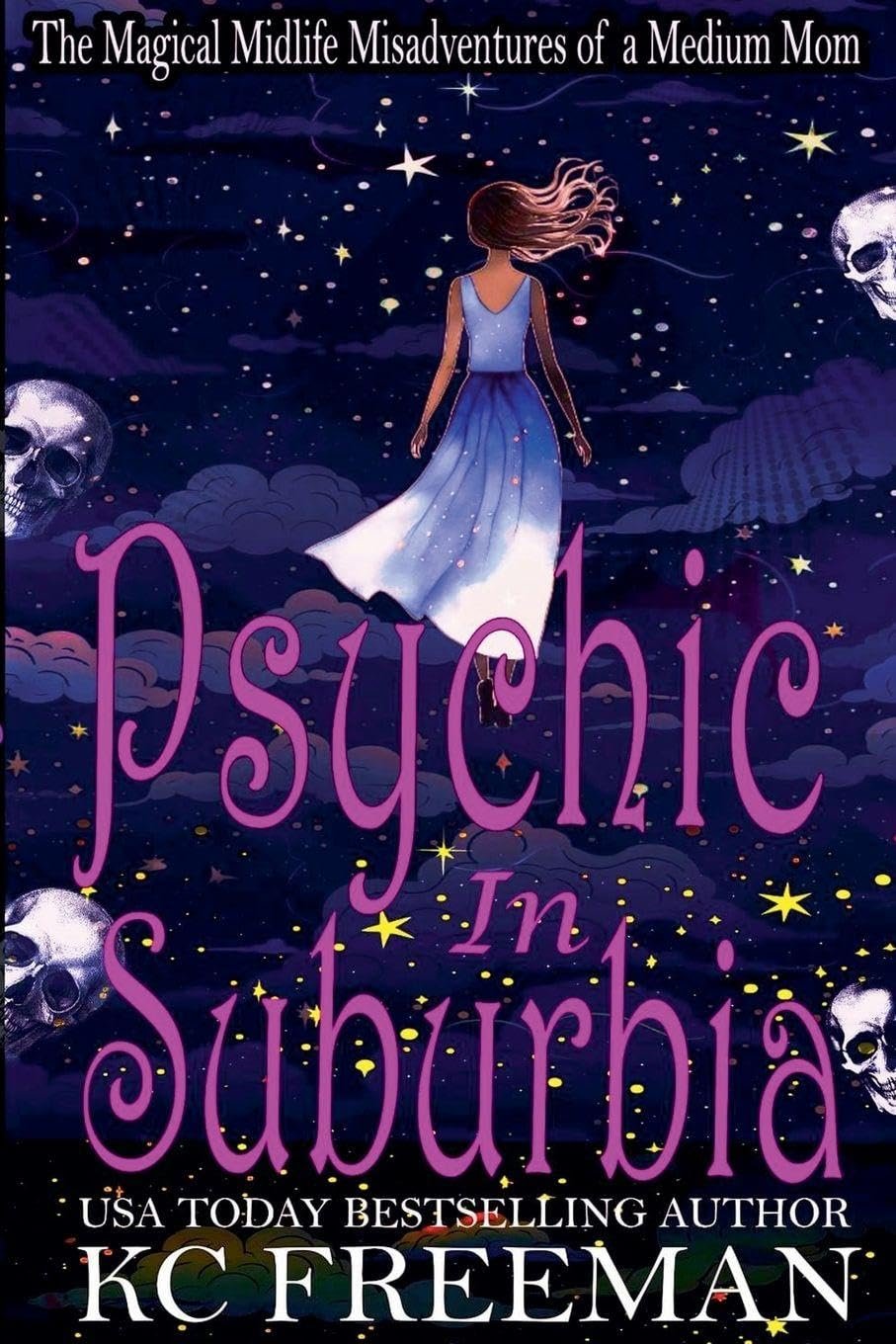
Psychic in Suburbia
A Halloween house party exposes Abby McBride’s hidden psychic ability—and a haunting with consequences for her family and neighbors.
Books worth discovering. Authors worth knowing.
The spirits have finally lost patience with Abby McBride’s effort to behave like an ordinary suburban mother.
S.
The Neighborhood Secret That Will Not Stay Buried
K. C. Freeman’s Psychic in Suburbia begins with a heroine who would very much prefer not to be one. Abby McBride has spent years suppressing her ability to see and communicate with ghosts. She has built an ordinary-looking life with her husband, Tanner, and a network of suburban friendships, all while concealing the part of herself she fears others will reject. Then a Halloween gathering at 125 Magnolia Lane turns the hidden ability into a public problem. The ghosts want attention, and they are no longer willing to wait politely.
That premise gives the novel two kinds of suspense. A haunting threatens people in and around a house, but disclosure threatens Abby’s carefully maintained place in her community. The author describes a woman concerned with appearances, marriage and the everyday embarrassment of midlife. Those concerns would be mundane in another kind of novel. Freeman places them beside supernatural mayhem, so the danger has both practical and personal consequences. Abby may need to save others while risking the relationships that have helped define her adult identity.
The advertised tone combines paranormal mystery with humor, rather than treating every ghostly encounter as pure terror. Midlife fatigue, brain fog and social awkwardness become part of the protagonist’s experience. That is a distinctive choice because fantasy often introduces a powerful heroine as someone already confident in an extraordinary gift. Abby is reluctant and anxious about hers. Her struggle is not merely learning what she can do; it is accepting the cost of letting people know she can do it at all.
What Lurks at 125 Magnolia Lane
The house supplies a focal point for the story. According to the synopsis and author interview, ghosts residing there have demands, and their willingness to disrupt the living places a family at risk. The involvement of a young child intensifies Abby’s responsibility. She can no longer keep the problem at a comfortable distance or dismiss it as something that belongs exclusively to the dead. What began as a secret between Abby and her own perception becomes a danger other people must face.
Haunted houses work well in fiction because they disturb the assumed safety of domestic space. A home is supposed to protect its residents, and 125 Magnolia Lane instead becomes the location where private history asserts itself. The public account does not need to explain every ghost’s motive to make the setup compelling. The important change is that the supernatural refuses to remain atmospheric decoration. It demands action, and Abby’s efforts to avoid notice begin to carry consequences for people she cares about.
The Halloween-party setting adds an ironic layer. Guests arrive prepared for the controlled fear of costumes and decorations, only to encounter events that refuse to stay within the boundaries of entertainment. In a novel with a comic streak, the contrast between staged spookiness and genuine paranormal trouble creates room for escalating misunderstandings. The author has spoken about drawing some setting inspiration from a real friend’s Halloween gatherings, while emphasizing the invented story. That distinction is useful: the party atmosphere may have a familiar origin, but the ghostly events are fiction.
Midlife as a Different Kind of Coming-of-Age
Abby’s age is not an incidental detail. Many supernatural stories center on young protagonists discovering abilities as they leave childhood. Freeman’s heroine has already spent decades managing obligations and maintaining an identity other people recognize. Discovering—or finally acknowledging—her power at this stage creates a different emotional problem. She is not merely asking who she might become. She must ask what happens to the life she has already built if she stops pretending an important part of herself does not exist.
The author’s interview identifies fear of exposure as a major aspect of the character. Even her husband has been kept outside the truth. That secrecy is understandable within Abby’s backstory, yet it can hurt those who discover it later. A reader may sympathize with the wish to avoid ridicule while also appreciating the strain that hidden information places on trust. This gives the novel something more substantial than a sequence of ghostly pranks. Paranormal danger makes a long-deferred family conversation unavoidable.
Humor can ease the pressure without dissolving the stakes. A woman juggling neighborhood expectations, physical changes and an inconvenient supernatural gift has reasons to view her situation with exasperation. The book’s published descriptions promise irreverence and emotional warmth alongside peril. That mixture suits stories about the awkwardness of self-acceptance: sometimes the hardest truth arrives not in a solemn revelation but in a moment so chaotic that embarrassment becomes impossible to avoid.
Community Judgment and the Cost of Visibility
Suburbia is a meaningful setting because its social life often depends on familiarity. Neighbors know who attends which parties, which families appear reliable and what behavior is considered normal. A psychic gift threatens Abby’s position within that implicit network of expectations. The ghosts at Magnolia Lane may be openly disruptive, but community reaction presents another kind of threat. Her fears about reputation and relationships are established by the synopsis, though the exact reactions of every neighbor should be left to the novel.
Visibility can be both liberating and frightening. Someone who has long concealed a difficult truth may feel relief when secrecy ends, but that relief does not erase the consequences of disclosure. Abby is placed in a position where refusing to act may endanger people, while acting publicly may change her marriage and friendships. This is the emotional dilemma that connects the haunted-house plot with the protagonist’s private history. The supernatural device is useful precisely because it forces a decision she has avoided under ordinary circumstances.
The book also raises a familiar question about responsibility. If Abby alone can perceive a danger, does that ability create an obligation to intervene? What support can she expect from people who cannot share her experience? Fiction can test these questions without claiming psychic perception works in the real world. The point is not the existence of ghosts beyond the narrative. It is the pressure placed on someone who believes she has knowledge others lack and must decide how to act on it.
Why the Mixture of Mystery and Comedy Works
The author and public listings identify Psychic in Suburbia as paranormal women’s fiction with a mystery thread and an irreverent tone. Readers who enjoy haunted-house comedy, middle-aged heroines and stories about reluctant powers have several grounded reasons to look closer. The threatening spirits give the plot urgency, while Abby’s marriage, parenthood and social anxieties make the stakes recognizable. Readers seeking outright horror should know that the marketing emphasizes humor and warmth as well as fear.
The combination also invites attention to character rather than just supernatural mechanics. A ghost can appear on a page and startle a reader, but Abby’s persistent attempt to be ordinary creates an ongoing source of tension. Every step toward dealing with the haunting also threatens to reveal the identity she has spent years protecting. That makes the house at Magnolia Lane more than a location for effects. It becomes a crossroads where private fears meet obligations to other people.
At the heart of Freeman’s premise is a woman whose ability cannot remain hidden when others need her. Psychic in Suburbia promises ghostly upheaval, household comedy and an uncomfortable demand for self-acceptance, all filtered through a stage of life often overlooked in supernatural adventures. Abby’s struggle is memorable because it links saving a family from fictional ghosts with the recognizably human risk of finally letting one’s community see the truth.
About the book.
Abby McBride has hidden her ability to see ghosts for decades. At a Halloween party in the home at 125 Magnolia Lane, spirits force her secret into the open and threaten friends and family, including a young child. Her husband Tanner is among those affected.
Editorial book feature, not paid sponsorship. Research-based commentary from named public sources, not a first-hand complete-book review. The cover placeholder will be resolved by the owner’s publishing automation.
Found a book worth opening?
Books worth discovering. Authors worth knowing.
Return to the Journal →