
Everything is F**ked, It’s Fine
M.C. Hudon’s novella has a stark cover and a deliberately contradictory title about alarm and reassurance.
Books worth discovering. Authors worth knowing.
M.C. Hudon’s novella has a stark cover and a deliberately contradictory title about alarm and reassurance.
Source-based review: verified bibliographic facts and independent interpretation, without a claim to full-text reading.
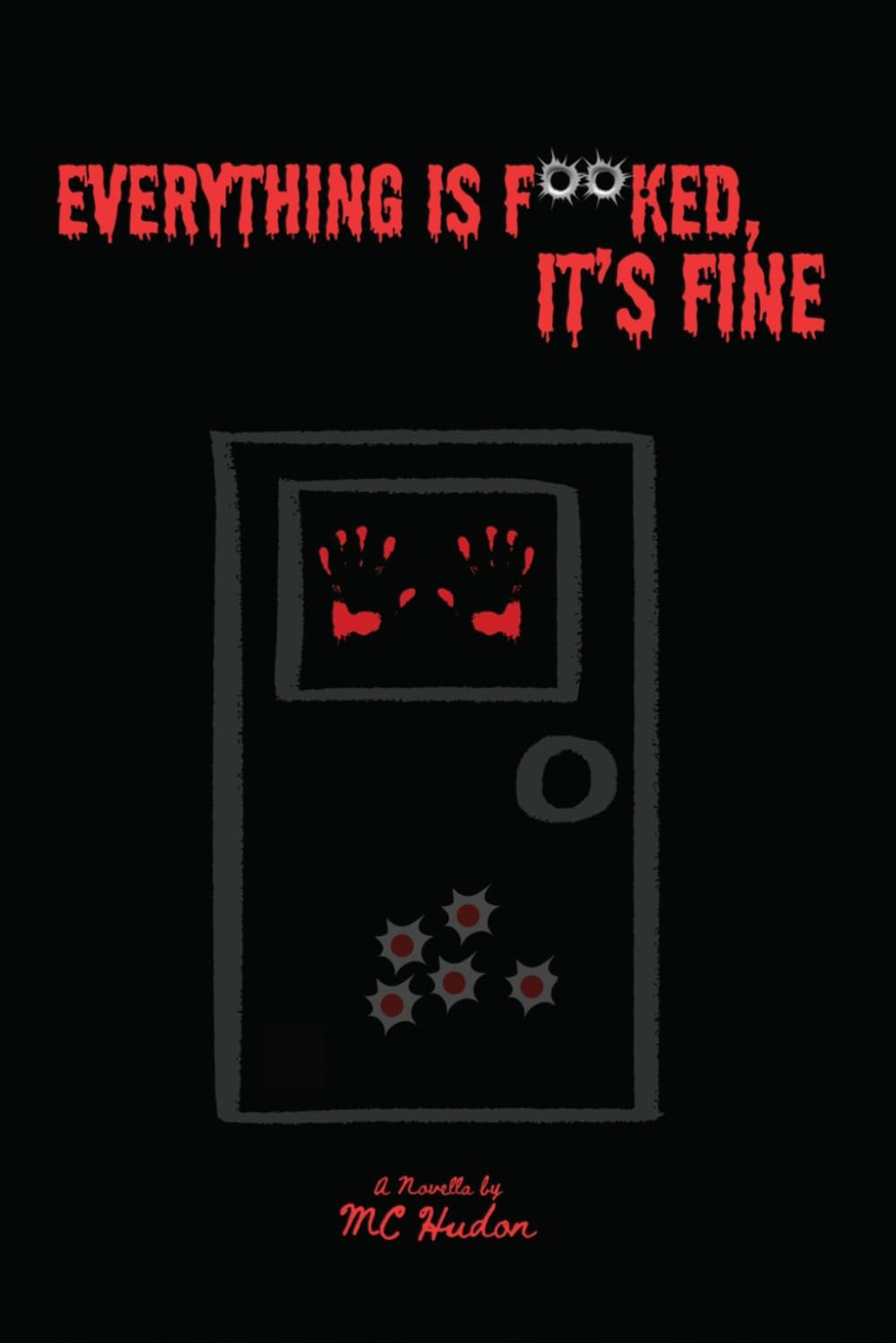
Everything is F**ked, It’s Fine by M.C. Hudon announces a contradiction before the reader reaches its first page. Its verified cover identifies the work as a novella and uses stark black space, urgent red typography and an image resembling a mechanical screen or door. The contrast between alarm and reassurance is built into the title itself. That gives the book a distinctive presentation, even though accessible sources do not establish its plot, narrator or genre in enough detail for a conventional synopsis. This review takes the cover and edition at their word, discusses the literary possibilities of their design, and refuses to invent scenes that cannot be verified.
The force of an impossible reassurance
The phrase It’s Fine is familiar as a verbal shortcut when circumstances feel anything but fine. Placed after an expletive and a sweeping declaration of disaster, it can sound comic, defensive, exhausted or defiant. Which feeling Hudon’s novella ultimately emphasizes is not documented. The title nevertheless works as an invitation to think about contradiction in human speech. People often reassure themselves and others while privately acknowledging distress. Literature can make that gap visible through dialogue, point of view and mood. We can discuss the tension announced by the title without claiming that the actual story features a particular crisis or diagnosis.
The book’s provocative wording also signals an intended readership comfortable with coarse language. Profanity is not, by itself, proof of a dark comedy, horror tale or social satire. It can be used for shock, intimacy, anger, humour or simple characterization. Readers who appreciate titles that disrupt polite surfaces may be curious; readers wanting gentler language may prefer to check an excerpt first. A title can set a register without fully determining the voice of the text.
The novella’s particular scale
The cover explicitly calls this a novella. That label usually points to a length between a short story and a full novel, though exact conventions vary. The form can accommodate intensity because it often follows a limited set of pressures without the breadth of a sprawling novel. This is a point about novella reading, not a confirmed description of Hudon’s structure. Without the actual chapters, no one can say how many characters appear or how quickly the plot unfolds. Still, knowing the declared form helps readers approach the book with different expectations than they would bring to a multi-volume series.
A shorter narrative may ask the reader to notice how little explanation it needs, or may cultivate an atmosphere that depends on leaving things unresolved. The contradiction in the title would suit many approaches, but it would be speculation to say the author chooses any specific one. Instead, a reader can look for whether the prose sustains its emotional register, how much of the world is revealed, and whether brevity becomes a strength rather than a limitation. These are questions of craft that only a reading can answer.
A cover that refuses softness
The dark cover, sharp red details, and small central screen-like image create a sense of warning or dislocation. It does not offer a comforting landscape or portrait of a hero. This is a visual analysis of the actual artwork, not a claim about a technology-centred plot. The design may make a prospective reader think of pressure, isolation, or control; those reactions reflect the viewer’s interpretive experience. Promotional artwork can be suggestive in many directions and is not reliable evidence of an interior scene.
There is a productive contrast between the cover and the novella label. The presentation is loud, while the form is compact. That combination can appeal to readers who like brief books with an assertive public identity. It may also disappoint someone who takes the jacket as a promise of a specific genre. The safest recommendation is therefore based on tone and format alone until a proper synopsis is available. The book’s visual language deserves consideration, but not a fictional plot invented to match it.
What should a reader watch for?
A reader picking up the work can ask what the title’s reassurance means within the actual story. Is it addressed to another person, to the narrator, or to society at large? Is it sincere, ironic, or unstable? None of those possibilities is established in available sources. They are ways to notice how a provocative phrase changes when placed in narrative context. The answers would shape whether the novella is best read through humour, anxiety, absurdity or some combination, but a responsible reviewer must leave them unresolved until the text is examined.
Readers can also pay attention to proportion. In a short work, a single image or repeated word may take on unusual weight. A strong ending may clarify earlier contradictions or deliberately preserve them. Those are ordinary standards for evaluating novella craft, not claims that this particular work employs repetition or a twist. A review based only on an outer cover cannot reliably praise the quality of its prose, structure or emotional resolution. Honesty about that limitation is part of giving the reader useful information.
Who might try it
Everything is F**ked, It’s Fine may attract readers who like provocative titles, compressed fiction and cover art that favors unease over reassurance. The identified novella format is a reason to consider it for a shorter reading session, while the stark imagery and profanity signal a potentially abrasive presentation. These are signals, not assurances about genre, content warnings or endings. People seeking a specifically comic story, a particular horror subgenre or a mental-health memoir should verify the interior before purchasing. The text may turn out to be gentler or stranger than its design suggests, and readers deserve room to discover that for themselves.
This source-limited review can identify M.C. Hudon, the work’s title and declared form, and the visual tension of its cover. It cannot testify to scenes, characters, or literary execution. Its initial strength as a prospect is the question built into four blunt words: what happens when the world feels wrong but someone insists everything is fine? Only the novella itself can provide an answer.
About the book.
M.C. Hudon’s novella has a stark cover and a deliberately contradictory title about alarm and reassurance. Review framing reflects documented descriptions and clearly limited sources.
Non-sponsored book: the MarketAnyBook source queue marks this listing as non-sponsored. This is a research-based review-style editorial discussion and not an assertion that the writer read the complete book. When interior text was unavailable, analysis of themes or possible reading questions is explicitly interpretive and not presented as documented plot.
Found a book worth opening?
Books worth discovering. Authors worth knowing.
Return to the Journal →