
Words from Whitney
A year-long keepsake by Whitney Napoleon Matthews for intentional reflection, purpose and growth.
Books worth discovering. Authors worth knowing.
A year-long keepsake by Whitney Napoleon Matthews for intentional reflection, purpose and growth.
Source-based review: verified bibliographic facts and independent interpretation, without a claim to full-text reading.
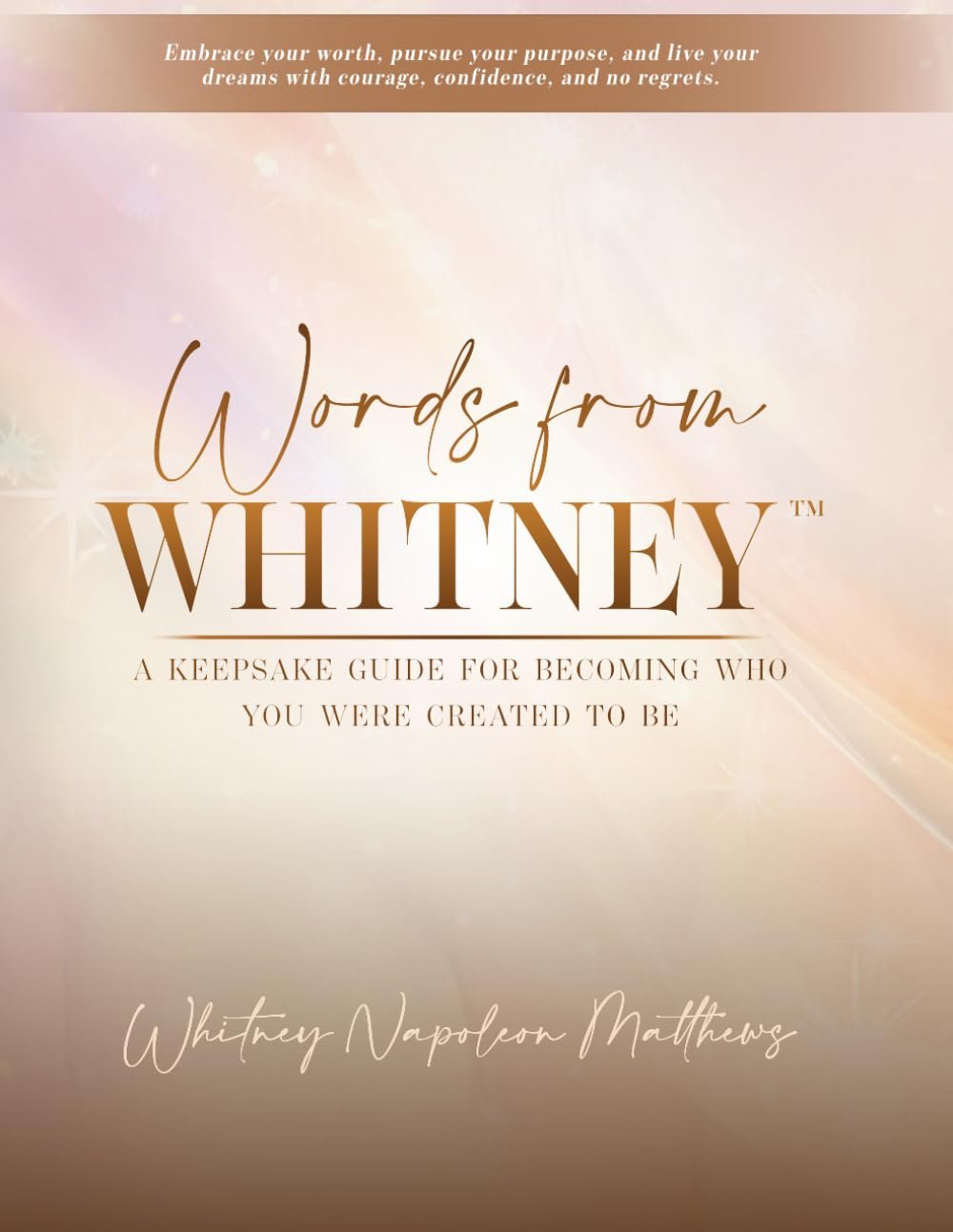
Words from Whitney: A Keepsake Guide for Becoming by Whitney Napoleon Matthews is more clearly described by its author than many independently published reflection books. In her public publication statement, Matthews calls it a 12-month keepsake meant to accompany readers through a year of reflection, purpose and intentional growth. She distinguishes a printed edition from an interactive digital guide. The verified cover emphasizes worth, purpose and the courage to live without regrets. This gives the work a recognizable form: it is not a plot-driven book, but a resource designed to be returned to over time. This review examines the value and limits of that proposition without claiming to know its individual prompts.
A keepsake rather than a quick fix
The word keepsake changes how a reader might use the book. Many guides are presented as problems to be solved at speed: finish the pages, complete the checklist, move on. Matthews explicitly describes this project as something not to rush through or read only once. That distinction is important because reflection requires time to notice whether an idea survives contact with ordinary days. A keepsake may acquire meaning through marks, revisited notes and the reader’s memory of who they were at the beginning of a year. We do not have an interior preview proving the placement of writing spaces or the exact sequence of exercises; the author’s own description supports the broader intention of an ongoing relationship with the guide.
The year-long design also introduces a more patient understanding of becoming. Personal change rarely happens in a straight line. People return to old ambitions, adjust priorities and sometimes discover that a goal no longer fits. A reflective book can create occasions to notice those shifts without presenting them as failure. The author’s language emphasizes purpose, worth and confidence, and those are meaningful themes for readers who want a structured opportunity to examine the direction of their lives. The usefulness of a particular prompt, however, depends on its wording and the person answering it; no general promise of transformation can be independently guaranteed.
Worth before accomplishment
An interesting tension in self-development writing is the relationship between self-worth and achievement. If a guide tells readers to pursue goals but implies that dignity must be earned through productivity, it can become another source of pressure. Matthews’s public framing begins with embracing worth and then moves toward purpose. This order may be important to readers who are tired of equating value with constant output. It invites the question of what someone would pursue if they did not have to prove their right to exist first. That is an editorial reflection on the stated theme, not a quotation or specific exercise from the book.
The word becoming is similarly open. It suggests identity in motion, rather than a final ideal person waiting at the end of a checklist. A meaningful reflective guide can help a reader distinguish between changes they genuinely want and expectations inherited from other people. Whether the text handles that distinction well cannot be determined from the cover and publication statement alone. But it is one useful standard against which readers might evaluate the experience: does the guide leave room for the person answering the questions to disagree with them?
Twelve months as a reading rhythm
A 12-month structure offers practical regularity. It provides a reason to return to the book long after the excitement of a new year has faded. A reader might compare hopes recorded early in the process with later decisions or notice an ambition that gradually became less important. These are possible uses of a year-long reflective keepsake, not descriptions of confirmed monthly activities inside Matthews’s edition. The author also notes an interactive digital version, which may suit readers who prefer a screen-based workflow; the exact technical features of that edition have not been examined.
There is no single ideal pace for reflection. Some people appreciate fixed dates, while others need flexibility because work, caregiving or health circumstances can make regular practice difficult. A good guide should feel like an invitation rather than a punishment for falling behind. The title’s use of keepsake supports a gentler interpretation: the object can remain meaningful even when progress is uneven. Readers can approach it with an interest in patterns rather than demanding an immediate revelation at every sitting.
The importance of questions that remain open
Guided reflection works best when a question is specific enough to notice but open enough to answer honestly. A prompt can ask what someone values or what they fear losing, yet the real work happens when the reader resists supplying the most impressive answer. We do not have verified page samples to judge the actual prompts in Words from Whitney, so this is a standard for evaluating such books generally. It is important not to confuse appealing cover language with demonstrated depth: a reader should decide whether the interior encourages genuine thought or simply repeats motivational slogans.
The visual design contributes to the book’s intended role. Its warm, luminous cover and script title present the guide as something personal and potentially giftable. That aesthetic can make a book feel welcoming, though it should not be mistaken for proof of therapeutic or coaching outcomes. The author identifies a background in visual design and related services in her public profile; it is reasonable to say that the book’s cover foregrounds visual care, but not to speculate about who designed each element or what professional process produced it.
Who will want this guide
Words from Whitney is a natural prospect for readers seeking a year-long, faith-compatible or purpose-centred space for self-reflection, though the accessible description does not establish every spiritual or methodological detail of its interior. It may suit someone who enjoys keeping meaningful personal records, reflecting on priorities, or revisiting written intentions over time. A person wanting a quick reference manual, evidence-based psychological treatment, or a business plan should not assume the guide offers those things. Its strongest verified appeal is as a paced companion rather than a one-sitting solution. Those choosing it as a gift can benefit from knowing whether the recipient genuinely enjoys writing and contemplative exercises.
The author’s published description gives this book a clear identity even without a scanned chapter: a twelve-month keepsake for intentional becoming. No specific prompt, affirmation, exercise count or guaranteed result is attributed to it here. The most grounded expectation is that it offers an organized occasion to ask where one is going and what matters enough to carry into the next season. That can be valuable without pretending that any single guide can make a person’s decisions for them.
About the book.
A year-long keepsake by Whitney Napoleon Matthews for intentional reflection, purpose and growth. Review framing reflects documented descriptions and clearly limited sources.
Sponsored book: the MarketAnyBook source queue marks this listing as sponsored. This is a research-based review-style editorial discussion and not an assertion that the writer read the complete book. When interior text was unavailable, analysis of themes or possible reading questions is explicitly interpretive and not presented as documented plot.
Found a book worth opening?
Books worth discovering. Authors worth knowing.
Return to the Journal →