
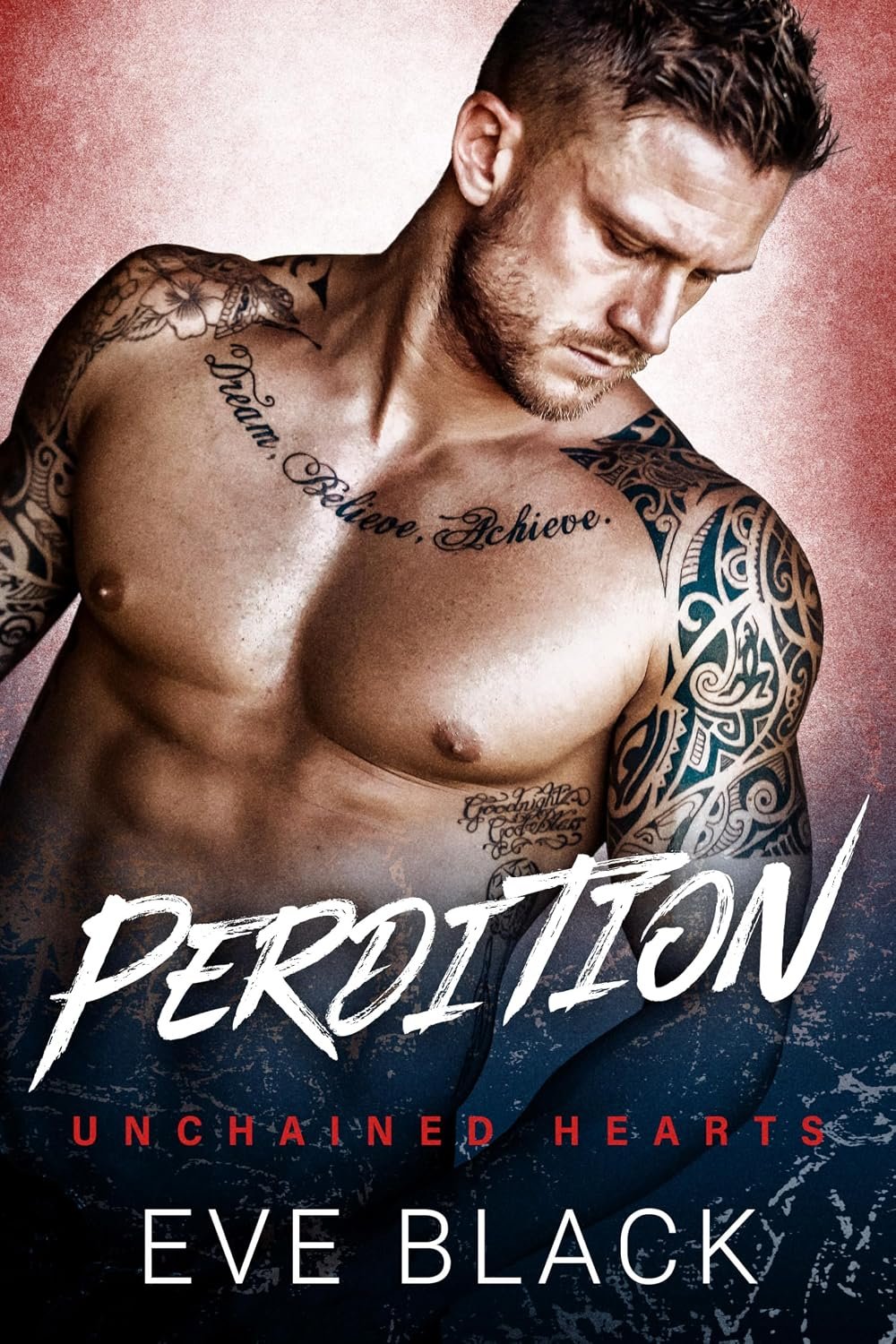
Perdition: A Marriage-in-Trouble Romance (Unchained Hearts Book 4) (English Edition)
Emily and Frost share a long history; the damage inside their marriage may be the hardest fight of all.
Books worth discovering. Authors worth knowing.
Long relationships accumulate a kind of history that can make ordinary disappointments feel enormous. Every new hurt sits beside earlier promises, shared crises and the memory of who two people believed they would become. Perdition, the fourth Unchained Hearts novel by Eve Black, approaches romance through exactly that difficult territory. Its official synopsis introduces Emily and Frost as partners whose connection began when they were young and whose marriage now faces betrayal and profound damage. The emotional question is not whether they once loved one another. It is what the weight of that love can mean after trust breaks.
An editorial introduction to the book and its published premise, not a full-book review.
A marriage with a long past Emily and Frost's history is unusually explicit in the author-provided synopsis. They knew one another as children, built a relationship as teenagers and eventually shared a home and family. Frost is now president of the Unchained motorcycle club, and Emily has been beside him through the dangerous responsibilities associated with that world. This is not a premise built around first attraction or two strangers meeting by chance. Its central tension depends on how much the pair has already invested in each other. The feature can discuss that framework without inventing conversations, scenes or a final reconciliation.
A marriage-in-trouble romance asks a reader to hold two truths together. Shared history can make a relationship worth fighting for, but history alone cannot excuse present harm. The public description portrays Frost as having lost sight of what mattered and failed a test of loyalty. That account comes from the book's promotional copy; it should not be confused with a complete, independently assessed portrait of either character.
Emily's place in the story The author summary gives Emily her own emotional perspective rather than describing her only through the husband's remorse. She recognizes the gap between the boy she loved and the man now capable of breaking her heart. Her role is framed through years of loyalty, family building and painful disillusionment. Those are the concrete facts established in public material. The synopsis does not disclose the details of every decision she makes after the rupture, and an introductory feature ought to preserve that uncertainty instead of treating forgiveness as a foregone conclusion.
For readers considering this book, Emily's perspective may be the clearest indicator of its focus. The advertised crisis is deeply personal, not merely a power struggle within the club. A story like this can invite reflection on how long emotional labor becomes invisible inside a relationship and what it takes to insist on being seen again. These are thematic possibilities suggested by the setup, not claims that the novel offers a particular diagnosis or model of healthy reconciliation.
Frost, leadership and failed priorities Frost's position as MC president puts authority into the story's relationship dynamics. A person responsible for a club has obligations that can compete with private life, but competing obligations are not an automatic defense against betrayal. The publisher's description says that when loyalty is tested, Frost fails. That direct admission is central to the marketing of the book. The question of what he does next matters more than any simple assertion that he is powerful, protective or determined. Romantic redemption needs actions; a promotional summary can only promise the attempt.
The narrative setup also allows an interesting distinction between succeeding at an external role and failing in an intimate one. Frost's title identifies him as a figure of authority, yet Emily is the person whose faith in him has been damaged. Authority does not grant access to her trust. The advertisement presents his determination not to lose his marriage, but it does not reveal the process of change.
What the stated tropes actually tell us The book's published trope list includes marriage in trouble, other-woman drama, overheard misunderstandings, perceived emotional cheating, a plus-sized heroine, forced proximity and soulmates. A trope list is useful shorthand, but each term covers many possible executions. Other-woman drama, for example, indicates an external relational complication, not proof of a particular event. Forced proximity signals situations where characters cannot easily avoid each other, not the nature of any one encounter. Readers who know their preferences can use these labels to orient themselves while resisting the temptation to imagine unverified scenes.
The author also states that her books have no physical cheating or cliffhangers and are designed to deliver a happily-ever-after. Because this assurance comes from the author's own series page, the feature should attribute it rather than independently certify how every reader will interpret the events. Emotional and perceived emotional betrayal can still feel intense even when a romance excludes physical infidelity. Anyone especially sensitive to the themes named in the blurb should consult content guidance and a reading sample before purchase. An outcome-oriented genre promise does not make the difficult journey emotionally neutral.
The motorcycle-club setting *Unchained Hearts* is an MC romance series, but the official description specifies that these books focus on the men, their partners and the obstacles standing between them and a happy ending. The club provides a social structure in which loyalty is not just an individual value; it is part of the language of membership. That gives the marriage's failure a second layer of irony. A man tasked with leading a community can still neglect the relationship closest to him. It is a potentially rich contrast, though no public source used here supplies the club's detailed internal politics.
Series placement is also worth noting. As Book Four, Perdition belongs to an established romantic world. The available description identifies Emily and Frost's crisis without confirming the precise amount of backstory required from the three preceding books. New readers can inspect the preview to decide whether this is a comfortable entry point; returning readers may arrive with different expectations about the wider cast. Neither group should be promised that every supporting plotline is recapped, because the official materials examined do not verify that claim.
Readers and expectations This is likely to appeal most directly to readers actively seeking a second-chance emotional experience within an existing marriage, not simply a low-conflict contemporary romance. The marketing emphasizes damage, choice and an attempt to recover connection. It also signals potential distress in its descriptions of betrayal and broken trust. Readers looking for mutual repair may find the core question compelling; readers who prefer romance with little jealousy or relational anguish may want to sample carefully. This recommendation is based on the publisher's framing rather than a claim of firsthand assessment.
What distinguishes Perdition in its public presentation is the contrast between an almost lifelong bond and a present moment in which that bond no longer feels secure. The romance must contend with accumulated memories without letting them do all the work of reconciliation. Whether the characters meet that challenge is a question for the novel itself. As an introductory feature, the fairest invitation is to identify the stakes, name the advertised tropes and preserve the reader's right to decide what a satisfying resolution should require.
About the book.
Fourth Unchained Hearts novel focused on Emily and Frost, the president of the Unchained MC, and a damaged marriage; author states no physical cheating or cliffhanger.
Sponsored Book Feature: promotional placement is disclosed; this is not an independent full-book review. Interpretive observations are distinguished from the publicly documented synopsis. Verify all copy before publication. Source research: primary reference and second reference.
Found a book worth opening?
Books worth discovering. Authors worth knowing.
Return to the Journal →