
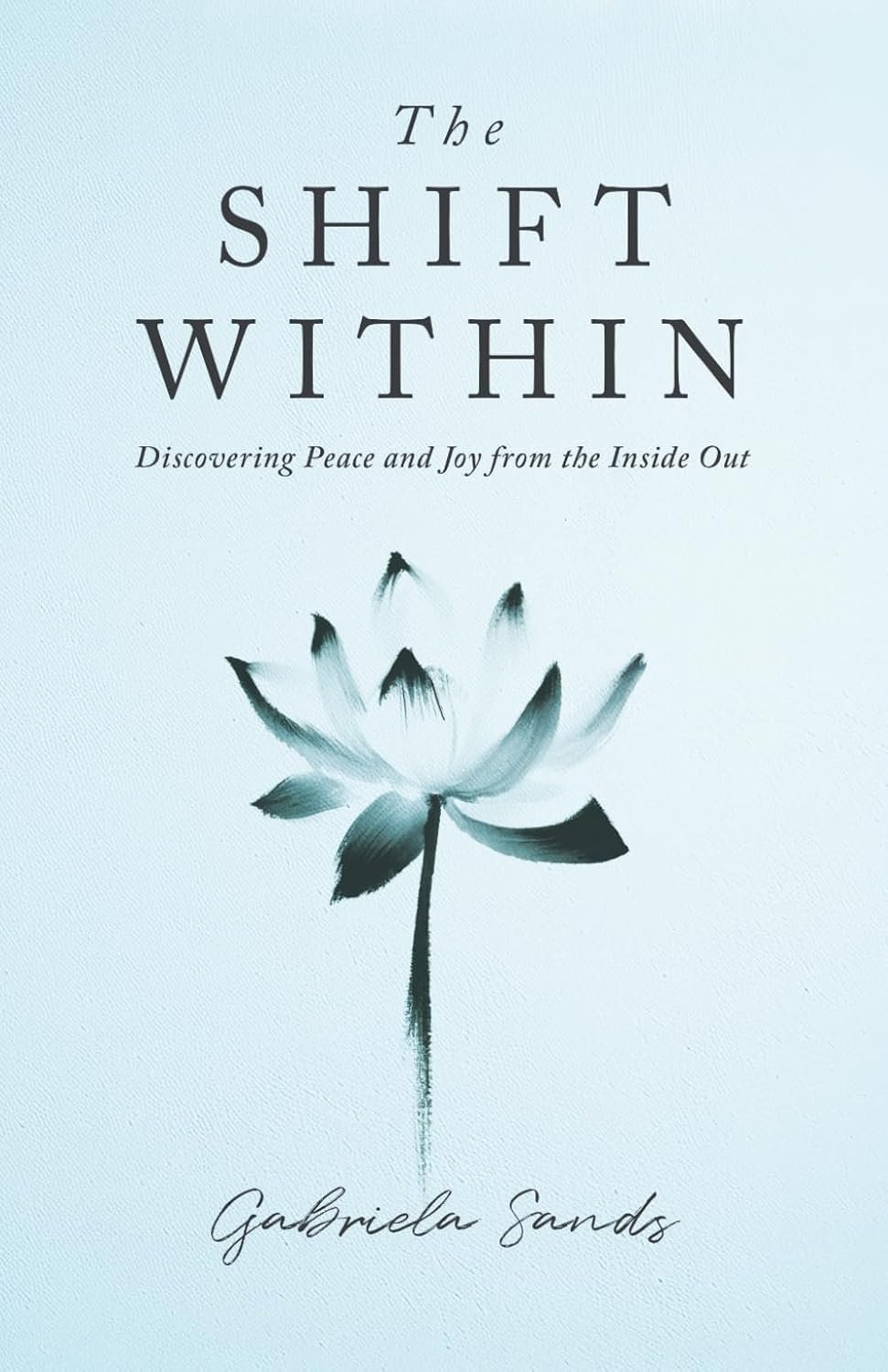
The Shift Within
Advice to “look within” can be either a liberating invitation or an evasion of the pressures people actually live under. Gabriela Sands’s The Shift Within approaches.
Books worth discovering. Authors worth knowing.
Advice to “look within” can be either a liberating invitation or an evasion of the pressures people actually live under. Gabriela Sands’s The Shift Within approaches.
Evidence-conscious literary criticism, not a claim of firsthand full-text reading.
Advice to “look within” can be either a liberating invitation or an evasion of the pressures people actually live under. Gabriela Sands’s The Shift Within approaches inner peace through a blend of personal experience, spiritual reflection and practical self-help. Its publicly available description presents the author’s movement from burnout and self-doubt toward a more settled sense of self, then offers reflective practices intended to help readers undertake their own internal changes. The book’s strongest promise is not instant happiness, but a change in the relationship between a person and their own emotional life.
Peace as a different kind of goal The title suggests a movement that does not require an external event to validate it. Rather than waiting for circumstances to improve, Sands emphasizes awareness, self-compassion and the recognition of limiting beliefs. These are familiar themes in contemporary wellness writing, but familiarity is not fatal. Their usefulness depends on how precisely they are handled. A reader who is exhausted by overwork needs something different from someone struggling with guilt or isolation, even if both experiences are described under the general heading of stress.
The public description identifies the book as a hybrid of memoir and self-help. That can be an effective form when a writer uses personal experience to illuminate a possible practice without implying that every reader’s life will follow the same path. A personal transformation can be evidence of what mattered to one person. It is not, on its own, proof of a universally successful method. Good self-help writing makes that distinction feel natural rather than treating the narrator’s story as a prescription.
The meaning of self-compassion The stated themes include forgiveness, mindful awareness, stillness and emotional healing. Such practices can help readers reflect on how harshly they judge their own thoughts and mistakes. Yet compassionate language can lose force when it treats distress as nothing but a failure of attitude. Social conditions, illness, trauma and economic insecurity cannot always be changed through inward reflection. An ethical reading should keep external realities in view while considering the book’s proposed inner work.
The word “healing” also deserves precision. It may refer to a subjective sense of recovery, to stronger emotional coping or to a clinical process. Those meanings are not interchangeable. This source-based review does not endorse unverified health claims, and the available information does not establish trials or evidence for particular therapeutic effects. Readers should view the exercises as personal reflection tools unless relevant professional guidance indicates otherwise.
Stories beside exercises According to the listing, chapters pair autobiographical moments with prompts or practices, inviting an alternation between witnessing the author’s story and considering one’s own. That is a promising pedagogical rhythm. Personal stories give abstraction a shape; exercises can prevent inspirational prose from evaporating after the page is turned. But prompts can also become mechanical if they merely ask a reader to repeat affirmations. The critical question is whether each practice opens genuine reflection or only reinforces the book’s starting claim.
A recurring challenge for spiritual self-help is the language of “energy” or alignment. Such vocabulary may have a meaningful role within a particular reflective tradition, but it can sound like a scientific claim when none is intended or verified. A serious review should leave spiritual interpretation available to readers without confusing it with clinical measurement. The author’s stated combination of mind-body themes and inner peace calls for careful distinctions of this kind.
The difference between insight and obligation A self-help exercise may invite a reader to examine beliefs they have carried for years. Done carefully, that can be liberating; done carelessly, it can imply that every hardship persists because the person suffering has not thought correctly. The advertised shift from an external pursuit of happiness to inner awareness needs this distinction. Someone might feel less defeated by a difficult workplace after reflecting on its effects, yet that does not mean the workplace has ceased to be harmful. Inner change and practical change can be complementary rather than competitors.
The book’s memoir element could help hold that balance if it presents the author’s experience in its own specificity. A story that admits ambivalence, setbacks and continuing limitations may provide more companionship than one with a relentlessly uplifting trajectory. Readers do not need another perfect individual to compare themselves with; they need a credible witness to the difficulty of changing habits of thought. The published summary asserts a transformation from burnout and self-doubt. How many doubts remain unresolved in the telling is a question for the text.
The art of a useful prompt Reflective questions work when they ask for observation before they prescribe conclusions. A journal prompt about moments of tension, for example, could help identify patterns without insisting that the reader immediately recast every experience as a blessing. Mindfulness also risks becoming an achievement to chase, which would recreate the very restlessness it promises to relieve. A good practice invites attention with less self-judgment, including on days when the practice feels difficult.
The public description says the book pairs personal stories with exercises. Its credibility will depend partly on whether those exercises meet readers where they are, not where an idealized programme imagines them to be. The distinction is modest but important: peace should not become another performance standard. The title’s promise is strongest when understood as an opening toward gentler perception rather than an instruction to be happy at all times.
The reader it may accompany <em>The Shift Within</em> is most likely to appeal to readers already open to journaling, contemplative practices and gentle self-inquiry. Its tone, from the descriptions, appears supportive rather than combative. People seeking a formally academic account of psychology, a medical guide or solutions to external structural problems may need other resources alongside it. The book should not be used as a replacement for care when distress is severe or persistent.
The available source gives a coherent description of purpose but cannot establish how original, readable or effective the complete text is in practice. Its useful critical proposition is nevertheless clear: a durable change may begin not in winning every encounter with the world, but in learning how to meet oneself with less hostility. The value of The Shift Within will depend on how honestly it sustains that proposition while acknowledging the complexity of ordinary life.
About the book.
The title, contributors, routing category, original retailer link and unique Drive image file were checked against the live queue. The review is based on publicly available evidence and original editorial analysis.
This is an unsponsored editorial book review. This research-based critical review interprets the verified book listing and available external descriptions; it does not claim a complete reading.
Found a book worth opening?
Books worth discovering. Authors worth knowing.
Return to the Journal →