
Out of Nashoba
To write about a hometown is to confront a place that has continued changing after the self who first knew it has gone. Out of Nashoba.
Books worth discovering. Authors worth knowing.
To write about a hometown is to confront a place that has continued changing after the self who first knew it has gone. Out of Nashoba.
Evidence-conscious literary criticism, not a claim of firsthand full-text reading.
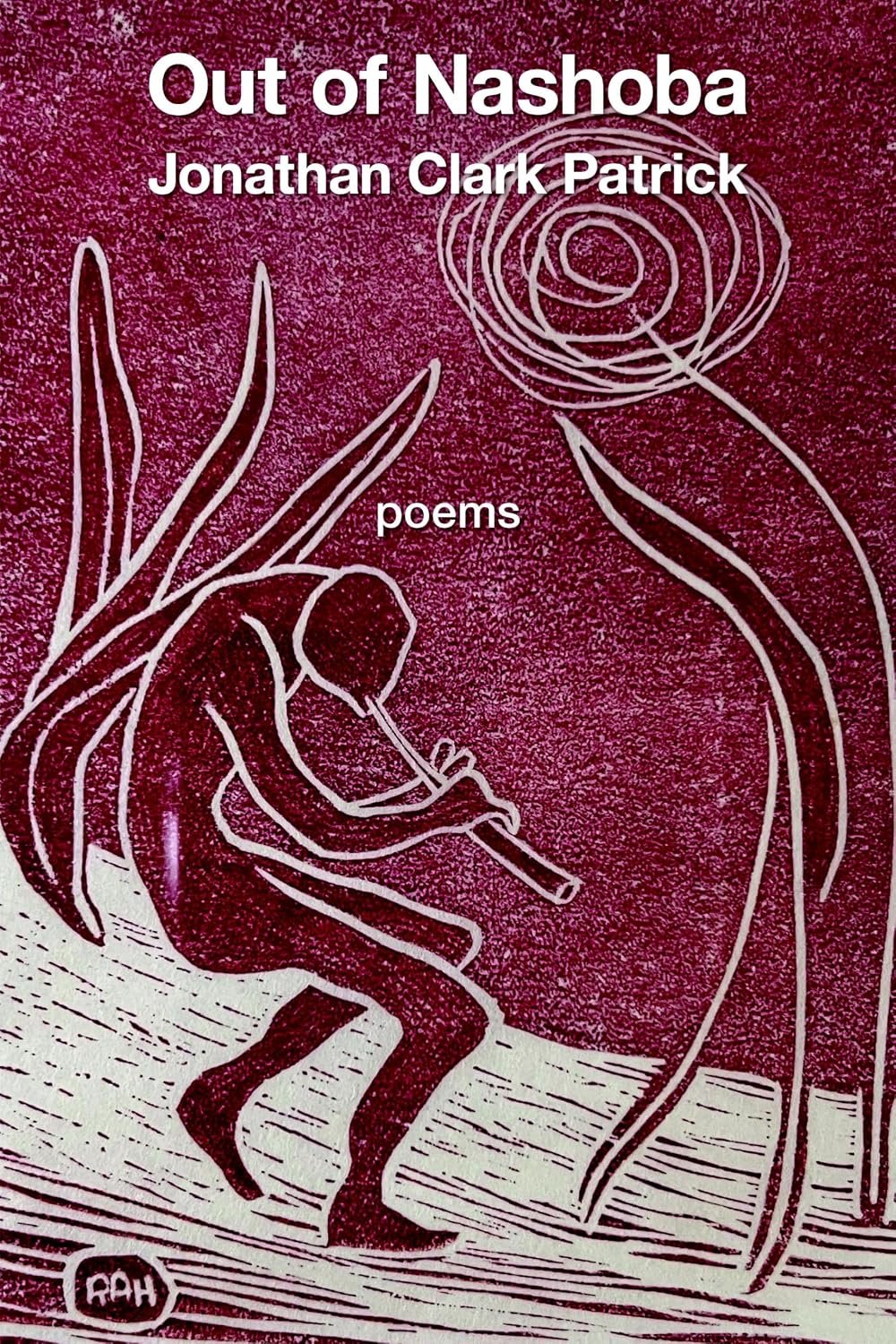
To write about a hometown is to confront a place that has continued changing after the self who first knew it has gone. Out of Nashoba, by the poet identified by publisher Kelsay Books as Jonathan Clark Patrick, returns to the New England terrain of the author’s youth. The publisher describes it as a continuation of his earlier personal journey in Songs Presidential. The publicly available accounts situate the collection among memories of a Massachusetts community moving from a rural economy toward a suburban future. That is a compelling subject for poetry: the landscape can disappear without its effect on a person doing so.
A place made of successive places The Nashoba Valley setting provides more than a backdrop. Orchards, quarries, farms and frozen ponds mark activities and social arrangements that can fade as development changes a region. Such places are remembered not only visually but through the work, games and relationships they made possible. A poem about a childhood place can be both particular and historically attentive when it asks what a community gained and lost as its landscape altered.
The public description refers to the discovery of old radios and to informal ice-hockey games as parts of the remembered childhood. These are concrete details, and their specificity matters. A vintage radio carries voices from elsewhere and from earlier time; a frozen pond is a place temporarily transformed by weather and shared activity. The memoirist’s imagination can give such objects new resonance without treating them as evidence that the past was uniformly simpler or better. The poems themselves must be consulted to see how Patrick handles the imagery.
Beyond the comforts of nostalgia Nostalgia can preserve the texture of ordinary life, but it can also erase exclusion, conflict and uncertainty. A collection tracing suburban transformation has the opportunity to resist that simplification. The most interesting poems about growing up do not insist that every lost thing was good; they ask what the young observer could not yet see. Adult reflection adds another consciousness to childhood memory. Poetry is uniquely equipped to hold those viewpoints in tension without announcing a definitive historical verdict.
The author’s return to writing after a long professional career is part of the publisher’s account, and the earlier collection combined political history with personal memory. Here the emphasis is more directly local. Such a shift can be artistically meaningful: the scale of national history is made answerable to the small places where a person first learned to understand power, work and community. It would be presumptuous, however, to claim a particular formal technique or meter without examining the poems.
What the form might make possible A poetry collection can turn a childhood recollection into something other than a continuous autobiography. Individual poems may approach one place from multiple emotional angles, with gaps and repetitions becoming part of the design. Silence can matter as much as remembered detail. The title <em>Out of Nashoba</em> suggests departure, but departure does not require emotional severance. What stays with someone after leaving may be the real subject of the return.
The listed author credit in the queue shortens the name to Jonathan Patrick, while the publisher and bibliographic records use Jonathan Clark Patrick. That difference should be recorded as an attribution question, not silently erased from source metadata. It does not necessarily indicate a different author, but confirmation against the exact cover is important for final quality control.
An object can hold a history An old radio is a particularly suggestive object for a poet remembering childhood. It makes voices and music appear from beyond the listener’s immediate surroundings, and it remains present as technology changes around it. The publicly reported discovery of vintage radios offers a way to think about layers of time: a child finds an object already old, then remembers that discovery years later. This doubling is one of the quiet strengths of autobiographical poetry as a form. A remembered object can point both to the historical era of its making and to the moment it became meaningful to the writer.
A frozen pond offers a different relation to time. It exists as a playing surface only under particular weather conditions; community forms on it in a way that is temporary by nature. When a region develops, memories of those informal games can carry the sense of a world disappearing even if the same bodies of water remain. This is not a claim about Patrick’s particular lines, which have not been examined here, but an indication of why such material has the capacity to sustain serious poetry.
Local memory and national history The author’s earlier book braided presidential history with the formation of a personal identity. The continuation in <em>Out of Nashoba</em> suggests that national events and private memory need not be separated into competing subjects. One may understand public institutions through the local places in which civic life first became visible. A changing town, for instance, can embody abstract decisions about land, transport and economic development. Poetry can give such forces a human scale without pretending to settle a historical argument.
A poem’s value, however, cannot be inferred solely from the worthiness of its material. The final task of criticism would be to examine the actual decisions of language: whether an image surprises, whether the lines permit more than one emotion, and whether the collection finds a rhythm that earns its recollections. Public descriptions provide an invitation to that reading, not its replacement.
A recommendation for attentive readers <em>Out of Nashoba</em> is most likely to interest readers of autobiographical poetry, New England social history and writing about the formation of memory through place. It may be less suited to those seeking a conventional chronological memoir; the public publisher record classifies it as poetry. Someone who has watched a familiar community change could find resonance in the central subject even without knowing Massachusetts.
This review is grounded in publisher information and secondary descriptions rather than a complete reading of every poem. It offers no judgment about lineation, sonic texture or formal achievement beyond what the sources establish. Yet the book has a clear and worthwhile critical horizon: it asks how places that cease to exist in one form can continue to shape the person who remembers them. In poetry, that persistence can be more revealing than nostalgia alone.
About the book.
The title, contributors, routing category, original retailer link and unique Drive image file were checked against the live queue. The review is based on publicly available evidence and original editorial analysis. Original Sheet credit says Jonathan Patrick; publisher identifies this author as Jonathan Clark Patrick. Verify exact cover/edition attribution before publishing.
This is a sponsored book review. Sponsorship does not alter our standards for evidence and critical independence. This research-based critical review interprets the verified book listing and available external descriptions; it does not claim a complete reading. Original Sheet credit says Jonathan Patrick; publisher identifies this author as Jonathan Clark Patrick. Verify exact cover/edition attribution before publishing.
Found a book worth opening?
Books worth discovering. Authors worth knowing.
Return to the Journal →