
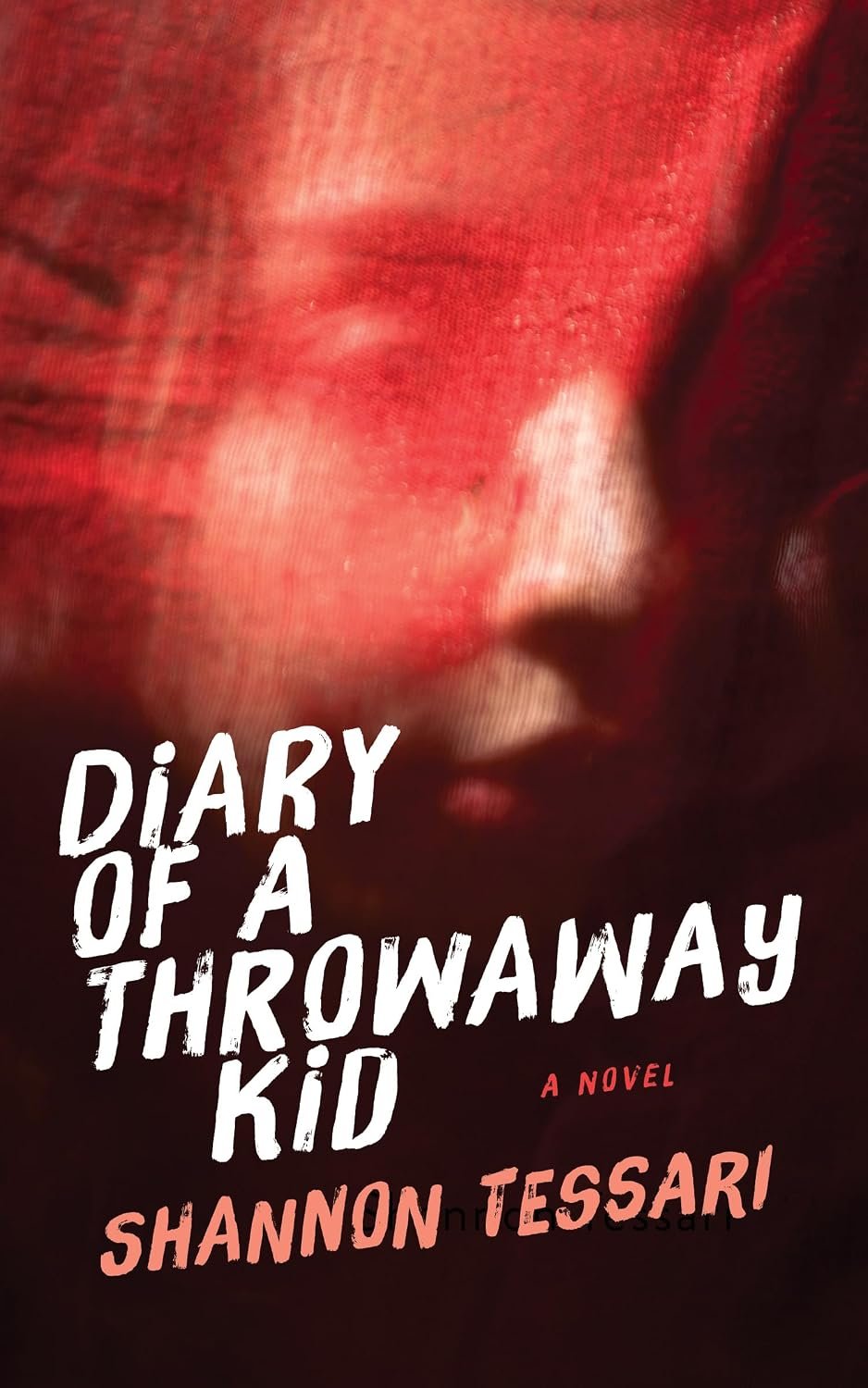
Diary of a Throwaway Kid
Storm Rogers has moved through foster homes, group homes and hospital stays since childhood. Her journal records the fatigue of repeated displacement and her stubborn desire for a family that chooses to stay…
Books worth discovering. Authors worth knowing.
Storm Rogers has moved through foster homes, group homes and hospital stays since childhood. Her journal records the fatigue of repeated displacement and her stubborn desire for a family that chooses to stay. Public descriptions emphasize the coexistence of anger, sharp humour, loneliness and hope.
Carefully sourced literary criticism and book-specific interpretation.
Storm Rogers has moved through foster homes, group homes and hospital stays since childhood. Her journal records the fatigue of repeated displacement and her stubborn desire for a family that chooses to stay. Public descriptions emphasize the coexistence of anger, sharp humour, loneliness and hope.
Giving the child the voice
The phrase “throwaway kid” is intentionally disturbing: it describes a child as if abandonment were a property of the child rather than a failure of the adults and systems around her. Giving Storm a diary voice is a meaningful counter-move. It places the authority to describe her life with the person who is most often described by case notes, placements and other people’s decisions.
Avoiding the spectacle of suffering
The central danger for fiction about trauma is that pain can become spectacle and resilience a demand placed on the wounded. The book’s premise invites a more careful measure: can Storm be contradictory, impatient and funny without needing to perform gratitude to earn sympathy? A moving back-cover description is not enough to establish how delicately the full narrative negotiates that problem.
A diary is not a case file
A diary creates a productive tension between immediacy and partial understanding. A young narrator may record what happened without knowing why others acted as they did; the reader must notice emotional patterns that the speaker is still discovering. That potential makes the form well suited to questions of identity, trust and the uncertainty of belonging, although the actual handling of dated entries and voice remains unverified.
Readers and responsibilities
This should speak to readers of character-led social fiction who can meet difficult material without looking for easy reconciliation. It may also interest people involved in caregiving or youth advocacy, provided they approach the story as an imaginative narrative rather than a clinical portrait of every foster-care experience.
What a placement cannot promise
One of the harshest implications of the premise is the distance between an administrative solution and a child’s experience of permanence. A move may be considered necessary by adults, yet still register in the young person’s memory as evidence that another relationship has failed. This kind of story can challenge readers to notice the violence that may be hidden within apparently neutral vocabulary: placement, transfer, assessment, discharge. Those words may be indispensable in practice, but they are not adequate emotional descriptions. Storm’s diary has the potential to counter their abstraction with a voice that belongs to someone living among the consequences. The novel’s critical promise therefore lies not in providing an exhaustive policy debate, but in insisting that a young person be heard as a person.
Belonging, too, is more difficult than a final address. The repeated desire for a “forever home” can be understood as a need for reliable attention, predictable affection and a history that does not disappear when circumstances change. Yet a romance of rescue would be too easy. A new caregiver cannot simply annul the meaning of the previous years, and any persuasive story about belonging must allow the past to remain part of the child. We would want to see how the novel handles Storm’s capacity to trust, refuse or misread kindness without treating hesitation as ingratitude. The accessible materials do not reveal those narrative decisions, but they make the questions unavoidable.
Humour as a form of possession
The description singles out Storm’s sharp wit, an encouraging detail in a novel whose subject could otherwise seem relentlessly solemn. Humour can allow a vulnerable narrator to control the terms in which she is seen, interrupting the expectation that she perform suffering for an audience. A joking response may be both a social defense and an authentic expression of intelligence. The difficulty for a novelist is to let the joke have more than one meaning. If it is always a cue to admire resilience, the humour becomes another kind of sentimental instruction. If it also reveals impatience or anger, it may offer a more convincing portrait of a child whose life does not fit a tidy moral.
That tonal negotiation is likely to determine whether the book succeeds as literary fiction rather than testimony arranged for maximum sympathy. An effective diary voice can shift between trivial worries and immense losses without announcing a change of register, because that is how everyday experience often works. A school-day irritation or an ordinary wish may matter to the character as much as a major decision by a caseworker. It would be unjustified to claim that Tessari provides such moments without reading the text; what can be said is that this is the artistic standard set by the book’s chosen form and difficult subject.
Making room for the reader’s discomfort
Books about children let down by adults invite readers to become indignant. That response may be justified, but indignation alone is not adequate attention. It is easier to condemn anonymous systems than to remain with the slow effects of uncertainty on a particular person. Storm’s projected voice asks for a slower response: to hear disappointment recur, to recognize the desire for connection even when it is mixed with mistrust, and to accept that recovery need not look impressive. Such a reading also resists the habit of turning the child into a symbol for a cause. The child must still be allowed humour, contradictions and a future that is not merely proof of somebody else’s virtue.
Approaching the novel through descriptions rather than a completed reading means the final question remains open. Does the journal form achieve sufficient variation over its length? Are the adults treated as distinct individuals rather than convenient representatives of failure? Does the ending earn whatever hope it offers? Those are not minor matters to be decided by a synopsis. They are exactly the questions readers should carry into this book, and the reason its subject calls for criticism that is attentive rather than merely enthusiastic.
The review’s scope
This assessment is based on the identified bibliographic records and available author, publisher and bookseller descriptions. The interpretive claims above are editorial judgments about the documented premise and genre choices, not testimony to having read every chapter or inspected every illustration. The published text may answer, complicate or contradict the critical questions raised here. A finished review would assess the language, structure and ending directly.
About the book.
The title, author/contributor record, source URL and matching cover file ID come from the current MarketAnyBook Journal Queue and its Drive asset folder. The review considers literary fiction about foster care through verified available descriptions rather than firsthand full-book reading.
Unsponsored editorial book review based on publicly available bibliographic and descriptive evidence, with critical interpretation distinguished from verified book details.
Found a book worth opening?
Books worth discovering. Authors worth knowing.
Return to the Journal →