
Poinsettia Girl
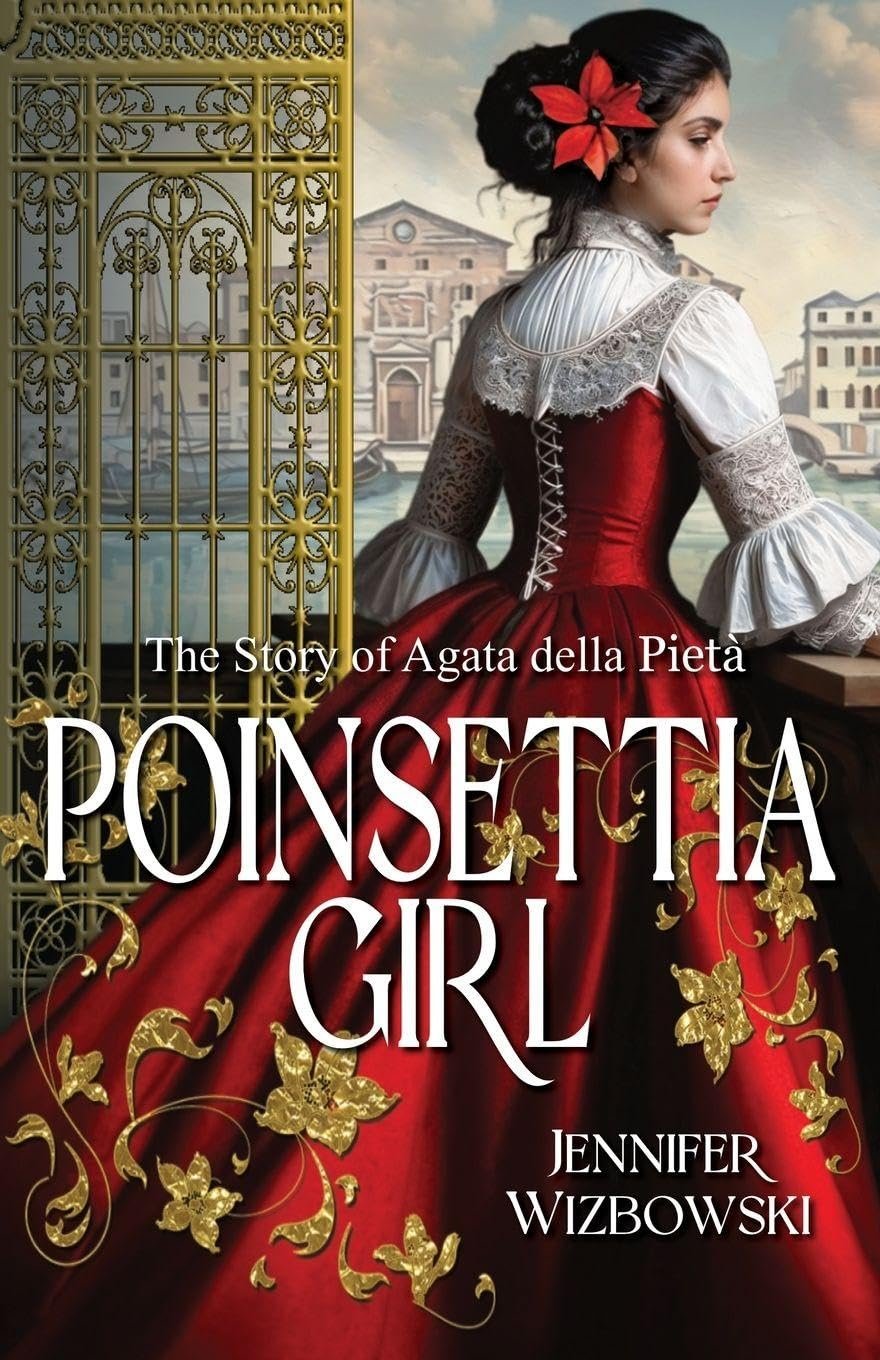
In Venice in 1710, Agata loses her mother and is brought to the Ospedale della Pietà, an institution whose cloistered female musicians attract fascinated audiences. The young girl’s talent offers a way to…
Books worth discovering. Authors worth knowing.
In Venice in 1710, Agata loses her mother and is brought to the Ospedale della Pietà, an institution whose cloistered female musicians attract fascinated audiences. The young girl’s talent offers a way to survive grief and to belong, but the novel’s later prospect of marriage creates a painful choice between a life shaped by music and another kind of…
Carefully sourced literary criticism and book-specific interpretation.
In Venice in 1710, Agata loses her mother and is brought to the Ospedale della Pietà, an institution whose cloistered female musicians attract fascinated audiences. The young girl’s talent offers a way to survive grief and to belong, but the novel’s later prospect of marriage creates a painful choice between a life shaped by music and another kind of freedom.
Music, refuge and restriction
Wizbowski’s premise contains a powerful ambiguity. The institution offers shelter, education and artistic possibility, but the grates behind which musicians perform also mark the limits of their autonomy. Music can be a means of self-making and a spectacle presented for others. Historical fiction becomes interesting precisely when it declines to call either condition uncomplicated liberation.
Two futures, neither uncostly
Agata’s childhood loss matters because her musical vocation is not an abstract sign of destiny. The public descriptions connect her ambition to what she must recover and remake after losing a family. The marriage proposal, too, resists simple classification: it might offer affection, mobility or social recognition, yet also ask her to surrender the community and artistry that sustained her. The novel is promising when read as a story about competing versions of belonging rather than a straightforward contest between love and career.
The responsibilities of historical invention
The historical person behind the novel was an orphan musician associated with the Pietà, but fiction necessarily supplies scenes and motives beyond the surviving record. The author’s treatment of that gap deserves close attention: how does she distinguish what can be known from what must be imagined? Public excerpts and reviews describe an immersive Venetian environment; that does not give us leave to certify every anachronism or detail without examining the whole text.
Why this premise matters
This is a compelling prospect for readers of historical fiction that treats art as both refuge and discipline. Its moral centre seems to be the refusal to make one woman’s choices easy from a modern distance. A full critical verdict would weigh the prose, the historical texture and the nuance with which the competing futures are rendered.
The complicated gift of an institution
Historical fiction about gifted girls frequently moves between two unsatisfactory extremes: the institution is either an uncomplicated prison or a sanctuary of pure self-realization. The Pietà seems especially resistant to either simplification. It could offer an orphan education, discipline, community and artistic possibility that society might otherwise deny her, while still determining where she could live and how her talent would be displayed. The iron grates familiar from descriptions of the singers hold those realities together in a single image. They separate performers from spectators, but they also enable a kind of fame that is both intense and oddly anonymous.
For Agata, music might therefore become an instrument of personal autonomy precisely inside an environment that limits other choices. This is the sort of contradiction historical fiction can animate better than a modern sermon. A writer can allow the reader to admire a young woman’s creative life while still noticing what she has surrendered or never been offered. The published description makes that tension central; a longer review would need to decide whether the narrative gives the institution and its guardians enough individuality to avoid making them symbols only.
Whose history can be recovered?
The documented historical Agata is not identical to the fictional child whose path Wizbowski imagines. The publicly available account explicitly describes a fictional construction built from fragments of a musical life and the better-understood culture of the Ospedale. This allows a novelist to restore emotional scale to a person who is often encountered through institutional records, but it creates a responsibility to distinguish researched conditions from inventions. The novelist’s freedom is considerable; so is the risk of writing a modern interior life that becomes too conveniently aligned with contemporary expectations.
One published historical-fiction review raises concerns about some details that may be anachronistic. It would be overstating the evidence to treat another critic’s observations as our firsthand findings, but it is useful to acknowledge them because they illuminate the difficulty of the task. Historical texture is not merely a collection of objects, dates and costumes. It shapes what people can imagine for themselves. The most convincing period fiction can make an unfamiliar set of choices emotionally intelligible without replacing it with a familiar set of twenty-first-century options.
Art, family and the price of choice
Agata’s late dilemma is powerful because neither side is contemptible. A marriage proposal could be interpreted as the return of a domestic life she lost in childhood, and longing for that life need not indicate weakness or a betrayal of art. Conversely, remaining with the music is not necessarily selfish ambition or a refusal of love. The girl who entered the institution grieving has grown into a woman whose sense of self may depend on the very discipline that once helped her survive. The narrative’s promise is to make that transformation understandable rather than to award the correct answer to one path.
Readers of literary historical fiction can bring this question beyond Venice. How does a person distinguish a genuine opening from a new enclosure when every option demands something irreplaceable? What happens when the people who offer care also control access to the world? In Poinsettia Girl, the book’s verified trajectory makes these matters unusually tangible. The evidence supports a strong recommendation of the premise for readers interested in women’s history and artistic vocation, while a fully decisive judgment must still engage with the voice and historical decisions of the novel itself.
The central artistic question, finally, is whether the novel can make the audience hear Agata rather than merely admire her. Her music is described as astonishing, but extraordinary talent is not the same as an intelligible inner life. For the choice between competing futures to have weight, the novel needs the texture of practice, loyalty and emotional attachment that makes each path difficult to abandon. That is the difference between an attractive historical premise and a deeply persuasive novel.
The review’s scope
This assessment is based on the identified bibliographic records and available author, publisher and bookseller descriptions. The interpretive claims above are editorial judgments about the documented premise and genre choices, not testimony to having read every chapter or inspected every illustration. The published text may answer, complicate or contradict the critical questions raised here. A finished review would assess the language, structure and ending directly.
About the book.
The title, author/contributor record, source URL and matching cover file ID come from the current MarketAnyBook Journal Queue and its Drive asset folder. The review considers historical coming-of-age fiction through verified available descriptions rather than firsthand full-book reading.
Unsponsored editorial book review based on publicly available bibliographic and descriptive evidence, with critical interpretation distinguished from verified book details.
Found a book worth opening?
Books worth discovering. Authors worth knowing.
Return to the Journal →