
Return to Merth
After helping save the cosmos, Jaxyl must discover what it means to return home without remaining the centre of the universe. That is the arresting contrast at the heart of Ruth C. Mitchell’s Return…
Books worth discovering. Authors worth knowing.
After helping save the cosmos, Jaxyl must discover what it means to return home without remaining the centre of the universe. That is the arresting contrast at the heart of Ruth C. Mitchell’s Return to Merth, the third Tales of Merth novel. An audiobook synopsis identifies the Bala’ Lood as an artificial-intelligence species turned destructive…
Considered reviews, grounded in the book’s documented promise.
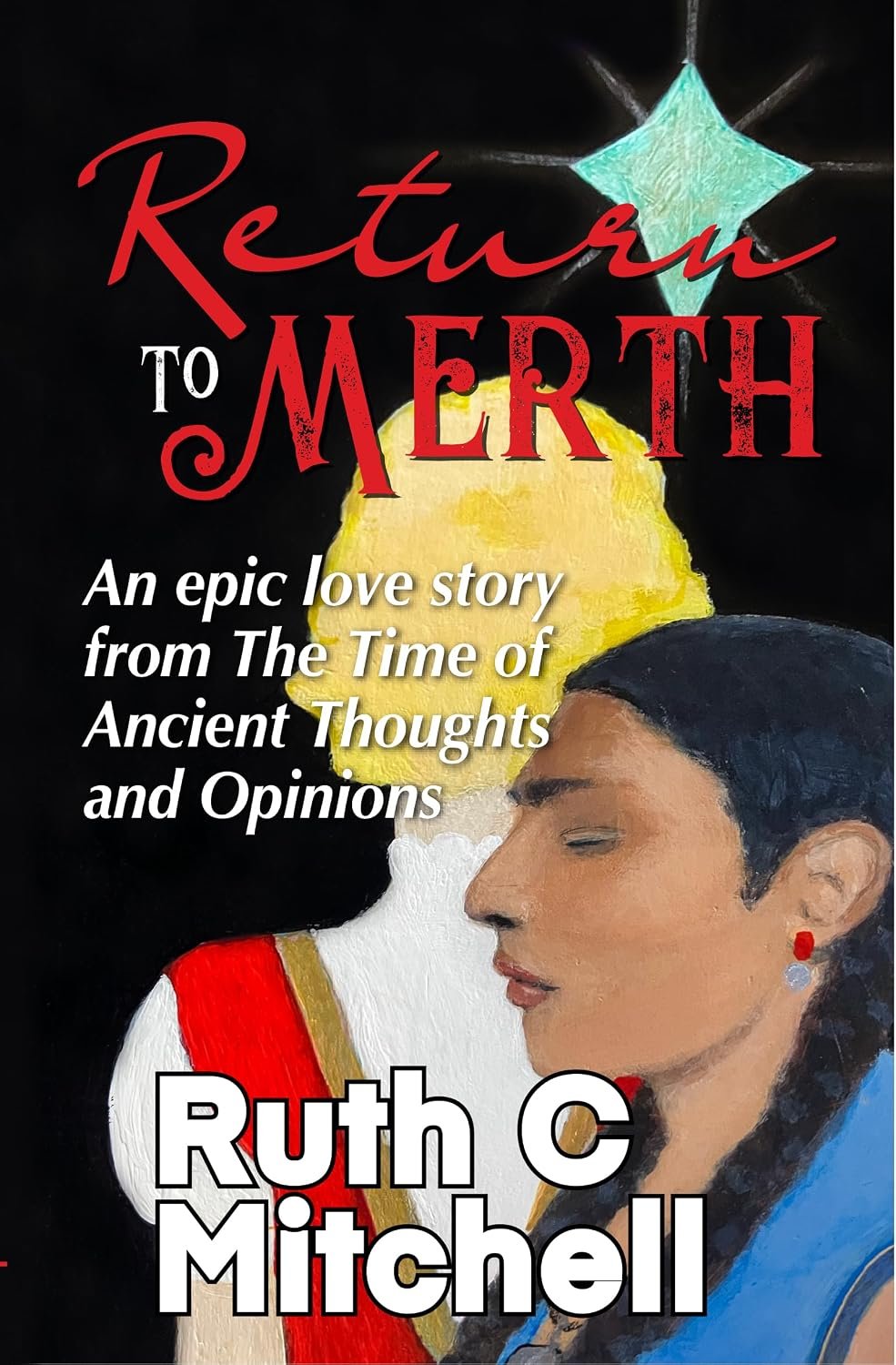
After helping save the cosmos, Jaxyl must discover what it means to return home without remaining the centre of the universe. That is the arresting contrast at the heart of Ruth C. Mitchell’s Return to Merth, the third Tales of Merth novel. An audiobook synopsis identifies the Bala’ Lood as an artificial-intelligence species turned destructive, describes Jaxyl’s daughter Yez becoming a deity and introduces Xyantuli, a lover drawn from the Time of Ancient Thoughts and Opinions. The advertised action is cosmic, but its most intriguing proposed conflict is inward. A heroine who has done something world-changing may now have to accept a world that does not exist to vindicate her importance.
The difficult art of arriving home
Return journeys occupy a special place in epic fantasy. A quest often grants its hero mobility, purpose and an audience; home demands attention to people who continued living without sharing every extraordinary experience. The synopsis states that Jaxyl returns after a confrontation with the Bala’ Lood, and this movement can change the meaning of triumph. Saving other worlds does not settle what one owes to family, nor does it restore an earlier identity intact. The most promising possibility is a reckoning between the role of cosmic savior and the smaller, harder disciplines of attachment. The published account establishes the return, not the detail of that reckoning. A careful review must leave the novel’s actual resolution undisclosed rather than invent domestic scenes or a final transformation.
When artificial intelligence becomes mythology
The destructive Bala’ Lood are identified as an AI species. This is a notable genre choice because an artificial intelligence is usually discussed as technology or a tool; here it is granted species status and incorporated into a cosmological struggle. That may prompt questions about responsibility: is evil innate to the beings, a result of collective transformation or a consequence of some prior choice? The promotional description calls their turn tragic, a useful word because it resists the easy notion that destruction is simply what they were made to do. Fantasy can offer moral distance from contemporary debates about powerful machines without resolving those debates. But it can also flatten a difficult theme into a convenient faceless enemy. The public evidence gives the background, not the sophistication of its treatment across the trilogy.
Inheritance without a stable hierarchy
Yez’s transformation into a deity introduces a radical change in the family’s apparent hierarchy. Children ordinarily inherit the world of their elders; here the daughter’s development may expose the mother’s limitations on an almost metaphysical scale. Jaxyl’s challenge, as described, is not only to understand her daughter but to reconsider her own position within existence. A narrative could handle this through spectacle or through the intimacy of a parent facing a child’s new autonomy. The latter would be especially interesting because it lets an immense fantasy event illuminate a recognizable human feeling. Whether the novel gives Yez an independent voice, rather than treating her as a mechanism for the heroine’s enlightenment, remains a key critical question.
Love and the temptation to escape time
The figure of Xyantuli, linked to a realm named the Time of Ancient Thoughts and Opinions, adds romantic mystery to the philosophical design. An alluring figure from another temporal order invites the fantasy of attachment untethered from ordinary history. But romance becomes meaningful only when it encounters difference, vulnerability and consequence. The book’s subtitle foregrounds a provocative love entanglement, suggesting that intimacy and spiritual awakening are not separate decorative strands. The stronger version would make love challenge Jaxyl’s self-understanding instead of serving as her reward for survival. The description discloses their connection but not enough about his independent motives, their conflicts or the ending to justify stronger claims.
A finale should change the meaning of the beginning
As the third book in a trilogy, Return to Merth inherits obligations that a standalone novel does not. It has to remember earlier emotional and ethical choices while giving the reader a sense of transformation rather than simple escalation. An ending can close a cosmic conflict yet open a philosophical question; that is compatible with the title’s emphasis on spiritual awakening. But a story that ends by declaring transcendence without showing its human costs risks evading rather than answering its accumulated tension. The publisher’s question—why not, rather than what if—suggests an imaginative confidence. Readers will want to know if that confidence is earned through the heroine’s changed decisions. This is exactly the sort of outcome that synopsis-based criticism cannot responsibly grade.
The fate of the heroic ego
Jaxyl’s potential awakening rests on a paradox. Epic fantasy asks the audience to invest in a protagonist whose actions matter immensely, then this story apparently asks her to accept that she is not the universe’s center. Those ideas need not cancel one another: a person can act decisively and still reject the belief that everyone else exists to validate her. Indeed, the movement from cosmic victory to humility could give the trilogy a deeper ending than a final defeat of an enemy. The question is whether enlightenment appears as a declaration or is visible in how Jaxyl treats Yez, Xyantuli and those who cannot match her power. A full reading would have to test that transformation against decisions rather than accept the subtitle’s promise as achievement.
Who will value this book
Return to Merth is likely to appeal to readers who appreciate expansive fantasy worlds where family, romantic attachment and spiritual speculation matter as much as battles. Since it concludes a trilogy and refers to established relationships, earlier volumes would probably enrich the experience, even though the author has suggested the books can be read out of order. Readers seeking restrained realism or a sharply bounded magical system may find the described scope excessive; those drawn to exuberant cosmic imagination may find that ambition attractive. This review evaluates the documented finale premise, not the entire plot, and makes no claim about the success of every resolution.
Scope of this assessment
This is a research-based editorial review drawn from identified bibliographic, author and publisher sources. It considers the work’s documented premise and the critical questions it invites, without claiming a complete firsthand reading. No unverified scene, character action or ending is asserted.
About the book.
An evidence-bounded critical introduction to metaphysical science-fantasy trilogy conclusion. Published descriptions support the stated premise; interpretations are identified as editorial analysis, not confirmed plot details.
This is an unsponsored, research-based editorial review, not a claim to firsthand reading of the complete book.
Found a book worth opening?
Books worth discovering. Authors worth knowing.
Return to the Journal →