
The Soul's Evidence
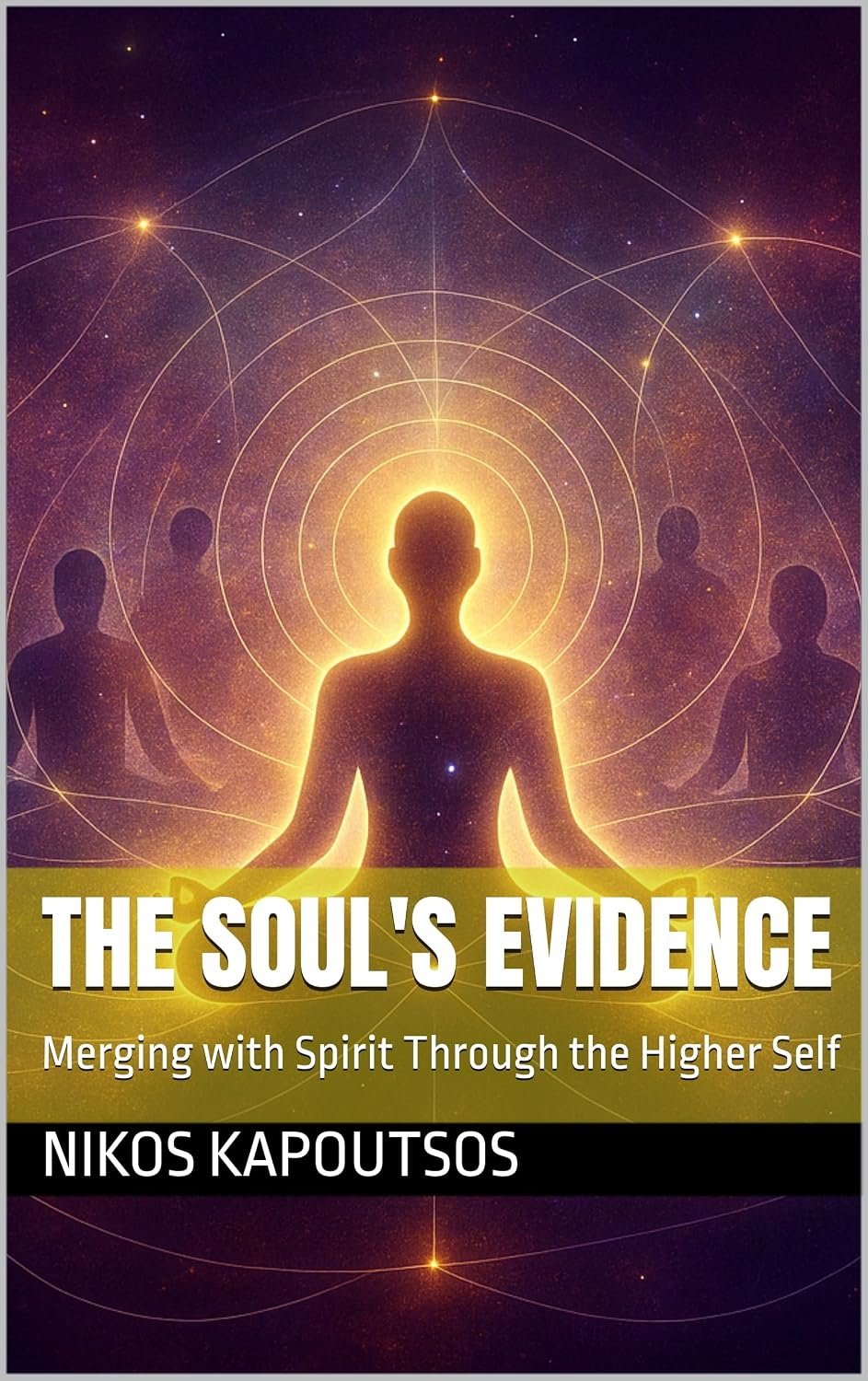
The Soul’s Evidence proposes that the deepest form of knowledge may begin with an altered relationship to one’s own awareness. Nikos Kapoutsos’s subtitle, Merging with Spirit Through the Higher…
Books worth discovering. Authors worth knowing.
The Soul’s Evidence proposes that the deepest form of knowledge may begin with an altered relationship to one’s own awareness. Nikos Kapoutsos’s subtitle, Merging with Spirit Through the Higher Self, announces a spiritual framework rather than an empirical treatise. The accompanying audiobook description presents inner awareness as a bridge toward…
Considered reviews, grounded in the book’s documented promise.
The Soul’s Evidence proposes that the deepest form of knowledge may begin with an altered relationship to one’s own awareness. Nikos Kapoutsos’s subtitle, Merging with Spirit Through the Higher Self, announces a spiritual framework rather than an empirical treatise. The accompanying audiobook description presents inner awareness as a bridge toward purpose and transformation. The serious question for this kind of work is how a reader should understand the word “evidence.” Does it mean private experience, philosophical argument, testimony, or proof in the ordinary scientific sense? Those are different claims, and an honest evaluation cannot treat them as interchangeable.
What a higher self can mean
In many contemplative traditions, the language of a higher self points toward a perspective that feels less dominated by habit, fear or constant self-judgment. Such language can be practically useful as a metaphor even when a reader does not share the author’s metaphysical beliefs. The book’s description promises an exploration of inner awareness, and that promise may be approached as an invitation to reflect on attention and values. It does not establish that a separate spiritual entity has been demonstrated. A professional review must keep the distinction visible. Otherwise the intensity of an experience could be mistaken for public verification of an explanation attached to it.
The seduction of absolute clarity
Spiritual guidance often emerges from dissatisfaction with the noise of ordinary thought. It can offer relief by suggesting that behind the mind’s argument lies a more stable witness. That is a potentially fertile idea, but it can become dangerous when uncertainty is treated as a personal defect. A persuasive book should give seekers permission to question their experiences, change their minds and retain responsibility for everyday decisions. The synopsis is too limited to confirm how Kapoutsos handles skepticism or spiritual authority. Readers should therefore approach its framework as one proposed interpretation among many, without mistaking an affirmative marketing description for a critical demonstration.
The book as an experiential invitation
The description of the audiobook as a multi-chapter inquiry may suggest a reflective structure, but its details do not establish the print edition’s exact layout. Critical attention should focus on what the author asks readers to do. Are claims explained in language that can be examined? Are exercises distinct from promises of revelation? Does the book distinguish metaphor from metaphysics? None of those outcomes is settled by the listing. Still, the framing around purpose and awareness gives the work an intelligible audience: people who wish to consider the role of consciousness in meaning-making.
A responsible boundary for spiritual nonfiction
A book can enlarge the imagination without claiming to replace psychological care, medical attention or empirical research. The most fruitful reading mode is contemplative generosity combined with intellectual discrimination. The title may encourage readers to examine their inward lives with patience; it should not be treated as independent proof of supernatural realities. That modest standard is not an attempt to reduce spirituality to psychology. It recognizes that private conviction, symbolic insight and public fact operate under different conditions.
Who will value this book
Appropriate for readers exploring spiritual self-inquiry and the “higher self” vocabulary, but not for readers seeking established scientific proof of mystical claims. This is a limited-source critical orientation based on a clearly identified audiobook description, with detailed textual evaluation still pending.
Scope of this assessment
This is a research-based editorial review drawn from identified bibliographic, author and publisher sources. It considers the work’s documented premise and the critical questions it invites, without claiming a complete firsthand reading. No unverified scene, character action or ending is asserted.
About the book.
An evidence-bounded critical introduction to contemplative spirituality and self-inquiry. Published descriptions support the stated premise; interpretations are identified as editorial analysis, not confirmed plot details.
This review concerns a book marked sponsored in the current MarketAnyBook queue. Sponsorship is disclosed, and all observations remain research-based. The audiobook description is verified; its chapter count should not be assumed to describe this exact ebook edition. No clinical or scientific efficacy claims verified.
Found a book worth opening?
Books worth discovering. Authors worth knowing.
Return to the Journal →