
Love, Lust, & Other Hopeless Things: A poetry compilation
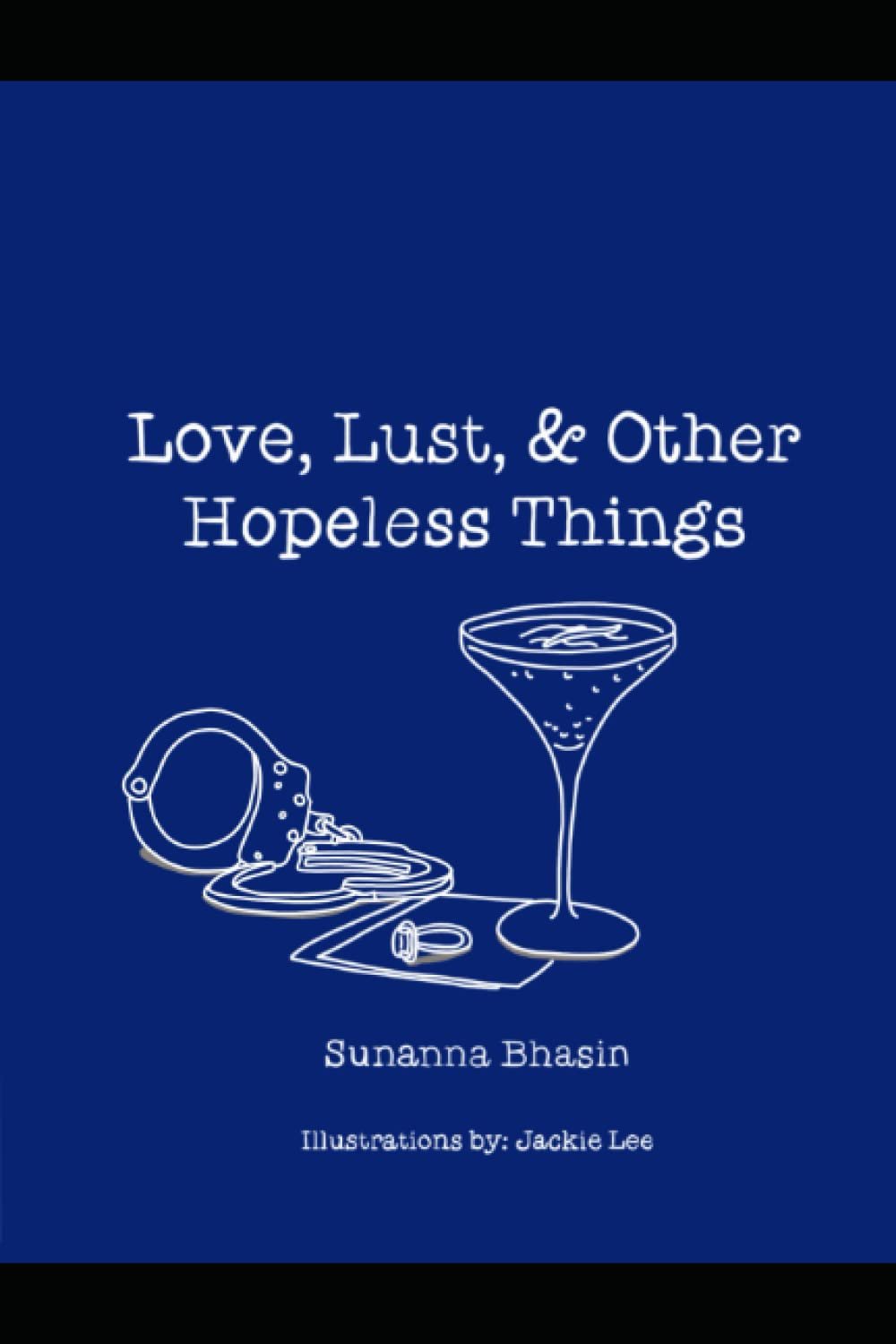
Love, Lust, & Other Hopeless Things identifies itself as a poetry compilation, with Sunanna Bhasin credited for the writing and Jackie Lee for illustrations. The three-part movement of its…
Books worth discovering. Authors worth knowing.
Love, Lust, & Other Hopeless Things identifies itself as a poetry compilation, with Sunanna Bhasin credited for the writing and Jackie Lee for illustrations. The three-part movement of its title—attachment, appetite and a more rueful category of emotional difficulty—offers a recognizable lyrical territory, but a title is not a substitute for poems…
Considered reviews, grounded in the book’s documented promise.
Love, Lust, & Other Hopeless Things identifies itself as a poetry compilation, with Sunanna Bhasin credited for the writing and Jackie Lee for illustrations. The three-part movement of its title—attachment, appetite and a more rueful category of emotional difficulty—offers a recognizable lyrical territory, but a title is not a substitute for poems. Without a reliable selection of lines, it would be professionally irresponsible to claim to have assessed the work’s imagery, prosody, arrangement or voice. The honest starting point is a question about what contemporary love poetry can do when it refuses to pretend that intimacy is always redemptive.
Love as an unsettled word
The word “love” is so heavily used in poetry that it can become a shortcut rather than a discovery. A strong poem makes the familiar word strange again by locating it in a particular gesture, embarrassment or contradiction. The inclusion of “lust” beside it suggests that this collection may be interested in the gap between idealized feeling and bodily desire. But that suggestion cannot certify the poems’ emotional range. The decisive evidence would be the lines themselves: the diction, sensory precision and degree of ambiguity with which a speaker distinguishes wanting someone from understanding them.
The wit of the hopeless
Calling some feelings “hopeless things” can indicate melancholy or a form of comic self-awareness. Poetry is capable of both at once. A title that treats love as part of a catalog of impossible pursuits might allow the speaker to question sentimental conventions without dismissing the importance of connection. It might equally lapse into familiar declarations that do not earn their intensity. Only the sequence and individual poems can establish which. A reviewer should be particularly alert to variation: emotional repetition is not necessarily artistic repetition, but a collection must give recurring concerns changing shapes if it is to sustain interest.
An illustrator changes the reading
The official credits name Jackie Lee as illustrator, making the edition potentially a collaboration between verbal and visual expression. Illustrations can complicate a poem’s surface meaning, introduce narrative details or create pauses that leave the words resonating differently. The relationship cannot be assessed through a cover listing. A proper review would examine how images and verse share space on the page and whether illustration extends rather than merely echoes the speaker’s feeling. Until sample pages are available, claims about visual style should be withheld.
A useful but incomplete invitation
The title may appeal to readers who favor short, emotionally direct poetry about desire, loss and the vulnerability of caring for another person. It is not possible to decide whether the collection’s particular voice is sharp, tender, clichéd or formally inventive from the bibliographic record alone. Resisting that temptation is part of treating poetry seriously. Poems are made of words chosen and placed, not just of themes announced in advance.
Who will value this book
This short entry is a provisional orientation, not a professional assessment of the poems themselves. Before publication, the editor should obtain representative poems and page images, confirm the contributor roles, and write a genuine close reading of the text.
Scope of this assessment
This is a research-based editorial review drawn from identified bibliographic, author and publisher sources. It considers the work’s documented premise and the critical questions it invites, without claiming a complete firsthand reading. No unverified scene, character action or ending is asserted.
About the book.
An evidence-bounded critical introduction to poetry of love and intimate disillusionment. Published descriptions support the stated premise; interpretations are identified as editorial analysis, not confirmed plot details.
This is an unsponsored, research-based editorial review, not a claim to firsthand reading of the complete book. No dependable excerpts or poem texts located; refrain from rating poetic quality, rhyme or illustration on the basis of title metadata alone.
Found a book worth opening?
Books worth discovering. Authors worth knowing.
Return to the Journal →