
A Book of Kisses: Love Poems from the Heart
Cameron Roy’s collection presents love through poetry, with a foreword credited to Shara Morales.
Books worth discovering. Authors worth knowing.
Cameron Roy’s collection presents love through poetry, with a foreword credited to Shara Morales.
Source-based review: verified bibliographic facts and independent interpretation, without a claim to full-text reading.
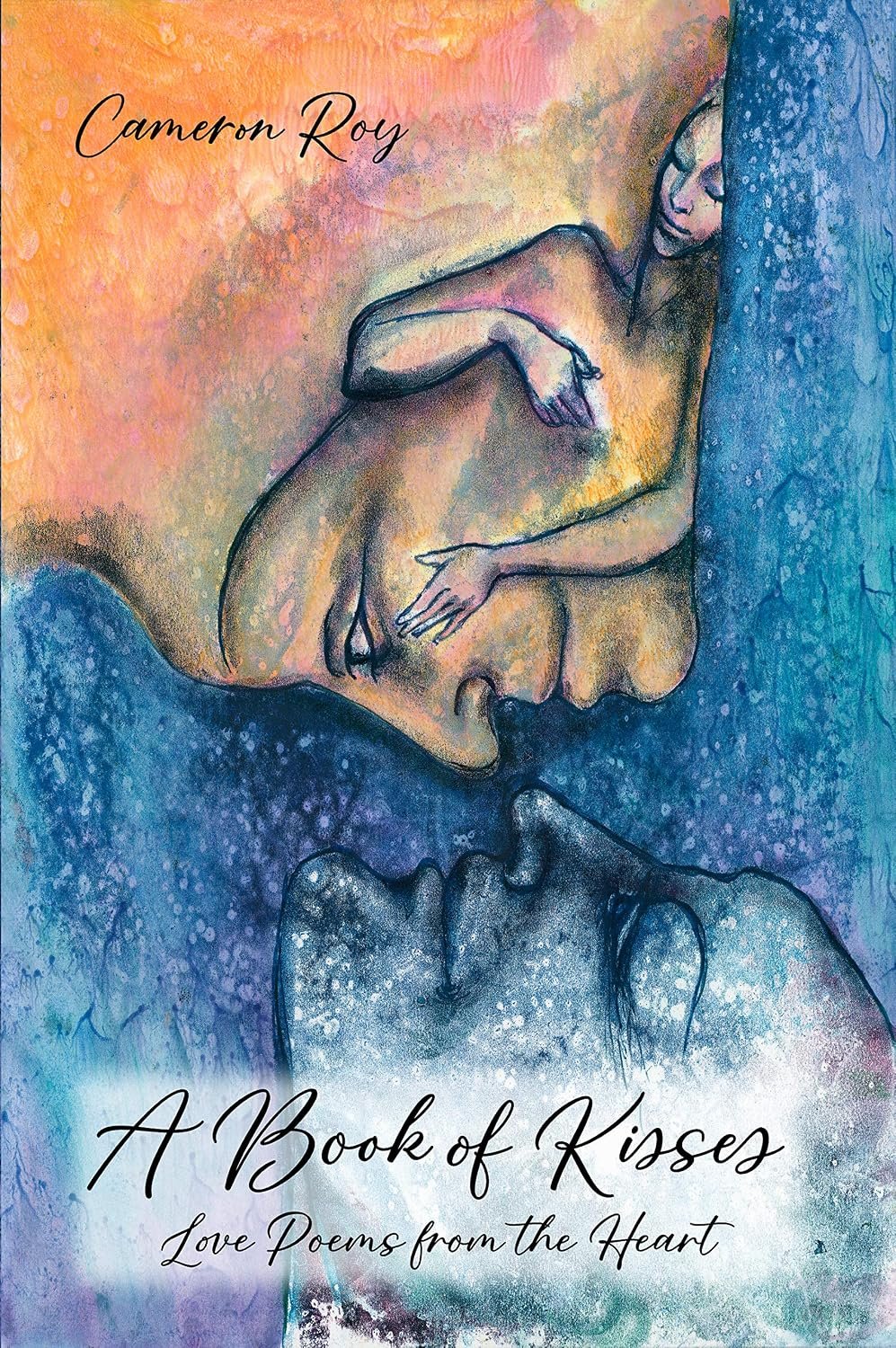
A Book of Kisses: Love Poems from the Heart by Cameron Roy, with a foreword credited to Shara Morales, announces a modest and generous literary territory. It is a collection of love poems, and its title places the kiss at the centre of a language of affection. The verified cover uses a warm, expressive illustration with figures drawn close to one another; its imagery makes the physical gesture feel intimate without telling us which particular relationships the poems describe. Because an accessible collection preview has not been established, this review evaluates the promise and reading context of the book rather than inventing lines, forms, or poetic techniques supposedly found inside it.
The kiss as a literary image
A kiss can signify greeting, longing, reconciliation, desire, farewell, gratitude, or vulnerability. In poetry, that flexibility is useful because one small action can hold emotions too complex for literal explanation. Roy’s title suggests a collection interested in the gesture’s expressive potential. It does not prove that the poems cover every one of those meanings. Instead, it gives the reader a question to take into the book: what happens when affection becomes visible through a concrete human action? There is a long tradition of lyric poetry turning brief contact into an extended thought about intimacy and absence. A collection centred on kisses can join that conversation without needing grand declarations in its title.
The subtitle Love Poems from the Heart also asks for a certain kind of reading. It gestures toward sincerity rather than irony, inviting someone to approach the poems as expressions of feeling. Sincerity alone is not a formal achievement; good poems also depend on diction, rhythm, particularity, and surprise. But it is a meaningful promise about the intended emotional relationship between writer and audience. The most revealing test for a reader will be whether the language gives love an individual shape rather than repeating familiar phrases. Without a verified excerpt, it would be dishonest to announce in advance how successfully Roy accomplishes that task.
Intimacy without a fabricated story
A collection of poems does not have to offer a plot or a continuous cast. Sometimes a sequence creates movement through recurring moods; sometimes each piece stands alone. We do not have a contents list proving which arrangement this edition uses. That absence matters because it would be easy to manufacture a narrative of first love, separation, or reunion merely from the cover image. A responsible review resists doing so. What can be discussed is the invitation created by the packaging: readers are asked to open a space devoted to affection and the vulnerability involved in communicating it.
The cover’s close figures may remind viewers of a private moment captured in colour. This is a visual interpretation, not evidence about the poems’ speakers. Cover art can establish mood before a first page is read, and here the mood appears warm, embodied, and reflective. Readers who appreciate art and poetry together may take pleasure in how the exterior frames a possible experience. They should also remain free to discover that the interior has a different range or emotional temperature. A cover is an introduction, not a substitute for the poems themselves.
What to listen for in love poetry
Love poems are sometimes dismissed as straightforward, yet the form can handle difficult contradictions. A poem about affection may ask for closeness while recognizing that another person cannot be possessed. It may celebrate a moment precisely because the moment will end. These are useful critical lenses to bring to the title, but not claims that Roy discusses those subjects. Readers can pay attention to whether the speaker makes room for the beloved as a fully realized person, how often sensory detail replaces abstract sentiment, and whether emotional intensity changes from one poem to the next.
Reading poetry aloud is another way of assessing its movement. Repetition can create a pulse; pauses can change an ordinary sentence into a confession; a line break can make an image linger. Because the text of this edition is not available for verification, no meter, rhyme scheme, or formal pattern can be attributed to the book here. The point is simply that an emotionally direct collection deserves to be judged as poetry, not only by agreement with its feelings. Beautiful intentions and effective language are related but not identical.
The foreword as an additional voice
The bibliographic record identifies Shara Morales as the contributor of a foreword. A foreword can give a reader a reason to pay attention before the main work begins. It may offer context, personal recognition, or a statement of what the contributor finds significant. We have no verified text for Morales’s foreword, and it would be wrong to claim she praises particular poems or describes a specific relationship with the author. Her credited role is nevertheless part of the book’s identity. It distinguishes this edition from a cover showing only a title and one writer’s name, while preserving the boundary between an attributed contribution and its unknown contents.
For someone choosing a poetry collection as a gift, the presence of a foreword and the explicit declaration of affection may help set expectations. Yet a gift book should not be reduced to ornament. It can invite slow reading: a single poem at breakfast, a return to an image on another day, or a conversation about what a word such as love means to different people. The experience is not guaranteed; it depends on the work itself and the person receiving it.
Who might want to open it
A Book of Kisses is an inviting prospect for readers who deliberately seek romantic verse, especially those who appreciate a direct, heart-centred presentation and cover art that signals tenderness. It may suit someone exploring contemporary independently published poetry or choosing a small literary gift rather than a lengthy narrative. Readers looking primarily for experimental poetics, scholarly commentary, or a documented cycle about a specific historical relationship cannot infer those qualities from the available sources. The sound approach is to sample the poems, if an edition preview becomes available, and make a decision based on voice and language. Those who respond to lyric intimacy may find the book’s announced subject appealing even before knowing its precise formal range.
The identified edition is credited to Cameron Roy and Shara Morales, and bibliographic listings also record a 2019 print version. No claim is made here about the number of poems, their order, autobiographical authenticity, or any quoted line. The collection’s central promise remains clear without embellishment: to make room for love through verse. That is a simple premise, but simplicity can give poetry a demanding task—to make a feeling recognizable while still allowing it to feel newly spoken.
About the book.
Cameron Roy’s collection presents love through poetry, with a foreword credited to Shara Morales. Review framing reflects documented descriptions and clearly limited sources.
Sponsored book: the MarketAnyBook source queue marks this listing as sponsored. This is a research-based review-style editorial discussion and not an assertion that the writer read the complete book. When interior text was unavailable, analysis of themes or possible reading questions is explicitly interpretive and not presented as documented plot.
Found a book worth opening?
Books worth discovering. Authors worth knowing.
Return to the Journal →