
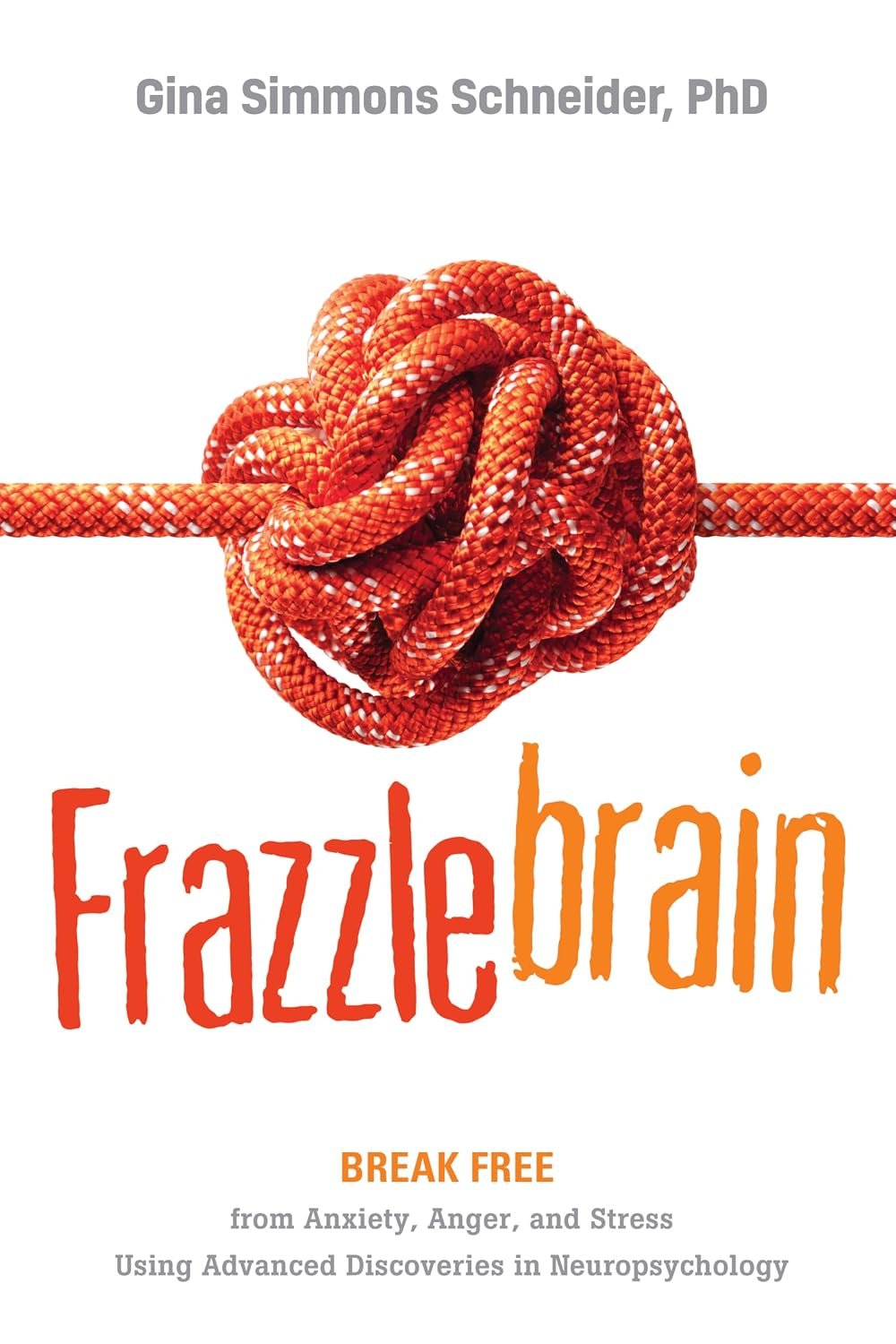
Frazzlebrain
Gina Simmons Schneider examines stress, anxious thinking and anger through an accessible psychology framework with exercises and cases.
Books worth discovering. Authors worth knowing.
Gina Simmons Schneider examines stress, anxious thinking and anger through an accessible psychology framework with exercises and cases.
Original editorial perspective, grounded in the identified book and edition.
There is a particular exhaustion in feeling busy even when nothing seems to get finished. Decisions multiply, small frustrations acquire disproportionate force, and the mind continues rehearsing tomorrow’s problems long after the day ought to have ended. Gina Simmons Schneider calls attention to this familiar state in Frazzlebrain, a nonfiction guide concerned with anxiety, anger and stress. Its publisher describes a combination of clinical experience, neuropsychological research, practical exercises and cases. The book’s central invitation is not to eliminate life’s demands, an impossible promise, but to examine how responses to those demands might become more flexible.
Putting a name to mental overload
“Frazzled” sounds informal, almost comic, yet it can name a genuine felt experience: attention stretched across obligations, irritability close to the surface, and uncertainty about which task deserves priority. The book’s title connects that everyday vocabulary with the brain, without requiring readers to approach the subject as a technical textbook. This choice has editorial significance. A subject framed entirely through diagnoses might exclude people who recognise persistent pressure but have no reason to adopt a clinical label. A more recognisable entry point permits a conversation about stress before the reader decides what kind of support they need.
The publisher’s description places work, health, family and friendships among the competing demands that can accumulate. Their coexistence matters. Stress does not necessarily arrive as one dramatic event; it can come from ordinary responsibilities that are each reasonable in isolation. One useful reading question is whether the book helps readers distinguish pressures they can change from those they must navigate. The quality of a coping guide often rests on that distinction. Without it, encouragement to become calmer can accidentally sound like an instruction to tolerate unreasonable circumstances indefinitely.
Why anxiety and anger belong in the same conversation
At first glance, worry and anger seem like opposites. Anxiety often faces an uncertain future; anger appears to protest something that has already gone wrong. Yet both can become entangled with threat, perceived loss of control and repetitive thinking. Schneider’s published framework explicitly brings anxiety, anger and stress together. This does not mean the feelings are interchangeable or that everyone experiences them in the same way. It suggests a useful direction for readers: pay attention to the patterns that connect a particular reaction to the situation around it.
There is also a cultural temptation to sort emotions into acceptable and unacceptable categories. People may apologise for anger before considering whether a boundary was crossed, while describing anxiety as conscientiousness because it drives preparation. A thoughtful guide can resist such shortcuts. Feeling angry is not the same as behaving aggressively; feeling anxious is not evidence that danger is real. The book is presented as offering ways to soften responses to stress and temper hostile or cynical thinking. Those aims are most persuasive when they leave room for legitimate pain, conflict and complexity.
Moving from self-criticism toward inquiry
One of the specifically advertised areas of Frazzlebrain is toxic self-criticism. That is an important inclusion because a person already overwhelmed can interpret a difficult day as proof of personal failure. The resulting cycle adds a second burden to the first: the original problem remains, and now there is shame about not handling it perfectly. Readers may find it useful to ask whether a thought supplies relevant information or merely delivers a punishment. The question is simple to state and harder to practise, especially when high standards have long been mistaken for self-respect.
Not every critical thought is useless. Sometimes an honest appraisal identifies a missed commitment or an avoidable mistake. The challenge is to make evaluation specific enough to guide the next action. “I should correct this error” leaves room for a remedy; a sweeping verdict on the whole self does not. The publisher describes practical self-improvement skills alongside research and examples, which suggests a book interested in changing habitual responses rather than offering comforting slogans alone. The exact exercises must be consulted in the book; this feature does not reproduce or independently certify them.
What a neuroscience frame can and cannot promise
References to the brain can make an approach sound authoritative, particularly in a culture hungry for explanations that seem both scientific and immediately useful. Schneider’s background as a licensed therapist and her stated professional experience give readers a specific reason to inspect her account carefully. They do not remove the need for judgement about how individual research findings apply to different people. The publisher positions neuropsychology as an important foundation for the guidance. Readers will benefit from treating that foundation as something to understand and question, not as a guarantee that every suggested technique will work universally.
A responsible approach to psychology books also recognises that a person’s circumstances matter. Sleep, finances, illness, caregiving responsibilities, discrimination and safety can all affect the experience of stress. Personal exercises may be valuable while not replacing changes in environment, relationships or professional care. This editorial feature does not make medical claims about the book’s interventions. It highlights the more durable question the description raises: how might knowledge about patterns of response improve a person’s ability to make choices under pressure, without pretending that choice alone solves every problem?
The case for exercises rather than inspiration alone
The publisher says the chapters include exercises, illustrative cases and skills. That practical structure is worth noticing. An uplifting idea can feel convincing while the reader sits comfortably with a book, then disappear when an argument begins or a deadline arrives. Exercises are an attempt to bridge that gap. They ask for attention, repetition and reflection; the reader must decide whether a proposed practice is appropriate and whether it brings useful change over time. The presence of activities does not establish their effectiveness, but it creates an opportunity for the reader to become more than a spectator.
Similarly, case examples can make abstract principles intelligible. They can show why two people respond differently to apparently similar pressures, or why the same person behaves differently depending on context. Their limits should stay visible: an example is not a controlled study, and a vivid story cannot prove a universal result. The most useful way to read such material is to look for questions it prompts about one’s own situation, while leaving room for differences. A reader need not see themselves in every illustration to gain something from the broader discussion.
Hope without the burden of compulsory optimism
The book’s promotional description includes cultivating hope, kindness, positive experience and resilience. These are appealing destinations, but they can become hollow when treated as mandatory moods. Hope may be an ability to imagine a different next step, not a belief that all outcomes will be favourable. Kindness may include setting limits rather than endlessly agreeing. A calmer response can coexist with a serious objection to something harmful. These distinctions give a reader useful questions with which to test any self-help framework: does it make room for grief, uncertainty and justified disagreement?
Schneider’s declared goal of helping readers become less captive to stressful reactions has a modest, compelling version: increased room between what happens and what happens next. Even brief moments of perspective can matter, though no book can promise them on demand. The published material offers a practical orientation; it cannot by itself confirm what a particular reader will experience. Approached with curiosity rather than a demand for instant transformation, Frazzlebrain may be most useful as a structured invitation to observe the habits that make already difficult days harder.
Who may want to read it
Readers who frequently feel pulled between obligations, regret sharp responses or notice that self-criticism amplifies daily tension may be interested in this guide. It also has a clear audience among people who prefer exercises and case-based explanations to purely inspirational language. The publisher’s framing suggests accessible psychology rather than a specialist research monograph, though anyone looking for precise clinical evidence should inspect the book’s citations and methods. Readers living with substantial anxiety, anger or distress should not treat a commercial book as a diagnosis or replacement for qualified, individual care. A good fit is someone willing to try reflective practices thoughtfully while remaining sceptical of one-size-fits-all promises.
Gina Simmons Schneider is identified by her official book site as a psychotherapist, trainer and author; Central Recovery Press is named as the publisher of the 2022 book. Those factual details support the attribution here. The larger value of Frazzlebrain lies in a question bigger than any single technique: what becomes possible when a person treats a stressful reaction as something to understand, rather than a permanent description of who they are?
About the book.
Gina Simmons Schneider examines stress, anxious thinking and anger through an accessible psychology framework with exercises and cases. The original queue purchase URL points to the intended edition.
Independent editorial feature: this is an original research-based introduction, not a firsthand review of the complete book. The supplied purchase URL is preserved, while the WordPress cover image will be supplied later by the owner’s publisher. Details unavailable in the cited sources have not been invented. No medical guidance or result is promised; psychological techniques require individual judgement and appropriate professional support.
Found a book worth opening?
Books worth discovering. Authors worth knowing.
Return to the Journal →