
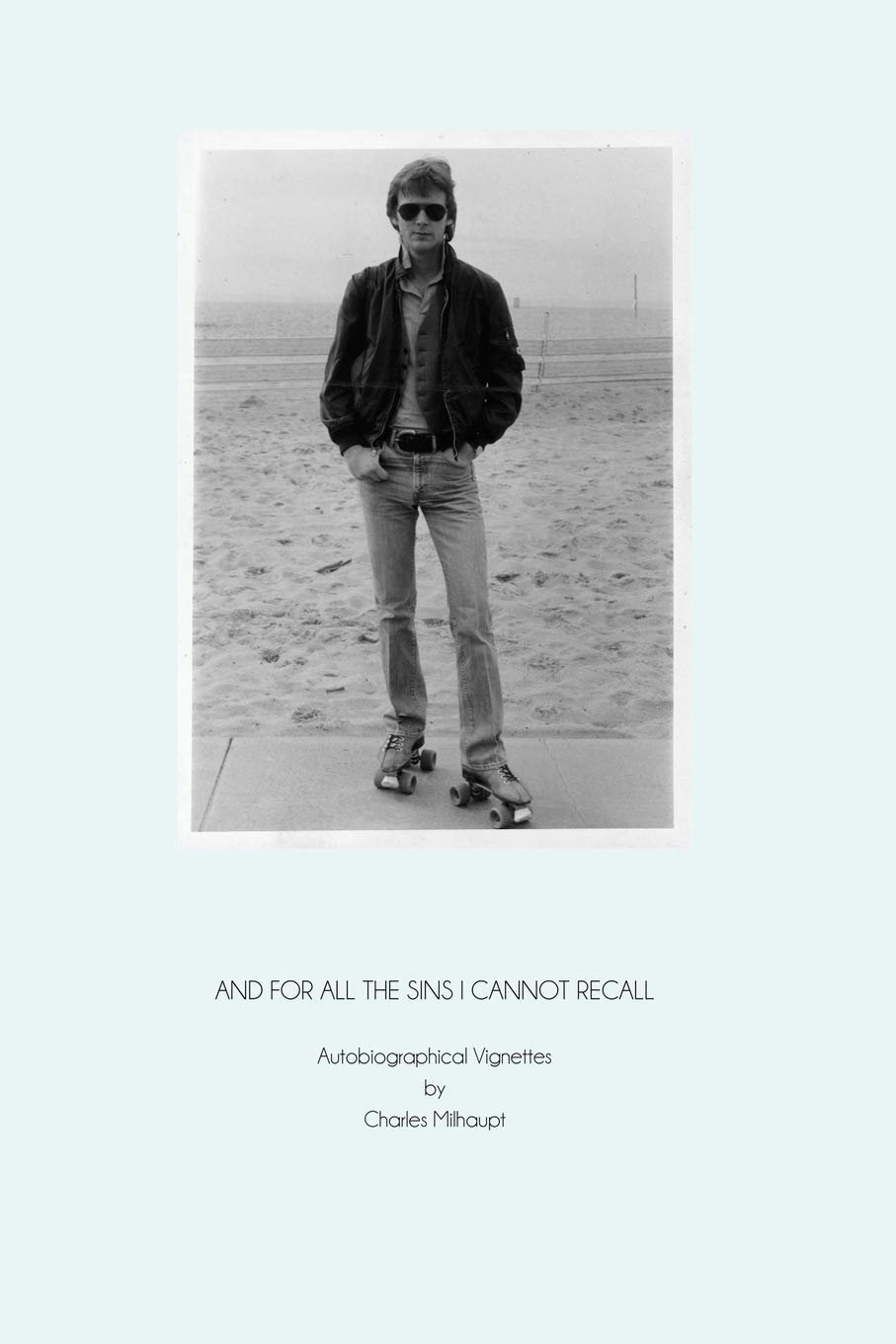
And for All the Sins I Cannot Recall
A storyteller’s autobiographical memories reach readers through a posthumous edition prepared by his sister and editor.
Books worth discovering. Authors worth knowing.
A storyteller’s autobiographical memories reach readers through a posthumous edition prepared by his sister and editor.
A sister-editor’s firsthand publication account grounds this feature without claiming to quote unseen vignettes.
A life returned to its own words
Some books have an unusual publishing history that becomes inseparable from the reading experience. And for All the Sins I Cannot Recall: Autobiographical Vignettes is one of them. Its author, Charles M. Milhaupt, died long before the memoir appeared in print. In an account of the publication, his sister and editor, Merimee Milhaupt Moffitt, describes recovering and publishing his writing more than two decades after his death. That gives these autobiographical pieces an added significance. They are not contemporary recollections polished to meet a new public moment, but a voice carried forward by someone who knew the storyteller. Readers encounter both the author’s recollections and the care involved in preserving them.
The word “vignettes” matters. A life written in short remembered episodes can resist the orderly progress of conventional autobiography. Memories do not always arrive in the order that a résumé would put them. An apartment, a conversation or a celebration can suddenly reveal a relationship, a fear or a whole social world. Moffitt’s publication essay remembers her brother as an entertainer and storyteller; she also names particular places from his past, including a Los Angeles house and later life in New York. The public account gives readers a feeling for the memoir’s environment without licensing invented details about the book’s individual passages.
Editing as an act of trust
When a writer can no longer approve edits or explain intentions, a posthumous publication carries ethical questions. What should an editor preserve when an anecdote feels dated? How should a reader hear jokes, contradictions and omissions from another time? Moffitt identifies herself as both the author’s sister and the person responsible for bringing the book to publication. Her account emphasizes presenting his own words. That is an important piece of provenance, though it does not make the memoir an unmediated transcript of every event it describes. Personal recollection, selection and editorial preparation still shape the artifact that reaches a reader.
There is a difference between allowing a voice to retain its personality and asking that voice to stand in for a historical era. A memoir can be a vivid witness to what its author believed and experienced while remaining partial. In particular, details about the people appearing in it need not encompass their full stories. Readers should approach the book with curiosity about perspective: what does Milhaupt choose to remember, and why might an apparently casual anecdote matter to him? That kind of reading can appreciate humor without losing sight of the fragility of personal memory.
A Los Angeles and New York life remembered
In her article, Moffitt describes a brother with connections to the entertainment world and vivid memories of houses and friendships in Los Angeles. She recalls a distinctive modern home in Silver Lake and an unusual encounter with another man sharing the name Charles Milhaupt. Her account presents her brother as someone who delighted in the absurdity and richness of everyday life, even amid circumstances that could be painful. Those biographical recollections help place the memoir, but they should not be mistaken for a list of episodes verified to appear exactly as retold in the published book. The article speaks to its history; the autobiography speaks with the author’s own selected voice.
The cities themselves have an important literary role in memoir. Los Angeles can represent an industry built on visibility and reinvention, while New York can offer a different culture of friendship, work and anonymity. Those contrasts are interpretive possibilities, not claims that Milhaupt organizes his vignettes around a formal comparison. The meaningful material is the relationship between setting and self: rooms, workplaces, gatherings and addresses often hold a version of the person who once inhabited them. Such memories can reveal more about change than a sequence of career milestones ever could.
Remembering amid illness and stigma
Moffitt’s account is also candid about her brother’s experience of HIV and the social conditions of the time. She remembers learning about his positive status when their father was gravely ill, and she describes the subsequent years with affection and grief. Because this is sensitive personal history, an editorial feature should do no more than state what a family member has made public; it should not speculate about medical care, relationships or the course of anyone’s illness. The existence of HIV stigma in that period is part of a broader history, but the singular life at the center of this memoir cannot be reduced to a diagnosis or a lesson about it.
Readers approaching work shaped by the AIDS era may carry expectations of tragedy. Moffitt insists on humor, energy and friendship alongside loss. That is not an argument that suffering was slight; it is a recognition that a person lived a complex life during difficult times. Autobiographical vignettes are often especially effective at preserving such contradictions. Someone can be afraid and witty, vulnerable and fiercely social, ordinary and extravagant, sometimes within the same recollection. The book’s posthumous form underscores why preserving a person’s particular language and rhythm matters.
Why fragmentary memories can feel complete
A memoir divided into episodes can leave gaps that no writer could honestly fill. Rather than treating those gaps as failures, a reader may see them as evidence of a life too broad to capture exhaustively. A name appears, a relationship changes, a door opens onto another year. In a good vignette, the smallest event may offer a more durable impression than a grand pronouncement. That is a way to consider the form promised in the subtitle, not an assurance about the quality or contents of passages we have not directly examined.
The book’s title adds another layer. “Sins I cannot recall” has an ironic sound: it gestures toward what memory retains, what it forgives and what it allows to remain unresolved. Without attributing a specific argument to the text, a reader can ask whether confession must always be solemn. Humor may be a means of truth-telling, evasion, companionship or all three. Someone else’s remembered antics can become serious literature not by abandoning their liveliness but by recording it. The title makes room for a playful conversation about accountability and the limits of retrospective certainty.
Family, legacy and the long route to publication
Moffitt writes that she and her brother had talked about his memoir while he was working on it. She later searched for the writing during a period of mourning and eventually helped it appear in print. The interval is not merely a publishing footnote. It invites reflection on how unfinished promises and private manuscripts can remain active within a family long after their author is gone. Editing such a book might involve practical tasks—organizing material, making production decisions, keeping names and places coherent—but it also means deciding how to introduce someone to readers who never met him.
That dual perspective offers two ways into the work. One can read the anecdotes for the craft of an entertaining autobiographical storyteller. One can also read the collection as a memorial object: a piece of cultural history passed forward through affection and responsibility. The second framing should not eclipse the first. Milhaupt’s identity as an author deserves recognition independent of the moving circumstances of publication. Readers are invited to listen for a voice rather than merely applaud the effort to preserve it.
Who should read this memoir?
And for All the Sins I Cannot Recall may appeal to readers of episodic memoirs, oral-history-like personal storytelling, queer cultural history and writing about the social worlds of late twentieth-century American cities. Its provenance makes it particularly meaningful for anyone interested in the relationship between families and literary legacies. Those looking for a systematic history of HIV or the entertainment industry should not substitute one person’s recollections for broader research. Readers willing to accept a subjective, humorous and occasionally sorrowful record of a lived life are the natural audience.
Charles M. Milhaupt is the author credited on the book, with Merimee Milhaupt Moffitt credited as editor in the supplied queue. Moffitt’s publicly available account of the publication supplies a rare firsthand explanation of how the writing reached readers. It makes the work worth discovering not because every episode can be previewed here, but because autobiographical voices are irreplaceable: a preserved story retains the inflection of the person who first told it.
About the book.
Posthumous memoir; autobiographical vignettes. A sister-editor’s firsthand publication account grounds this feature without claiming to quote unseen vignettes.
Independent research-based book feature, not a claim of a complete firsthand reading. Cover placeholders await the owner’s Python automation.
Found a book worth opening?
Books worth discovering. Authors worth knowing.
Return to the Journal →