
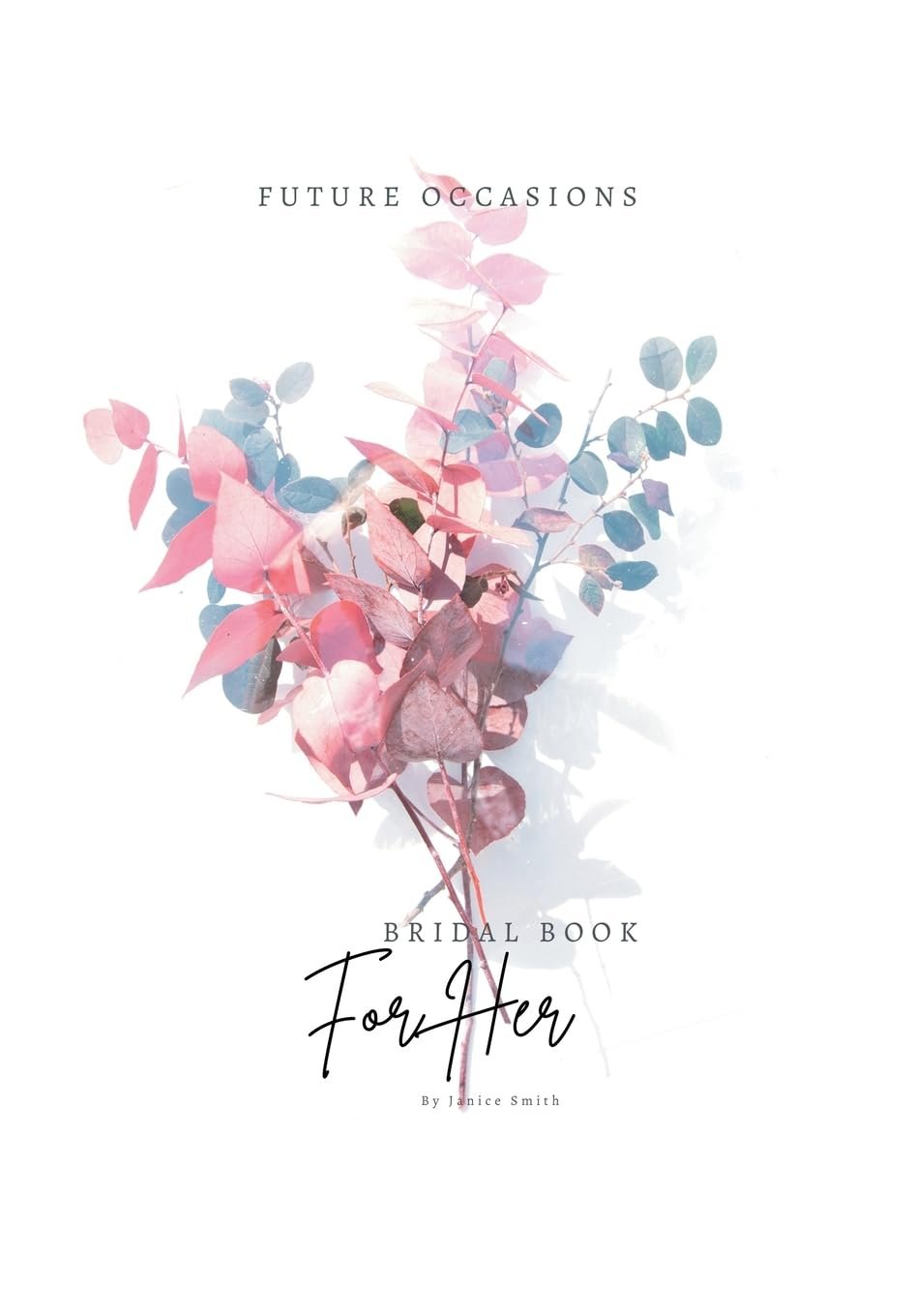
Bridal Book For Her
A wedding book has to do a difficult double duty: it must account for the unromantic arithmetic of an event while protecting the feeling that made.
Books worth discovering. Authors worth knowing.
A wedding book has to do a difficult double duty: it must account for the unromantic arithmetic of an event while protecting the feeling that made.
Evidence-conscious literary criticism, not a claim of firsthand full-text reading.
A wedding book has to do a difficult double duty: it must account for the unromantic arithmetic of an event while protecting the feeling that made the event worth arranging. Janice Smith’s Bridal Book For Her is presented by its accompanying project website as a planning guide with practical advice, checklists and space for a bride’s own notes. This is a more persuasive starting point than an abstract promise of a perfect day. In any major celebration, confidence usually comes not from controlling every outcome but from knowing what remains to be decided.
Planning as a form of care The book’s stated subjects—budgets, guest lists, photography and videography, suppliers, hidden costs, and the movement from engagement to honeymoon—represent different kinds of labour. Money questions are negotiated alongside family expectations; logistical choices affect how comfortable people feel; the most attractive setting may not be the one that serves a couple’s priorities. A useful wedding guide should make those connections visible rather than treat the individual items as isolated boxes to tick. The advertised structure appears designed to help readers bring an unwieldy event into a sequence of manageable conversations.
There is a quietly important difference between providing a list and providing a framework. A list records tasks; a framework helps a reader decide which tasks matter most. For example, a sensible question about photography is not only whether to hire a photographer but which moments the couple wants remembered, and whether the timetable permits those moments to unfold naturally. The public description does not allow an assessment of Smith’s exact worksheets, but its emphasis on both professional advice and personal notes suggests an attempt to give readers room to define their own celebration.
The tension inside the perfect day The book’s promotional language understandably speaks of reducing stress and preparing the perfect wedding. Those are appealing goals, though perfection is often the source of wedding stress in the first place. A rigorous assessment would ask whether the advice makes space for ordinary limitations: financial constraints, differing family customs, disability access, changes in circumstances and the possibility that plans simply fail. The best planning resources normalize compromise without making couples feel they have somehow fallen short of their occasion. That is an evaluative question, not a claim about passages we have not examined.
Smith’s site states that her experience in the wedding industry extends over twenty years. Experience of actual events can lend practical authority to a guide, but it does not automatically make every recommendation universal. A reader may live far from the customs and pricing structures familiar to the author. In this category, professional knowledge is most valuable when offered as adaptable principles, not as a single approved way to celebrate marriage. The guide deserves to be read with that distinction in mind.
A keepsake as well as a tool One of the more distinctive promises is that the book can become a record of thoughts and ideas as the marriage approaches. That changes the stakes of the blank spaces. Notes about a venue or guest list may eventually become evidence of a particular season in a couple’s life, with its compromises, enthusiasms and small disagreements. A wedding notebook can preserve decisions that photographs cannot: why a song mattered, who was important to include, or how two people arrived at a choice together. Its long-term value may depend as much on the reader’s participation as on the published advice.
This also raises a question about the title’s implied audience. For Her speaks plainly to brides, while weddings are made by partnerships and communities of different shapes. Couples can benefit from sharing the mental work of planning; any guide that helps a bride organize should ideally help her delegate and negotiate as well. Prospective readers should consider whether its perspective suits their own circumstances and how they intend to share decisions.
The cost of attention There is another expense in wedding planning that rarely appears as a line item: attention. Every choice must be researched, discussed, decided, recorded and sometimes revisited. Small decisions accumulate until the planning process begins to consume the emotional space the event was intended to celebrate. A guide promising organization should ideally reduce that cognitive burden rather than multiply it with ever more elaborate checklists. The most valuable pages may be those that help a reader recognize which decisions can be made simply, which require shared discussion and which do not matter enough to justify anxiety. The website’s description establishes that planning tools are present, but not whether they make such distinctions well.
The same principle applies to the book’s keepsake function. A bride may wish to preserve the process as a personal record, yet not every detail needs to become a treasured memory. The ability to leave a page blank, revise a budget or admit that an initial idea no longer appeals can be a sign of healthy flexibility. A wedding guide that allows its owner to remain human amid its structured pages will have accomplished something more useful than policing perfect completion.
Who should open it? The strongest case for <em>Bridal Book For Her</em> belongs to readers who want a single physical or digital place to think about their wedding rather than a stream of disconnected internet advice. Its described blend of checklists, vendor considerations, budget prompts and personal-note space is specifically suited to someone at the beginning of planning, although the depth and flexibility of the templates cannot be judged without consulting the interior. It is less obviously necessary for a reader who already has a planner, a detailed spreadsheet or a clear and modest ceremony arranged.
On the available evidence, this is a credible planning proposition, not a finished verdict on every worksheet. The book is most interesting where its practical and personal functions meet: it treats organization not simply as administration, but as a way of making space for the people and commitments at the centre of the occasion. A prospective buyer should look at sample pages to see whether the tone and level of detail fit the wedding they actually want, rather than one imagined for them.
About the book.
The title, contributors, routing category, original retailer link and unique Drive image file were checked against the live queue. The review is based on publicly available evidence and original editorial analysis.
This is a sponsored book review. Sponsorship does not alter our standards for evidence and critical independence. This research-based critical review interprets the verified book listing and available external descriptions; it does not claim a complete reading.
Found a book worth opening?
Books worth discovering. Authors worth knowing.
Return to the Journal →