
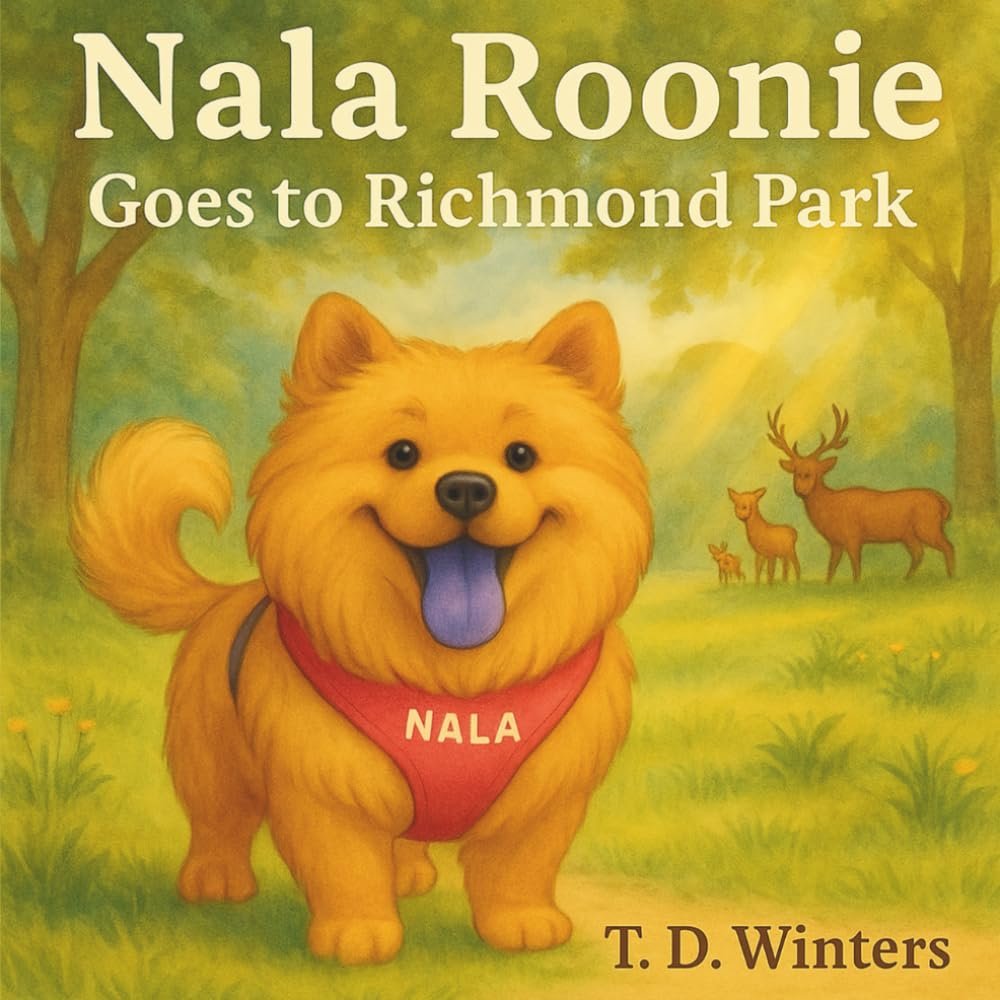
Nala Roonie Goes To Richmond Park
For a small child, a park can be enormous. Its paths seem uncertain, unfamiliar animals appear suddenly and everyday noises acquire a new scale. T. D.
Books worth discovering. Authors worth knowing.
For a small child, a park can be enormous. Its paths seem uncertain, unfamiliar animals appear suddenly and everyday noises acquire a new scale. T. D.
Evidence-conscious literary criticism, not a claim of firsthand full-text reading.
For a small child, a park can be enormous. Its paths seem uncertain, unfamiliar animals appear suddenly and everyday noises acquire a new scale. T. D. Winters’s Nala Roonie Goes To Richmond Park places that encounter in the company of a Chow Chow whose curiosity does not cancel her caution. The author has described the book as growing from walks with the real Nala and from watching a nervous young dog learn confidence in the city. It is an unusually grounded beginning for a story about courage: bravery is not a refusal to feel afraid, but the decision to enter the world gently despite that feeling.
A city opens into green space Richmond Park provides a meaningful setting rather than merely a picturesque name. Winters and the Vallace Studio team connect the adventure with a wish to bring urban children closer to nature, and the publisher’s description mentions leaves, squirrels and quiet discoveries. The juxtaposition matters. A child who lives among roads and buildings may experience a large open landscape as both an invitation and a challenge. The story’s premise allows the outside world to remain unfamiliar without declaring it hostile.
The team also describes rhyme, illustration and original music as parts of its creative approach. In an illustrated children’s story, meaning is never carried by the words alone: visual rhythm can give a young listener time to notice or reassure them that a new scene is safe. Winters has said the light in the pictures softens toward the end of the adventure, following the slowing movement of the verse. That account offers a more concrete artistic intention than the vague claim that a book is simply calming, although a complete assessment of its success requires reading and viewing the actual pages.
The dignity of a nervous heroine Many stories for young children rush to turn fear into triumph. Nala’s appeal, as described by her creator, lies in a gentler proposition. She may hesitate before a new experience and still be capable of joy. This can matter to a child who is shy about a new classroom, a bus journey or a crowded playground. The animal protagonist provides a little emotional distance: a reader can recognize anxious feelings in a dog before needing to name them in themselves.
The author’s stated interest in quiet courage is particularly fitting for the picture-book form. An adult reading aloud may be tempted to explain the lesson immediately, but the story’s strengths are likely to emerge through patient noticing—what Nala attends to, how the surroundings change, where a child chooses to pause over an illustration. That is an interpretive invitation rather than a claim that we have examined every spread.
Kindness without a sermon The project places mindfulness, curiosity, courage and kindness at the centre of its philosophy. Such words can become heavy when arranged as explicit instructions. An effective story would instead dramatize them in choices and sensory detail, allowing a child to feel that attention itself is a kind of care. The book’s outdoor setting gives that ambition a natural vehicle. One does not need to master a formal exercise to notice a leaf, a sound or another creature moving nearby.
Another important measure is whether a young reader can enjoy the tale without absorbing its intended lesson. A picture book that functions only as a tool for adult instruction risks losing the pleasure of the encounter. The author’s references to playful visual details and interactive discoveries indicate an awareness that returning to the pages should offer fresh rewards. How elegantly those rewards are woven into the storytelling is something to judge from a copy, not from promotional materials.
The art of reading slowly Young readers often absorb a picture book through a different sequence from adults. They may notice an animal hidden in the background, return to a particular color or ask the same question long after an adult believes it answered. The reported presence of small discoveries in the artwork makes that kind of rereading particularly relevant here. A title about mindfulness can enact its theme through the physical pace of reading: turning a page slowly, following an image, allowing a pause to become part of the experience. That is an artistic advantage of picture books which a lecture about paying attention cannot easily reproduce.
There is also something distinctive in giving this adventure to a Chow Chow rather than to a fearless child explorer. Animal characters may soften the embarrassment of uncertainty. Nala can be cautious without being judged for it, and a child can recognize the feeling without being compelled to explain personal anxieties. The choice of a real park keeps that emotional metaphor tethered to daily life. Richmond Park is a setting that exists beyond the book’s pages; its landscape offers children a model of discovery that might extend to their own ordinary surroundings, not necessarily through a visit to London itself.
The park’s named geography also offers a gentle reason for adult readers to connect a fictional outing with conversations about where animals live, how visitors behave and what it means to share a public landscape.
For shared reading and first adventures The surrounding listings position the book for young children, particularly ages three to seven, and for families seeking gentle nature-themed stories. It could be an inviting companion before a walk in a park, or after an unfamiliar outing when a child wants to talk about how the day felt. Adults should be prepared to linger on the illustrations rather than race to the finish. The local specificity of Richmond Park also gives the story a sense of place; it need not be translated into a generic lesson about every park everywhere.
This is an editorial assessment based on the published description and a substantial author interview, not a claim to have assessed the finished book’s page-by-page craft. What emerges is an appealing and thoughtful conception of childhood bravery. Rather than asking young readers to become fearless, Nala Roonie Goes To Richmond Park appears to offer them permission to be tentative, attentive and curious all at once. That is a promise worth exploring with the actual book in hand.
About the book.
The title, contributors, routing category, original retailer link and unique Drive image file were checked against the live queue. The review is based on publicly available evidence and original editorial analysis.
This is an unsponsored editorial book review. This research-based critical review interprets the verified book listing and available external descriptions; it does not claim a complete reading.
Found a book worth opening?
Books worth discovering. Authors worth knowing.
Return to the Journal →