
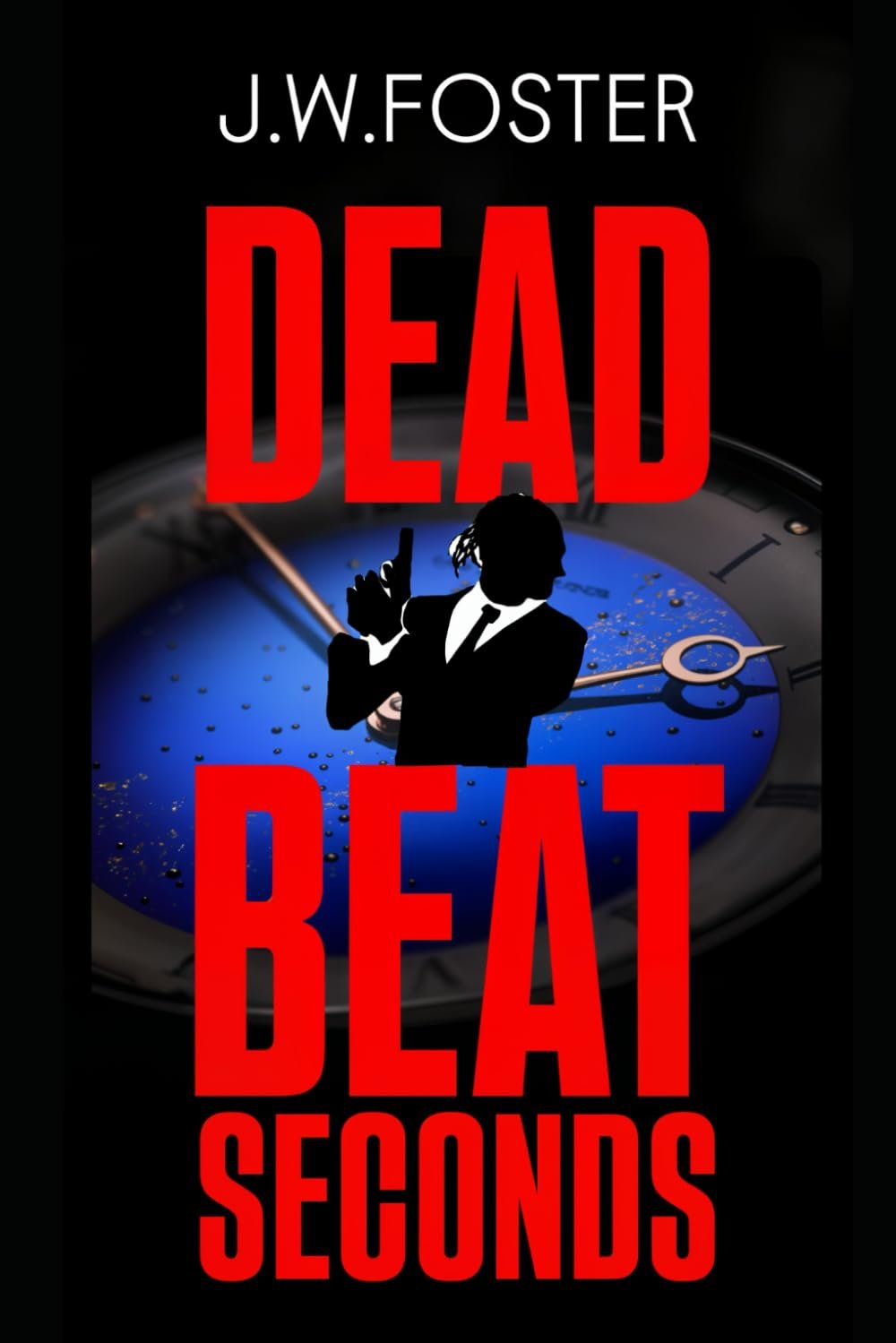
DEAD BEAT SECONDS
A collectors’ trip turns perilous when rare watches, surveillance technology and personal loyalties collide.
Books worth discovering. Authors worth knowing.
Time is valuable in every thriller, but in DEAD BEAT SECONDS it also has a physical form. J.W. Foster sets a high-stakes pursuit against the world of rare mechanical watches, where engineering, craftsmanship and desire can turn a small object into a major obsession. The published account follows a group of Miami friends traveling through Europe for a watch-focused trip, only to discover that an extremely wealthy opponent is tracking them. The setup allows a familiar chase narrative to enter a much more specialized world, where collectors may recognize the objects while other readers recognize the dangers.
An editorial introduction to the book and its published premise, not a full-book review.
A trip built around a shared passion According to an article by specialist retailer The 1916 Company, the protagonists are Miami friends who head to Europe to explore luxury watches. That is an unusual point of departure for a suspense story. Travel to see a beloved object is not inherently dangerous; it is usually a way of strengthening friendships and deepening knowledge. Beginning from that shared enthusiasm gives the eventual threat greater contrast. A feature can identify the journey's purpose and its reversal without inventing particular European destinations, purchases or meetings that the public synopsis does not confirm.
The collecting context matters because a watch is not just a display of wealth to an enthusiast. It can stand for intricate mechanics, design history, an object's scarcity or a connection made through a shared interest. The retailer's coverage explicitly emphasizes friendship within the watch community. This suggests one way to read the book's stakes: danger intrudes on a network that normally provides trust and pleasure. Whether specific objects become clues, bargaining chips or symbols in individual scenes is a question for the novel, unless those roles are documented in the official material.
The unseen pursuit The public description says a crypto mogul and his crew track the travelers using futuristic technology. Their advantage appears to lie in information as well as money. This combination resonates with contemporary anxieties about how easy it can be for well-resourced actors to monitor other people's movements. The blurb does not list specific surveillance devices or techniques, so it would be misleading to offer a technical account of their methods. What readers can reasonably expect from the premise is a tension between what the friends believe is private and what their pursuers may already know.
A chase involving surveillance has a different emotional rhythm from one involving an openly visible enemy. Uncertainty grows before confrontation. Ordinary signals can become suspicious, and a journey planned for pleasure can turn into an exercise in second-guessing. That is a genre observation, not a claimed scene from DEAD BEAT SECONDS. It helps explain why the combination of travel, highly desirable possessions and unequal access to technology can support suspense. A reader does not need to understand a mechanical movement to understand the fear of being watched.
Roman “Blaze” McClain changes the equation The publisher-adjacent account identifies Roman “Blaze” McClain as a former Special Forces operative secretly hired to protect one traveler. That is a crucial fact in the documented setup. Some characters may believe they are part of an ordinary trip while another person is pursuing a concealed protective assignment. The difference between visible roles and hidden responsibilities creates dramatic possibilities even before any conflict. We cannot assert which member of the group employed him, how he earns trust or what tactics he uses; none of those details are supplied in the reference.
The same account says the line between hunter and prey becomes blurred. That phrase is marketing language, but it names a recognizable thriller mechanism. An antagonist with superior resources can appear unstoppable until defenders understand a weakness or find a different kind of advantage. The premise invites that reversal without establishing exactly how it occurs. Roman's military background may shape reader expectations, but a responsible introduction avoids turning a brief description into a catalogue of unverified combat scenes or abilities.
Watches as more than decoration The 1916 Company's feature goes unusually far in identifying watches associated with the novel. It names pieces by De Bethune, F.P. Journe, Patek Philippe and other makers, along with a Casio G-Shock connected to Blaze. That level of specificity suggests the objects belong to the story's imaginative environment rather than having been added as a generic luxury label. The presence of real brands does not, on its own, prove that a particular brand sponsored the novel or endorses its content. Those relationships should never be implied without evidence.
A specialist reader might notice the contrast between extraordinary collector pieces and an everyday rugged watch. It offers a useful interpretive question: which qualities become important when a situation moves from admiration of craft to a struggle over safety? Price and rarity command attention in a showroom; reliability and legibility may matter more under pressure. This is a reading lens suggested by the known inventory, not a definitive account of how any watch functions in the plot. The book itself must establish the significance of each object.
The story behind the author's interest The 1916 Company has also presented a podcast conversation with Foster about watch collecting, writing and technology. Its public introduction identifies the writer as a longtime collector whose enthusiasm informed the thriller. This background helps explain the concentration of horological detail. Specialized fiction often feels most distinctive when an author makes the practices and objects of a community legible to outsiders without flattening their particularities. Whether Foster accomplishes that balance across the entire novel is something to assess through the reading experience, not through the existence of an interview alone.
The title itself provides a neat bridge between the specialist and general audience. Dead-beat seconds is also a horological term for a second hand that advances in discrete steps. The phrase can evoke urgency for a thriller reader and a specific mechanism for a watch enthusiast. That overlap is attractive because it doesn't require either audience to abandon its interests. One can begin with the danger, the other with the watches, and both arrive at the problem of how people use their limited time.
Friendships under extreme pressure The public account presents friendship as a significant ingredient. A group journey becomes vulnerable when an external threat has the power to divide or expose people. How individuals respond under pressure can reveal whether their connections depend on shared leisure or something sturdier. Again, the sources do not establish any character's betrayal or sacrifice, so it would be wrong to manufacture them. The verified promise is a thriller where friends must confront danger in a milieu defined partly by collective enthusiasm and mutual recognition.
Readers who enjoy technology-driven chases and contemporary adventure may find the premise accessible even without being collectors. Watch enthusiasts may find additional pleasure in recognizing specific pieces and the culture surrounding them. Those expecting a technical treatise on mechanics, however, should remember that the public material describes a thriller, not a reference guide. The successful balance between accessible suspense and specialist detail is a judgment only a complete reading can support. What the verified description offers is already compelling: the objects people cross borders to admire become the backdrop to a journey no one intended to take.
About the book.
Miami friends travel to Europe for luxury watches while a crypto mogul tracks them; former Special Forces operative Roman “Blaze” McClain secretly protects one traveler.
Non-sponsored Book Feature based on the queue record and cited public materials; this is not a full-book review. Interpretive observations are distinguished from the publicly documented synopsis. Verify all copy before publication. Source research: primary reference and second reference.
Found a book worth opening?
Books worth discovering. Authors worth knowing.
Return to the Journal →