
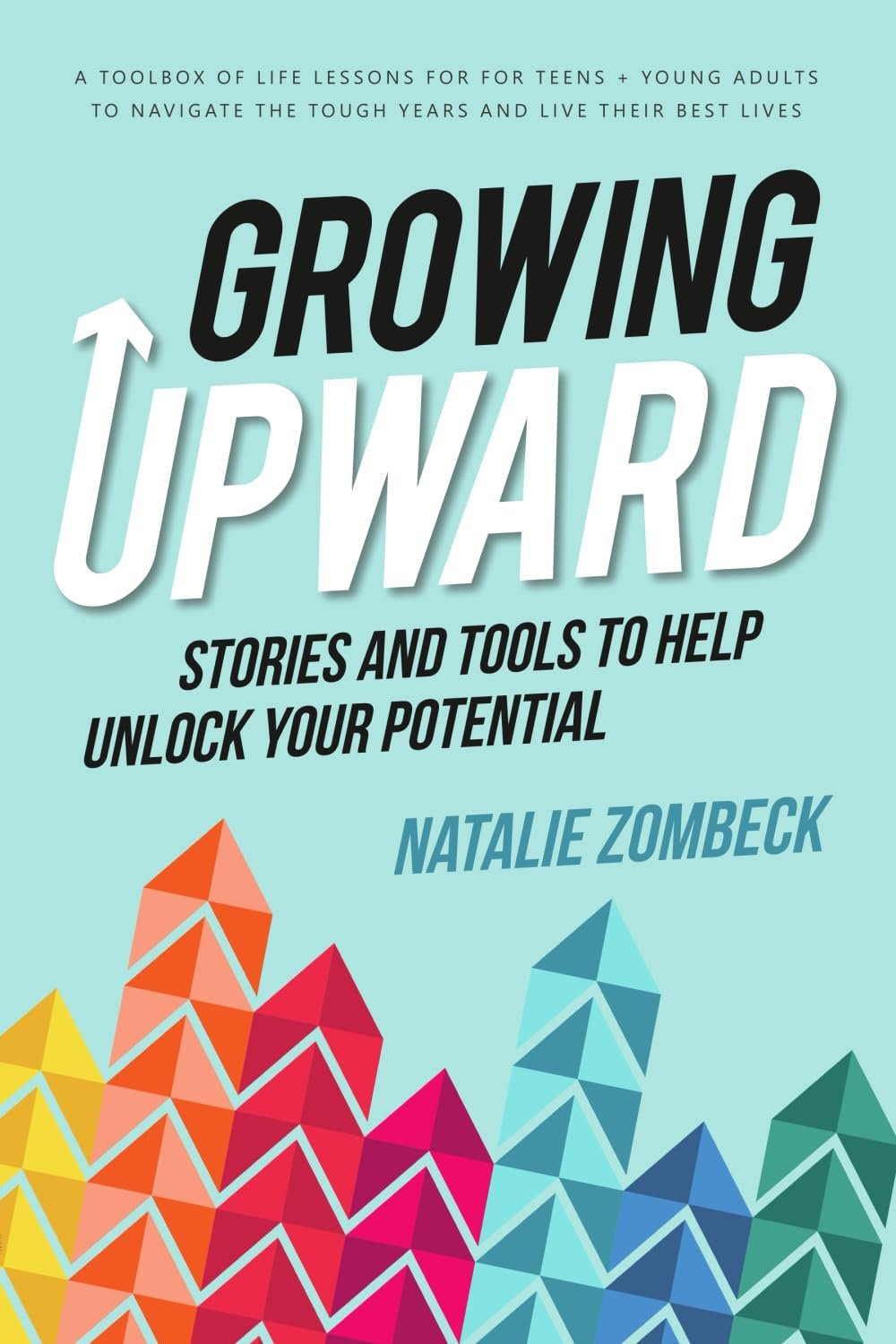
Growing Upward
Natalie Zombeck offers stories and exercises to help young readers develop self-awareness, resilience and confidence during difficult transitions.
Books worth discovering. Authors worth knowing.
Natalie Zombeck offers stories and exercises to help young readers develop self-awareness, resilience and confidence during difficult transitions.
N.
A Personal Development Book Written for Young People
Natalie Zombeck’s Growing Upward is described by its publisher as a combination of personal stories, mindset tools and practical exercises. Its intended readership includes young people navigating the uncertainty of growing up and the adults who support them. That audience matters. Teenagers are frequently told to become more confident, responsible and resilient without being shown what those qualities look like in ordinary decisions. Zombeck’s approach, according to interviews and publisher material, is to begin with recognizable experience and invite readers to reflect before attempting change.
The title offers a useful counterpoint to the phrase growing up. Development is not simply getting older or checking milestones from a list. Moving upward suggests direction, persistence and the possibility of choosing how to respond to difficulty. A young person may develop academic skills while still feeling unsure in friendships. Another may look confident in public while privately questioning their value. The book’s premise does not promise that every struggle can be quickly solved. It offers a set of activities through which readers can practice understanding themselves and responding more deliberately.
Stories That Make Advice Less Abstract
In an interview with BrantBeacon, Zombeck speaks about including real experiences and specific stories to make personal development more accessible. One account she discusses involves a student named Brooklyn who endured severe bullying and eventually found support from trusted people in her community. That is a concrete illustration of why reflective skills cannot be reduced to cheerful slogans. A bullied teenager may need safety, responsive adults and practical assistance, not simply instructions to think positively. Zombeck’s public account emphasizes the significance of turning toward reliable sources of support.
Narrative examples can make educational writing feel less like a lecture. When readers see a challenge unfold through a person’s actions and circumstances, they have room to consider more than one response. They may disagree with a decision, recognize a feeling or remember a similar experience from their own lives. The activity component then gives them a place to examine that connection. The exact workbook questions should be checked in the book itself, but the author’s interview confirms that self-reflection and usable exercises are central features, not incidental marketing language.
A Teacher’s View of Personal Growth
Zombeck’s background as a special education resource teacher provides relevant context. Public interviews describe years of work with students, along with her experiences as an entrepreneur and parent. She has spoken about wanting to create a resource for young people who feel lost or uncertain. That professional history does not make the book a clinical intervention. It does suggest familiarity with the difference between giving advice and helping someone find an entry point into a difficult conversation.
A classroom contains students with different learning styles, confidence levels and expectations at home. A reflective workbook can be useful precisely because it does not require every reader to begin from the same emotional position. Some may write extensively; others may need to think quietly before putting a sentence on paper. Adults supporting young readers can respect that variation rather than turning self-discovery into another task that must be graded. The book’s practical value is best assessed by whether its exercises foster genuine reflection, not whether every response looks immediately impressive.
Confidence Is a Practice, Not a Personality Type
Confidence is often portrayed as an inborn quality belonging to outgoing people. Zombeck’s public message instead stresses trusting one’s strengths and taking ownership of a developing life. Such an approach leaves room for quieter confidence: asking a question, admitting confusion, making a careful decision or seeking support when a situation is too big to handle alone. A reader may not be ready to lead a group, but may still begin by naming a goal they care about. Small actions can create experiences from which confidence gradually becomes more credible.
The author’s discussion of her own writing process reinforces this idea. She describes feeling imposter syndrome about creating a book despite years of professional experience. Her response was to focus on the need she had identified rather than on the image of herself as a conventional writer. This is an illustrative author account, not proof of a universal psychological formula. Still, it offers an accessible lesson: uncertainty about one’s qualifications can coexist with a worthwhile reason to try. Readers may find comfort in seeing an adult educator describe the same hesitation they themselves experience.
The Role of Parents, Mentors and Teachers
Although Growing Upward addresses young people, the surrounding adults are part of its intended audience. A parent may use it to start a conversation that is otherwise difficult to approach. A teacher may find a prompt suitable for reflection outside a formal test. A mentor may use a story to ask what kind of support someone wants rather than assuming an answer. These are plausible applications of the confirmed workbook format, not claimed instructions lifted from the text. The essential point is to invite a young person into the process without taking over their response.
Support also means recognizing the limits of self-help. Bullying, serious distress and unsafe environments may require intervention by responsible adults or qualified professionals. A growth-mindset exercise should never substitute for that assistance. It can, however, provide language with which someone begins to describe what is happening and what help might be needed. Framing the book this way respects its empowerment mission without promising that individual thought exercises can resolve every structural or emotional challenge a teenager faces.
Stories, Exercises and the Space to Pause
The publisher describes practical strategies and mindset tools. The author’s interviews mention reflection prompts and sections that readers can personalize. That combination suggests a structure built for active use rather than passive consumption. A teenager reading under school pressure might move through one exercise slowly, while another might return to the same question months later and find that the answer has changed. The ability to revisit one’s thinking is one of the quieter benefits of writing it down.
There is a trade-off in every activity book. A prompt must be specific enough to help, but flexible enough not to force a false confession or simplistic positivity. The strongest questions encourage choice, observation and curiosity. Growing Upward’s appeal, based on its publicly described form, is that it aims to equip readers with a language for changing circumstances. Whether every exercise achieves that ambition is a matter for firsthand evaluation of the full text. The author and publisher at least provide a clear, concrete sense of the book’s intended method.
Who Might Grow With This Guide
Growing Upward is well positioned for teens and young adults who want approachable personal-development exercises and for educators seeking story-driven reflection materials. Adults choosing it for younger readers should first consider age, reading confidence and willingness to use a workbook. A useful book is not automatically useful at every moment. Some readers may prefer to engage privately; others may benefit from a trusted person sharing the process. The important thing is to treat self-reflection as a resource, not another measure of success or failure.
Zombeck’s book joins a wider conversation about giving young people tools before pressures become overwhelming. Its title encourages movement without insisting that life follows a straight staircase. Setbacks, uncertainty and changing interests can all be part of development. The book’s central invitation is to take an active role in discovering what matters to oneself while recognizing that support remains available. That is an appealing message when paired with practical activities and grounded personal stories.
About the book.
A blend of personal stories, mindset tools, workbook-style exercises and reflection prompts, especially for teens and the adults who support them.
Sponsored book feature. Independent research-based commentary using publicly available descriptions and author material, not a claim of first-hand full-text review. The cover placeholder will be resolved by the owner’s publishing automation.
Found a book worth opening?
Books worth discovering. Authors worth knowing.
Return to the Journal →