
THANKFUL
A photograph-led reflection on loss, self-worth and beginning again connects striking images with questions about healing.
Books worth discovering. Authors worth knowing.
A photograph-led reflection on loss, self-worth and beginning again connects striking images with questions about healing.
E.
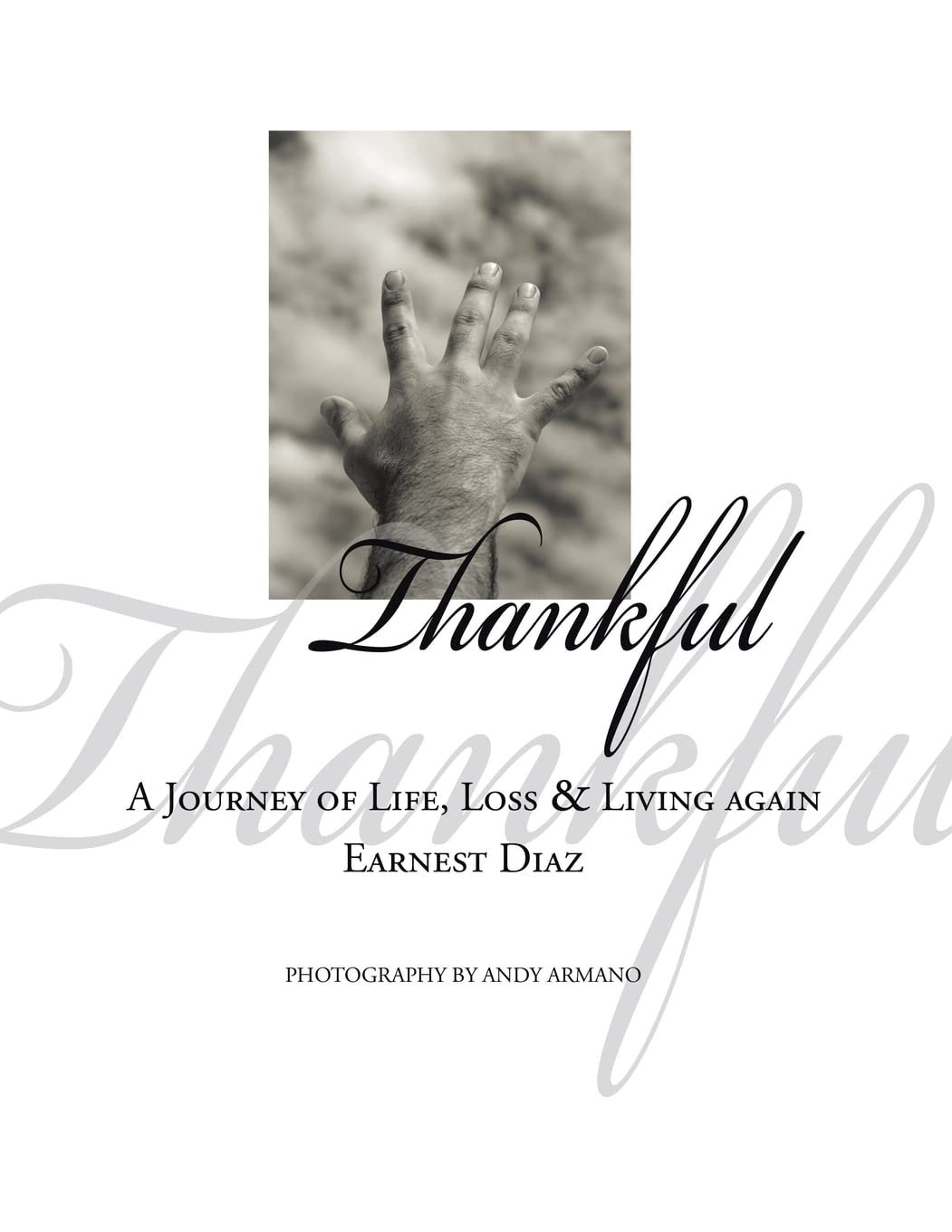
A Book That Begins With an Image
Some accounts of recovery arrive as chronological memoirs; others start with the difficulty of finding words at all. Earnest Diaz’s THANKFUL takes a visual route. On his official website Diaz describes an approximately eighty-page coffee-table book pairing notable photographs with reflective prompts and a personal message about emerging from depression. Its format matters because an image can ask readers to remain with an emotional experience before they are ready to explain it. The book is not presented as a clinical guide or a step-by-step intervention. It is a photographic invitation to think about loss, resilience, self-regard and the possibility of moving forward.
The title might sound uncomplicated, yet gratitude after loss is rarely simple. A person can recognize something beautiful without ceasing to grieve what was taken away. To treat being thankful as a command would misunderstand the most promising part of this project’s presentation. The publisher-facing description emphasizes questions and pictures as openings for reflection. Such materials can invite a reader to consider what remains worth noticing, without pretending that a single insight removes pain. The distinction is important when discussing any creative work grounded in the author’s experience of depression. Recovery is individual, uneven and not guaranteed by a book.
Why Photographs Change the Conversation
Photography fixes a moment in a way that ordinary recollection cannot. A shoreline can hold the drama of movement and stillness at once; a figure can appear small against a vast landscape while occupying the emotional center of the scene. Diaz’s site describes work using a coastal setting and a figure whose outstretched arms signify surrender without defeat. This is an author’s interpretation of the artwork, not a universal truth about the image. It shows, however, how visual composition can carry an idea that a reflective prose passage may only approach indirectly.
Pictures also leave space for the reader’s own associations. Two viewers looking at the same photograph may bring different histories of regret, survival or hope. Questions placed beside an image can turn that diversity into a constructive reading experience. Instead of requiring the audience to agree with a definitive interpretation, the book can ask what the viewer recognizes in the arrangement of light, scale and gesture. That participatory quality distinguishes a reflective photo collection from a conventional autobiography. The reader becomes a collaborator in meaning-making, even as the artist’s own recovery provides the work’s stated starting point.
Loss Without a Shortcut
Diaz’s description connects the creation of THANKFUL to his movement out of depression. That is a personal narrative, not scientific evidence that photography or gratitude will treat a mental-health condition. The book can nevertheless offer a meaningful encounter with another person’s attempt to make sense of suffering. Creative accounts are often valuable because they name experiences that feel lonely or difficult to communicate. A photograph can acknowledge silence; a short question can make space for answers that change from one day to the next.
There is a moral difference between asking what helps a person endure and insisting they ought to feel better. The former can encourage attention, relationships and reflection. The latter risks adding guilt to pain. A reader approaching this collection after bereavement or emotional upheaval should be allowed to disagree with an image’s optimism or to put the book aside. The most thoughtful interpretation of the title holds thankfulness alongside sorrow instead of using it to erase sorrow. In that sense the book’s strongest potential is not an immediate mood lift, but a more patient way of noticing a complicated life.
A Brief Format With Room to Return
An eighty-page image-led book can be read quickly, but it may also reward slow revisits. Photographs frequently reveal different details when viewed under new circumstances. A question about personal strength may land one way during a difficult week and another after a period of stability. This is a useful quality for a book designed for a table or a place where people can open it without committing to a long reading session. Its physical presentation can turn reflection into something available in small intervals rather than reserved for a special occasion.
The photographs and words are described as deliberately paired, suggesting that the collection should be experienced as a sequence of visual and verbal prompts. This feature cannot verify the precise arrangement of pages or individual images beyond what the author has made public. But the stated design is enough to set expectations. Readers who enjoy visual essays and contemplative art books may appreciate a work that does not demand they follow an elaborate argument. Those seeking a detailed account of a diagnosis, therapeutic program or linear biography should recognize that the project advertises a different kind of encounter.
From Coffee-Table Book to Screenplay
Diaz’s author website also records that he adapted the original coffee-table project into a semi-autobiographical screenplay beginning in 2013. The site lists numerous honors for that script. Those are author-reported distinctions relating to a separate screenwriting version; they should not be confused with independently verified awards for this particular print edition. The adaptation is interesting for another reason. Moving from still images and reflective questions into film writing requires a shift in how a personal experience is organized. A photograph can leave a moment suspended, whereas a screenplay generally asks what changes from one scene to the next.
That creative movement suggests the persistence of the underlying subject. The questions surrounding loss, self-respect and continuing after a difficult period did not end with one format. Different media create different ways of telling a related story. The existence of the adaptation does not prove that every version carries the same sequence or message. It does indicate that Diaz has continued working with the material and looking for an audience beyond the initial photo book. For readers interested in artists who revisit personal experience, that development provides useful context.
The Quiet Work of Looking Again
THANKFUL invites a kind of engagement that fits awkwardly into categories built around plot, instruction or comprehensive testimony. It is personal, visual and reflective. The premise is simple enough to describe, but its effect will depend on how a particular reader responds to the photographs and questions. There is no need to promise that everyone will find the same comfort or attach the same significance to its images. Honest editorial writing leaves that judgment with the audience.
The title’s invitation is best understood as an opening rather than a conclusion. One can look at a difficult life, accept that parts of it remain unresolved and still search for moments of connection or beauty. Diaz’s work appears designed to support that searching through image and pause. Its interest lies less in asserting that loss ends with gratitude than in asking how a person might live alongside loss while noticing that other forms of meaning are still possible.
The collection can also be considered in the context of giving a thoughtful gift. A visually reflective book may invite conversation between people who find direct discussion difficult. That does not mean it can carry the burden of comforting someone through a crisis on its own. An accompanying message, patience and practical attention may matter far more. Diaz’s work might begin an exchange about what an image evokes, but the relationship between reader and giver should leave room for silence, disagreement and the choice to look again later.
About the book.
Earnest Diaz describes THANKFUL as an 80-page photographic coffee-table book with reflective questions and a personal account of emerging from depression; he later developed it into a semi-autobiographical screenplay.
Sponsored book feature. Independent research-based commentary using publicly available descriptions and author material, not a claim of first-hand full-text review. The cover placeholder will be resolved by the owner’s publishing automation.
Found a book worth opening?
Books worth discovering. Authors worth knowing.
Return to the Journal →