
Hollow Bones
Molly Fitzgerald plans for disasters because her mother walked into the World Trade Center and did not come home.
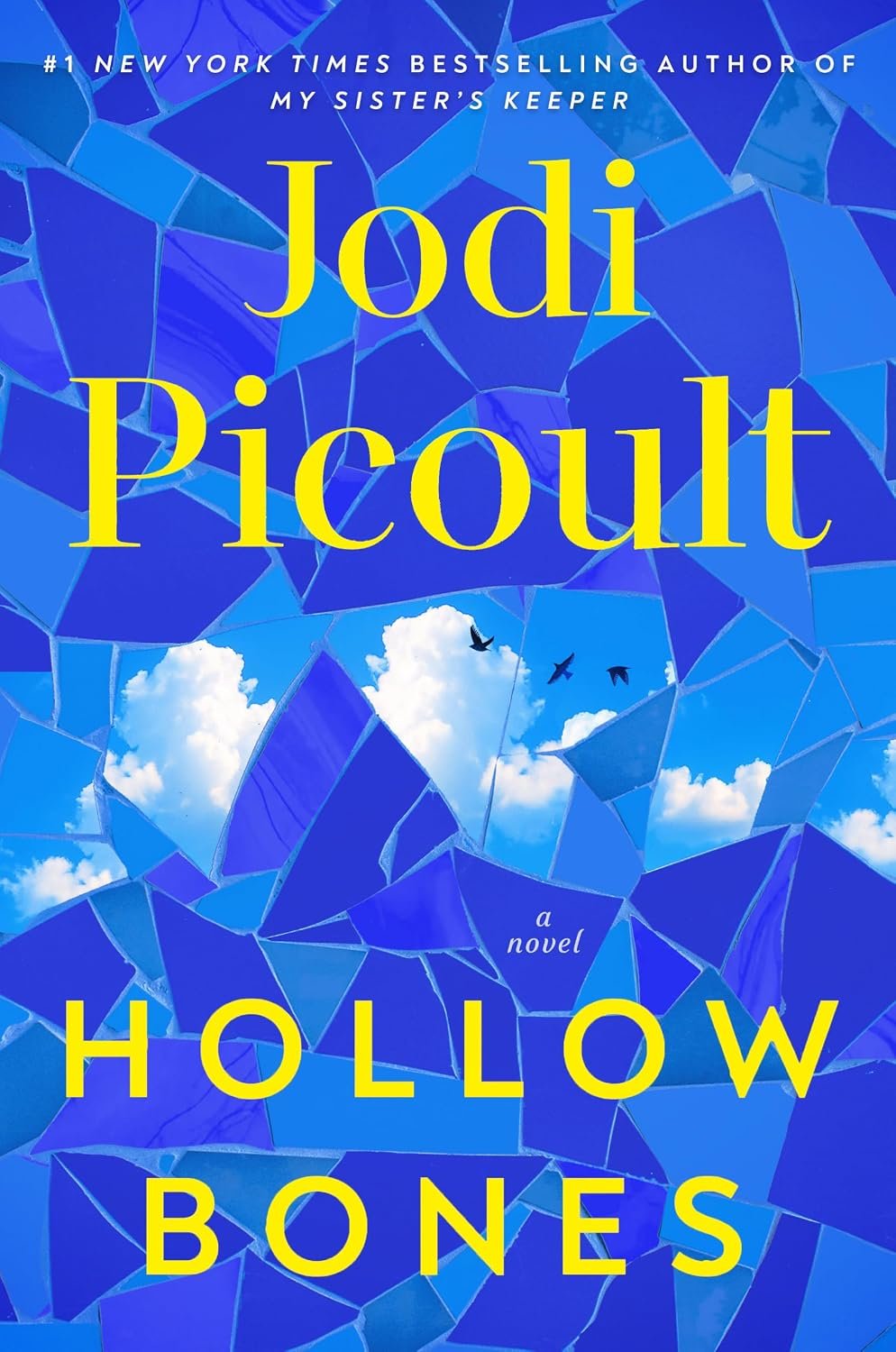
The novel Hollow Bones, a family story set against disaster planning and an old absence.
Hollow Bones is Jodi Picoult’s novel about a woman whose job is disaster and whose life began in one. On September 11, 2001, when Molly Fitzgerald was two months old, her mother went to an appointment at the World Trade Center and never came home. Molly is raised by her father and stepmother. As an adult she runs the Rhode Island Department for Emergency Preparedness. Ballantine published the 464-page hardcover on September 15, 2026.
A life built around the next emergency
The absence the book starts from
Molly’s mother does not die in a private accident. She goes to an appointment in the towers and does not return. The novel uses that public day as a private origin. Her father and stepmother love her. The publisher says the love does not erase a dread of disasters. That dread becomes a profession. She maps how to save lives in storms, epidemics, and plane crashes. The book opens on a woman who has turned the worst morning of her infancy into a department.
Her husband, Jesse, is a police polygraph expert with his own history of crisis. The publisher calls their marriage a solace in a dangerous world. A polygraph is a machine for sorting truth from performance. Emergency planning is a file for sorting the feared future from the ordinary day. The couple is built from those two jobs. The novel is interested in what happens when the file and the machine meet a crisis inside the house.
Picoult’s publisher frames the book as the risks people take to protect the ones they love when crisis is always nearby. That is the premise. Reviews have also described a story of postpartum psychosis and maternal identity across a dual timeline. This feature stays with the publisher’s named situation and does not invent a diagnosis scene.
Rhode Island, and the work of being ready
The setting the publisher names is practical. Molly runs a state office. The work is maps, protocols, and the belief that a plan can stand between a storm and a death. Hollow Bones puts that belief next to a woman who was not saved by a plan, because she was two months old and the appointment was ordinary. Readiness is both her skill and her inheritance.
A 464-page novel has room for the marriage, the office, and the old day. The publication date is September 15, 2026. ISBN 9780593726259. Those facts locate the object. They do not locate the ending. This feature will not describe one.
The book is for a reader who wants a family novel in which the public disaster is not background color. September 11 is the reason the protagonist flinches. The flinch has a budget and a staff. That is a specific kind of story, closer to a moral argument than to a thriller, even when the office deals in crashes.
What the title is doing
Hollow Bones is a body phrase. It suggests a structure that looks intact and is not. The publisher’s Molly is intact enough to run a department and loved enough to have a husband. The hollow is the appointment her mother did not return from, and whatever the novel finds inside the marriage. The title does not need a medical chapter to earn itself.
Picoult has written novels that take one hard fact and walk around it. This one takes a missing mother, a preparedness office, and a husband who listens for lies. The walk is the book. A reader does not need the earlier novels to enter. The situation is complete on the jacket.
I have not read the 464 pages. The verified offer is Molly, Jesse, Rhode Island, and a morning in 2001 that the family never got back.
More Journal stories are on the Journal, and other book articles are collected in Book Reviews.
About the book.
Ballantine published Hollow Bones on September 15, 2026, a 464-page hardcover, ISBN 9780593726259. Molly Fitzgerald loses her mother in the September 11 attacks as an infant and grows up to run Rhode Island’s emergency-preparedness office. Her husband, Jesse, is a police polygraph expert.
A short note
I like that Molly’s job is the fear she inherited. The part worth opening is the appointment: a two-month-old, a mother who does not come home, and a woman who grows up drawing maps for the next disaster. Picoult fits the book because the crisis is both intimate and civic. I have not read the marriage’s turn. The office is the part I would hand someone first.
This MarketAnyBook feature is based on the publisher listing and verified public information. It is not a full-book review. Book links may be affiliate links.
Found a book worth opening?
Books worth discovering. Authors worth knowing.
Return to the Journal →