
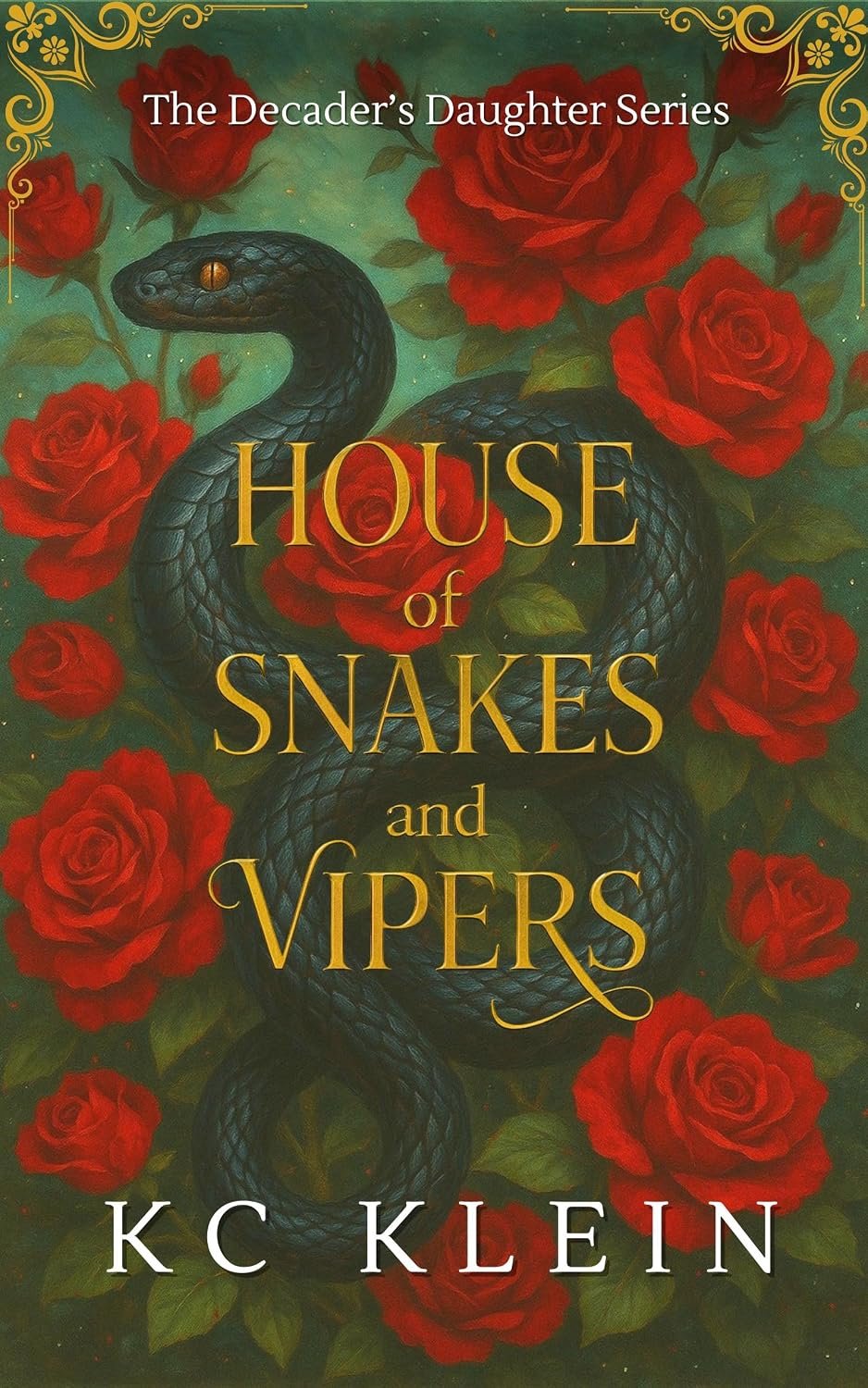
House of Snakes and Vipers
In a fantasy empire built on ownership, knowledge becomes dangerous.
Books worth discovering. Authors worth knowing.
KC Klein’s House of Snakes and Vipers opens its advertised fantasy premise with conquest and enslavement.
An original critical assessment, grounded in verified public book descriptions.
KC Klein’s House of Snakes and Vipers opens its advertised fantasy premise with conquest and enslavement.
A world where language itself is property
KC Klein’s House of Snakes and Vipers opens its advertised fantasy premise with conquest and enslavement. After invaders overrun her island, the unnamed first-person heroine in the publisher’s synopsis is taken into a system governed by a corrupt Senate. She belongs to a hunted Creed capable of practicing pharmika, and she knows a forbidden written language ordinarily reserved for elites. Those abilities make her valuable and endangered at the same time. This is a more pointed foundation for fantasy than the mere promise of magical gifts. Knowledge here is regulated; the right to read, heal and interpret is a political privilege. The heroine’s talents threaten the structure that seeks to exploit them. That opposition gives the story an identifiable argument about power before any romantic entanglement begins.
The body as a contested territory
The synopsis describes Cato, a senator’s ambitious son, buying the heroine to serve in the House of Sapphire. The family’s expectations include the demand for an heir, and she resists becoming a reproductive instrument of its ambitions. This material establishes that bodily autonomy is not an incidental theme. Coercion shapes the world’s laws, domestic arrangements and intimate relationships. The novel is also marketed in fantasy-romance territory, where attraction can sometimes blur the meaning of consent. A discerning reader should watch how the narrative navigates that pressure and whether its heroine’s refusals retain their significance even when romantic and political stakes collide. The premise is dark, and the story’s treatment of captivity deserves a far more careful discussion than an enthusiastic label such as “spicy fantasy” would permit.
Home, love and the cost of survival
The heroine’s hope of returning to Rome, the man she loves, gives the narrative an emotional point beyond escape. In a structure built around power and ownership, home may represent a promise of selfhood, yet attachment can create vulnerabilities of its own. The synopsis suggests an eventual offer of freedom that requires a devastating choice. The nature of that choice should not be invented or spoiled; the important point is that release from a coercive institution may not return a person to the life that existed before capture. Fantasy often literalizes such costs through oaths, bloodlines or magical bargains. Klein’s setup makes the political and emotional versions of the same question visible: what can a person relinquish without surrendering the self?
The Senate and the hierarchy of the sacred
The language of a Senate and a privileged forbidden tongue suggests an invented world organized through law, class and the control of cultural legitimacy. That mixture can create depth if the author treats its institutions as functioning systems rather than labels attached to villainous figures. Pharmika, meanwhile, places the heroine’s knowledge at the intersection of healing and danger. The contrast between what those in power call sacred and what they punish others for knowing offers fertile ground for an expansive fantasy series. The first volume of the Decader’s Daughter sequence carries an obvious burden of exposition, and a close critic would need to evaluate how the world is revealed through decisions rather than explanatory blocks. Marketing copy can establish the architecture, not its successful execution.
Who should enter the House of Sapphire?
This is aimed at readers who welcome politically dark fantasy, coercive institutions, forbidden knowledge, divided loyalties and high-stakes romantic attachments. Its explicit themes of enslavement, reproductive coercion and bodily control may be distressing, and the advertised premise should be read with that awareness. Those expecting an uncomplicated empowering adventure may find the material more punishing than they want. The most convincing element of the available account is the way private freedom and state power are inseparable: language, magic, class and desire are all policed. The major unanswered question is how fully the novel can dramatize those ideas while sustaining individuality and narrative momentum. As a series opening with unusually serious thematic stakes, it warrants careful investigation rather than automatic praise.
Forbidden literacy as a form of resistance
The heroine’s knowledge of a restricted tongue is especially promising because it makes reading and writing politically charged acts. In many fantasy worlds, magic is a matter of bloodline or natural gift; here access to language itself is guarded by elites. A person who can interpret what others are prevented from knowing may threaten both the law and the stories that justify it. This makes the heroine’s hidden knowledge more than an instrument for solving puzzles. It can become a challenge to the legitimacy of the regime. The literary question is whether the novel allows her intelligence and choices to reshape the plot, or merely labels her exceptional while other characters continue to control her fate. The synopsis foregrounds her abilities, so the standard is appropriate even without access to the interior prose.
The obligation to handle darkness precisely
The book’s advertised captivity and reproductive coercion are not minor decorative dangers. They describe a social order that treats people as commodities and bodies as resources. A fantasy romance that enters this terrain needs to distinguish survival strategy from consent and to grant consequences weight beyond the demands of a love triangle. It is possible to write compellingly about exploitation without endorsing it; it is also possible to disguise exploitation beneath the language of irresistible desire. Readers should pay attention to whether the heroine’s interior life remains larger than her value to the powerful people around her. Klein’s premise gives her knowledge, memory and a desired future outside the House of Sapphire, encouraging that possibility. The final measure will be whether those qualities retain force as the plot tightens.
Why this story needs a long memory
Epic fantasy can multiply dangers until its protagonist seems defined only by the latest threat. Here the heroine’s knowledge and her attachment to a life before captivity offer a defense against that flattening. Her longing to return to someone she loves is not merely a romance cue; it is evidence that she had a world of commitments before the Senate claimed authority over her body. The story becomes richer if those memories remain active, affecting what she accepts and refuses. The advertised impossible choice at the close of the premise will carry weight only to the extent that readers understand what each possible future asks her to lose. That is the real challenge beneath the novel’s elaborate machinery of power.
About the book.
This review examines the documented premise and its critical implications; literary execution cannot be completely assessed without a full text.
Sponsored book review, identified according to the MarketAnyBook queue. Based on publicly accessible descriptions and bibliographic evidence; it is not a claim of full-book firsthand reading. Assessments of unverified interior craft are withheld.
Found a book worth opening?
Books worth discovering. Authors worth knowing.
Return to the Journal →