
UNSTUCK
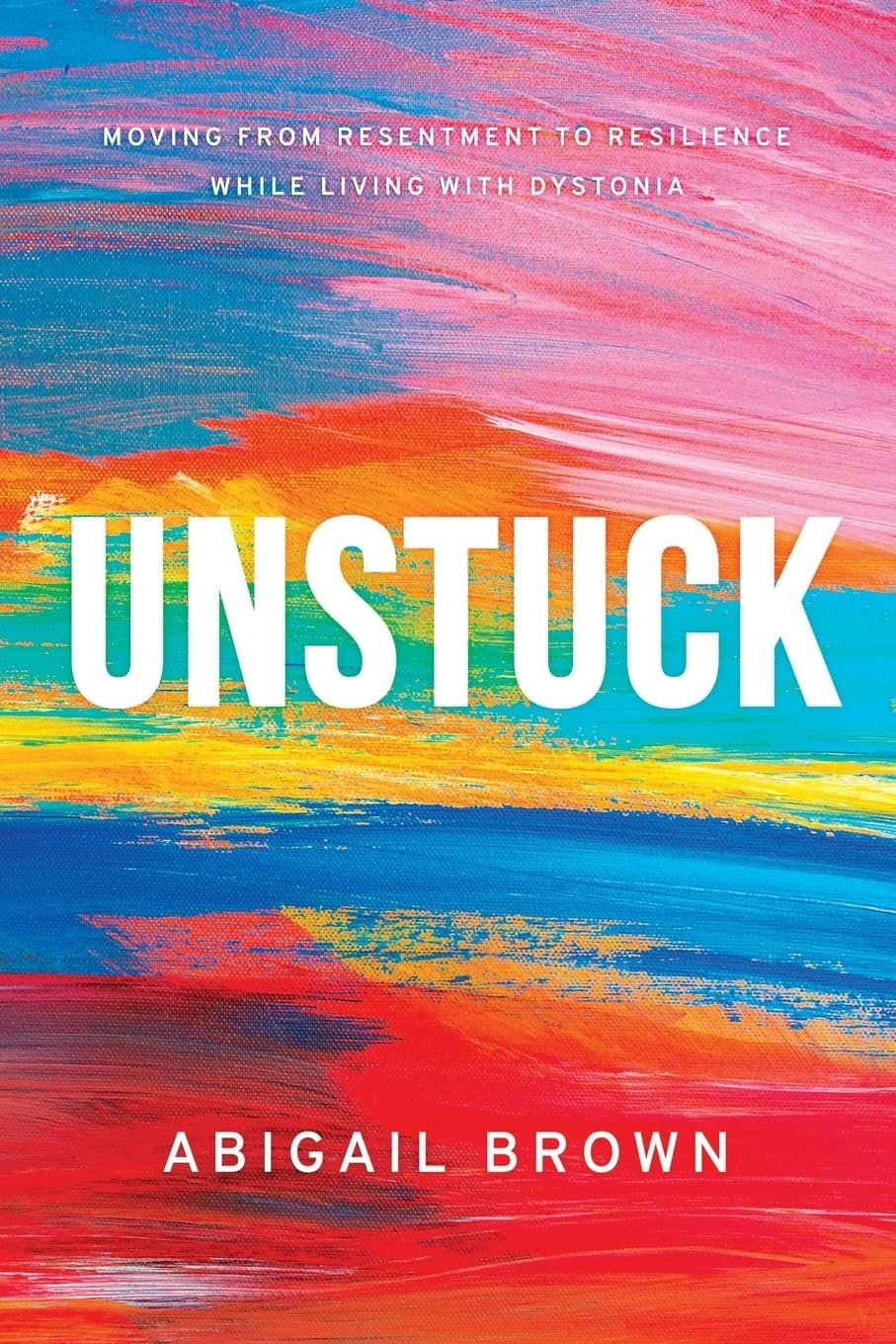
Abigail Brown’s Unstuck sets out to describe a painful and often unrecognized form of captivity: living not only with a disability but also with the imagined life one believes the disability has…
Books worth discovering. Authors worth knowing.
Abigail Brown’s Unstuck sets out to describe a painful and often unrecognized form of captivity: living not only with a disability but also with the imagined life one believes the disability has taken away. Brown writes about dystonia, recurring comparisons with a hypothetical able-bodied future and the emotional exhaustion of resentment. Her public…
Considered reviews, grounded in the book’s documented promise.
Abigail Brown’s Unstuck sets out to describe a painful and often unrecognized form of captivity: living not only with a disability but also with the imagined life one believes the disability has taken away. Brown writes about dystonia, recurring comparisons with a hypothetical able-bodied future and the emotional exhaustion of resentment. Her public description addresses the habit of asking what might have happened had circumstances been different. The book’s Christian perspective is explicit. Its central question is not how to become grateful on command, but how a person might acknowledge loss without allowing every possible future to be measured against the life that never occurred.
The invisible work of counterfactual grief
Brown’s description lingers on hypothetical questions about marriage, home and everyday opportunity. These are not abstract complaints but reminders that grief can concern unrealized lives as deeply as actual departures. A disability memoir that admits envy and anger may do more for readers than a triumph narrative built entirely around courage. It makes emotional contradiction legible: a person can appreciate support and still mourn limitations; love the people around them and still resent circumstances. The strongest element of the premise is its refusal to treat resentment as an unfamiliar enemy. The author knows it from the inside, and that experience is evidence about her own life, even if it cannot define everyone else’s.
Resilience without the demand to perform
The language of resilience can put unfair pressure on disabled people, as though endurance must always be publicly inspiring. Brown’s framework is religious and openly directed toward a change in spiritual perspective. A reader may find that faith meaningful, but its usefulness should not be confused with a universal emotional timetable. Some days remain physically difficult and socially constrained regardless of a person’s attitude. A nuanced reading must preserve the difference between finding room for hope and requiring cheerful testimony. Brown’s own public conversation acknowledges repeated grief and the continuing process of healing, offering a more complex portrait than the book’s hopeful subtitle might initially suggest.
A life written against comparison
Comparison has a peculiar cruelty when the imagined alternative self cannot be tested. Every possible relationship or success becomes available to the fantasy of what might have been; the actual present then bears the weight of competing with a person who does not exist. Brown’s decision to write about these thoughts gives them form and may interrupt their authority. The memoir’s strongest critical promise is not the disappearance of comparison but the recognition that longing is not a reliable measuring device for worth. A reader should nevertheless ask how the author balances private spiritual counsel with the realities of accessibility and support. Personal growth cannot remove structural barriers.
Faith as vocabulary and audience
Brown speaks directly from a Christian perspective and, in an interview, connects her change in outlook to prayer, Scripture and journaling. Her intended audience likely includes believers for whom that framework is comforting and actionable. Nonreligious readers may find the emotional account accessible while resisting its theological premises. Both responses are legitimate. A sound review should not disguise faith as a neutral clinical intervention, nor assume that its presence makes the account less emotionally serious. The book is best approached as testimony and reflection, not as a medical explanation of dystonia or a treatment recommendation.
The moral force of an unfinished journey
The verb “moving” in the subtitle is more persuasive than a claim to permanent arrival. It implies a repeated effort rather than a once-and-for-all conquest. Published conversations suggest that Brown considers her healing ongoing. That admission gives the account a possible integrity often missing from self-transformation narratives. Readers may value the companionship of someone who recognizes the difficulty without promising a world in which difficulty disappears. A complete appraisal would need to examine the memoir’s organization and prose, but its documented personal argument is substantial.
Witnessing versus prescribing
One of the virtues of first-person disability writing is that it can offer an account the reader would otherwise be unlikely to encounter. Its authority is strongest when it describes this person’s lived experience, not when it is mistaken for the mandatory emotional response of all disabled people. Brown’s Christian framework is central to her own movement away from resentment, and that specificity should be preserved. Readers may recognize themselves in her grief while interpreting it through other beliefs or practices. Respecting that difference is essential. The memoir should be evaluated for the honesty of its testimony and the care of its language, not for its ability to provide a universal model of acceptance.
A resilient story still needs a world
Disability is experienced in the body, but also through public spaces, jobs, institutions and relationships that can support or exclude. Brown’s emphasis on mindset addresses one significant part of the experience; it cannot erase the material world. A serious reader can value the book’s encouragement while asking where social support and structural accessibility enter the story. There is no contradiction in holding both ideas at once. A person may cultivate internal resources and still need practical accommodation from others. Keeping those realities together avoids turning an account of resilience into a suggestion that suffering is solely a matter of attitude. Brown’s more candid interview remarks provide reason to expect sensitivity to continuing difficulty.
Hope as practice
The emotional stakes of a book like this are sharpened by the possibility that faith and difficulty remain present together. A practice of resilience can offer meaning on an exhausting day without transforming that day into a victory story. Readers deserve an account capable of honoring both forms of experience.
Who will value this book
This book is especially relevant to readers interested in disability memoir, Christian reflections on suffering and the emotional toll of resentment. It should not be used as medical guidance or a universal standard for how people with dystonia ought to feel. The critical assessment relies on the publisher listing and a recorded author interview.
Scope of this assessment
This is a research-based editorial review drawn from identified bibliographic, author and publisher sources. It considers the work’s documented premise and the critical questions it invites, without claiming a complete firsthand reading. No unverified scene, character action or ending is asserted.
About the book.
An evidence-bounded critical introduction to faith-centered disability memoir. Published descriptions support the stated premise; interpretations are identified as editorial analysis, not confirmed plot details.
This is an unsponsored, research-based editorial review, not a claim to firsthand reading of the complete book.
Found a book worth opening?
Books worth discovering. Authors worth knowing.
Return to the Journal →