
Merlyn’s Reverse: An Androgynous Adventure
A limited-source spotlight on a provocative adventure title evoking Merlyn, reversal, and androgyny.
Books worth discovering. Authors worth knowing.
A limited-source spotlight on a provocative adventure title evoking Merlyn, reversal, and androgyny.
Merlyn’s Reverse: An Androgynous Adventure arrives with a premise that can be approached honestly even when substantial plot documentation is difficult to locate.
A title that turns a familiar legend around
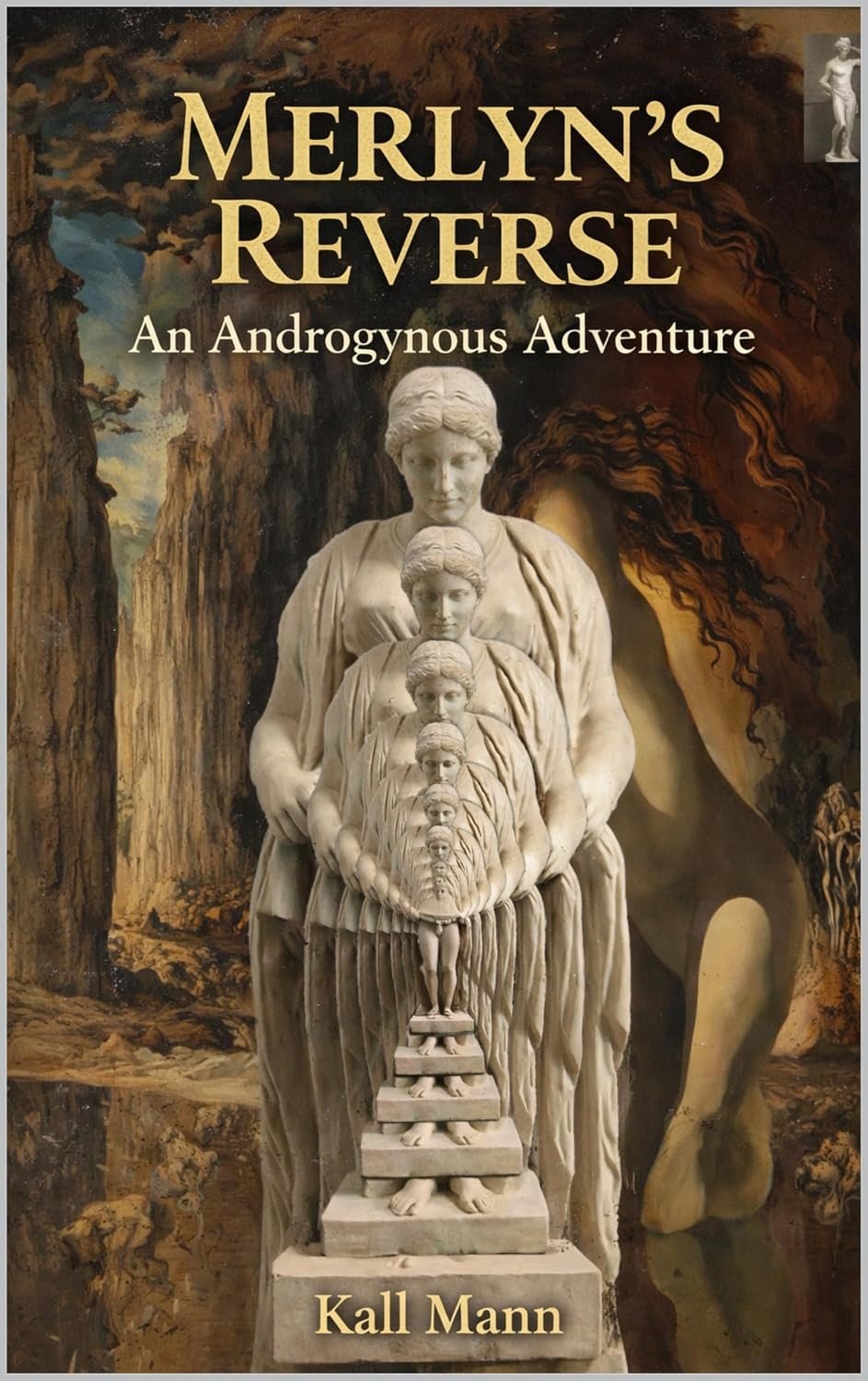
Merlyn’s Reverse: An Androgynous Adventure arrives with a premise that can be approached honestly even when substantial plot documentation is difficult to locate. The queue identifies Kall Mann as the author and Mogg Morgan as a translator; a separate bibliography associates Morgan with an editorial credit, a discrepancy requiring confirmation before publication. The title itself is provocative. Merlyn evokes the wizard attached to Arthurian storytelling, while ‘Reverse’ suggests an inversion of what readers expect from such a figure. ‘An Androgynous Adventure’ puts questions of gender expression or duality near the center of the book’s public presentation. Those phrases are verified as parts of the title, not proof of particular scenes or characters. A responsible introduction should not pretend that a detailed synopsis is available. Instead, this limited-source spotlight examines the literary expectations raised by the title and the questions a potential reader might bring to the actual work. That is a narrower but more credible form of coverage than manufacturing a quest, magical object, relationship, or ending.
Why the name Merlyn carries weight
Versions of Merlin occupy a long history of legend, reinterpretation, and modern fantasy. Some readers know the wizard as a counselor to rulers, others as a seer or a figure caught between ordinary time and supernatural possibility. That broad cultural history is context for the title, not evidence that Mann’s work reproduces any specific episode of Arthurian legend. Indeed, the word ‘Reverse’ invites caution about assumptions. A reversal could concern chronology, power, perspective, or the familiar hierarchy between the one giving advice and the person receiving it. None of those possibilities should be reported as the novel’s documented plot. Their value is as reading questions. Does the text use legend to challenge received authority? Does it change who holds knowledge, or shift the voice through which magical history is told? What might it mean for a symbol associated with inherited tradition to become a starting point for reinvention? Readers attracted to mythic retellings often enjoy such questions, but they deserve an honest admission of uncertainty rather than a confident invented summary.
Androgyny as an invitation to look again
The subtitle explicitly uses the term ‘androgynous,’ a word that can refer to blending or moving beyond conventionally separated masculine and feminine markers. That wording alone does not establish a character’s identity, pronouns, sexuality, or experiences. It would be careless to assign those details without the work itself. As an editorial frame, however, the subtitle invites consideration of classification. Fantasy worlds frequently divide heroes, sages, warriors, and caretakers into inherited roles; a work foregrounding androgyny may invite readers to question whether such partitions tell the full story. The value of exploring the term lies partly in allowing it to remain complex. Androgyny is not a single personality type or an automatic sign of particular beliefs. A reader can consider how costume, speech, authority, and transformation might be represented without assuming the book contains a specified episode involving any one of these elements. Here the distinction between theme suggested by packaging and theme demonstrated through text is essential. Responsible criticism begins by saying which kind of claim is being made.
The problem with inventing a fantasy synopsis
A striking title can tempt an article writer to fill in a familiar story: an ancient wizard, a misplaced apprentice, a quest for a talisman, a villainous court, and a climactic restoration of balance. That sequence might sound plausible, but plausibility is not documentation. None of it follows from the bibliographic record for Merlyn’s Reverse. The ethical alternative is to identify what prospective readers can verify. The work is associated with Kall Mann, with Mogg Morgan credited in an additional production role by different sources. It presents itself as an adventure and draws its hook from reversal, legend, and androgyny. Beyond those facts, a full plot account would require publisher copy, a reliable preview, or the complete text. This distinction protects both author and audience. Authors deserve not to have stories attributed to them that they did not write, while readers deserve an accurate sense of whether a feature is informed commentary or guesswork. The absence of a public synopsis is a limitation, not permission to invent one.
A note on the collaborative credit
The sheet records Mogg Morgan as translator, while an independent author bibliography lists Morgan as editor for this title. These labels describe different kinds of work. Translation shapes a text across languages; editing may involve selection, developmental work, correction, or presentation. A responsible metadata record must preserve the owner’s original entry while flagging the discrepancy for verification. The public article therefore refers to Morgan as an associated contributor without claiming to resolve the role. This is especially important for a book whose subtitle suggests complex treatment of identity and voice. Readers should not be led to assume there was a particular original language or editorial process without supporting evidence. A bibliography is a starting point for source comparison, not a replacement for a title page or publisher statement. The most useful next verification would be a photographed copyright page, credible publisher listing, or full preview identifying the role. Until then, retaining the unresolved note is better than silently normalizing the attribution.
Reading questions worth carrying into the book
If this title appeals to you, begin with its own terms rather than a borrowed plot outline. What does the story call an ‘adventure’? Does it preserve familiar mythic conventions so that its reversal feels significant, or does it invent a different world altogether? Who is allowed to possess knowledge? Does the work treat ambiguity as strength, difficulty, humor, or a combination of these? How do the voices presented in the text complicate its subtitle? These are questions for a future reading, not findings represented as already established. A comparison with traditional Merlin stories might be illuminating only if the book actually engages those traditions in a sustained way. Likewise, a reader interested in representations of gender should approach the work attentively without forcing characters into preselected categories. A good encounter with unconventional fantasy depends on openness to surprises. This spotlight can help name the curiosity, but the book alone must answer what becomes of it.
Who might be interested
Merlyn’s Reverse: An Androgynous Adventure is a candidate for readers drawn to mythic titles, experimental reinterpretations, or works that signal interest in the boundaries of conventional identity. It may also appeal to collectors exploring little-known fantasy and esoteric-adjacent literature, provided they are comfortable doing additional verification before purchase. Because the available evidence is limited, prospective readers who require a detailed spoiler-free synopsis, strong genre placement, or content warnings should look for a publisher preview or sample rather than relying on this feature. The recommendation is exploratory, not an assurance that the book delivers a specific plot or viewpoint. Curiosity about the title is legitimate; a claim of firsthand assessment without access to the text would not be.
About the credited creators
Kall Mann is the author named in the connected queue and bibliographic references for Merlyn’s Reverse. Mogg Morgan is associated with the edition, although the contributor’s precise role differs between sources. This article records that conflict rather than choosing one unsupported resolution. Its research confidence is limited to title and bibliographic identity. Editorial approval should follow inspection of an authoritative edition credit and a fuller description of contents. Such a review is especially important before the files are used by an automated publishing system.
About the book.
Adventure fiction; mythic and identity-oriented title (limited-source spotlight). A limited-source spotlight on a provocative adventure title evoking Merlyn, reversal, and androgyny.
Editorial book feature, not paid sponsorship. Original research-based commentary, not firsthand complete-book reading. Public synopsis is limited: book-specific plot is not invented. Editorial sign-off required for contributor credit.
Found a book worth opening?
Books worth discovering. Authors worth knowing.
Return to the Journal →