
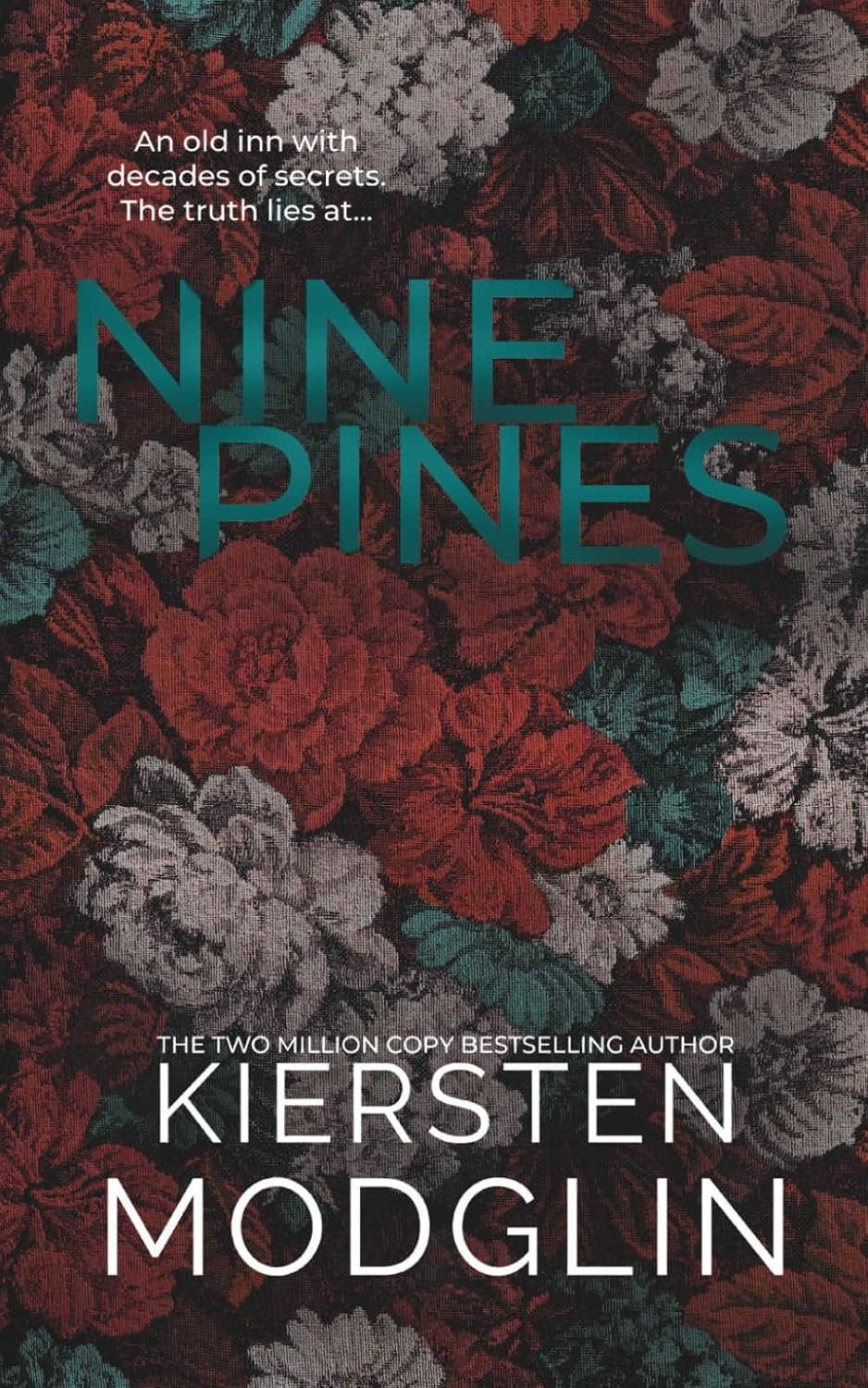
Nine Pines
Two women pursue unsettling secrets linked to an inn, a disappearance, and a town where gossip clouds the truth.
Books worth discovering. Authors worth knowing.
Two women pursue unsettling secrets linked to an inn, a disappearance, and a town where gossip clouds the truth.
Kiersten Modglin’s Nine Pines begins from a compelling contradiction: an inn described as safe is also the setting of a disappearance that continues to trouble the people connected to it.
An inn where the past will not stay quiet
Kiersten Modglin’s Nine Pines begins from a compelling contradiction: an inn described as safe is also the setting of a disappearance that continues to trouble the people connected to it. On the author’s official book page, Lennon arrives with questions about her own mysterious background and a conviction that Nine Pines can help her understand it. In another thread, Ingrid has come to suspect her husband is concealing something. She arranges a test involving a stranger, only for the woman who participates to vanish. The book’s public premise therefore does not depend on one isolated riddle. Two women are drawn toward unanswered questions for different reasons, and their searches begin to connect the idea of hidden truth with the danger of pursuing it. Modglin presents this as domestic suspense, a genre where seemingly ordinary places become charged because people are not saying what they know. The inn is an effective central image: visitors come expecting shelter, yet transient guests and private histories can make it difficult to know who really belongs there.
Lennon and the problem of belonging
Lennon’s investigation is personal. According to the author synopsis, she is trying to learn where she came from, and the truth seems to be tied to Nine Pines. That is more than curiosity about a local scandal. Questions of ancestry and belonging can unsettle a person’s account of their own life, especially when the answer may be held by people who have strong reasons to remain silent. Small-town rumor adds another complication. Information travels quickly, but repetition is not the same as reliability. A community that believes it knows everyone may also protect narratives that are convenient rather than true. In this context, Lennon’s task involves deciding which voices to trust and which clues require independent thought. A book feature should not invent her family history or disclose the result of the search, because the official description holds those back. What it does confirm is an investigation in which discovering facts carries emotional risk. Readers drawn to suspense rooted in identity, inheritance, and the unreliability of local consensus will recognize the appeal of this strand.
Ingrid and the threat inside a relationship
Ingrid’s part of the synopsis starts close to home: she thinks her husband is lying. Instead of accepting her suspicions, she arranges to test him through another woman, but that plan leads to a disappearance and fresh uncertainty. The sequence illustrates why domestic thrillers are frightening without needing an unfamiliar criminal underworld. The starting point is a relationship whose shared history should create trust. When trust begins to fracture, everyday behavior can look suddenly ambiguous. Does secrecy signal betrayal, private fear, or something far worse? The description does not establish the answer, and this article will not manufacture one. It does establish that Ingrid’s efforts to verify her suspicions create consequences she did not foresee. That mechanism lends suspense an uncomfortable moral texture: investigation can be necessary, yet the methods used to investigate can expose other people to danger. Readers can consider where the limits of certainty lie when someone is forced to act before they have a full explanation.
The two disappearances as a shared disturbance
The official promotional copy links the inn’s older missing-girl mystery and the disappearance connected to Ingrid’s plan by inviting readers to follow two women digging for answers. It does not authorize an exact theory about how every person or event is related. That distinction matters in mysteries. A feature that supplies an invented connection can undermine the very puzzle the author built. The more useful reading focus is on repetition: when different women disappear or are forgotten, a community’s response becomes part of the story’s ethical landscape. Who is treated as worth looking for? What makes one story linger while another is dismissed? Such questions reflect the premise’s wording about overlooked missing girls, without declaring an unsupported solution. The two strands also provide distinct emotional registers. Lennon looks backward to her own origin, while Ingrid confronts a present relationship that has become unstable. The past and present may pressure each other, but readers should discover how through the novel rather than a manufactured synopsis.
The small town as an information system
Small towns in suspense fiction can create a special form of pressure: almost everyone knows something about everyone else, but the knowledge is partial, emotional, and sometimes wrong. Modglin’s official description explicitly says gossip circulates as a kind of currency. That is a sharp organizing idea. Information can grant status, protect someone, or ruin an innocent person’s reputation. It can also make genuine inquiry difficult, because established narratives resist correction. An inn adds a second information network of temporary guests who may see things locals miss but lack the context to interpret them. None of this requires inventing a specific witness or secret passage. It is a way to understand why the stated setting serves suspense. Readers might watch how rumor changes their own assumptions about characters, and how swiftly they judge people before having sufficient evidence. The thriller’s emotional tension depends not only on frightening acts but on the experience of not knowing whom to believe.
Reading for uncertainty rather than answers alone
A fast-moving mystery naturally encourages the question ‘What happened?’ Yet Nine Pines also invites ‘How do people decide what is true?’ The advertised dual perspective supplies readers with potentially contrasting information and motives. If one strand makes a character seem suspicious and the other makes that character sympathetic, the audience may be forced to revise its assumptions. This is a genre expectation, not a claim about a particular twist. Modglin’s publicly available synopsis promises disturbing truths and high stakes, but it is deliberately reticent about the final revelations. Readers who prefer to avoid spoilers should respect that boundary. They can notice the interplay of safety and danger in the inn’s reputation, the role of gossip, and the cost of seeking facts that others have chosen to bury. The book’s title itself is unadorned, letting the location carry emotional weight. By the time readers return mentally to ‘Nine Pines,’ they may find the apparently ordinary place no longer feels neutral.
Who should read Nine Pines
Nine Pines is an inviting choice for readers who enjoy domestic suspense, missing-person mysteries, divided narratives, and the unsettling atmosphere of a town reluctant to revisit its secrets. Its appeal is especially strong for those who prefer psychological uncertainty and damaged trust alongside an investigation. Readers seeking a traditional police procedural with a documented forensic structure should know the author’s description foregrounds two women’s personal searches instead. The setup includes disappearance and possible deception within a marriage, so it may feel intense for readers sensitive to those subjects. Approach it for atmosphere, character-driven suspicion, and the gradual reconsideration of what a safe place can conceal, rather than for any promised outcome that the publisher has not disclosed.
About the author
Kiersten Modglin presents Nine Pines on her official website as a domestic-suspense novel involving Lennon, Ingrid, and a troubled inn. The site supplies the basis for the premise used in this feature. This is a research-based editorial introduction, not a claim that every chapter or twist has been examined. The author-controlled synopsis offers sufficient grounding to recommend the book by genre and dramatic setup without spoiling its mysteries.
About the book.
Domestic psychological suspense; missing-person mystery. Two women pursue unsettling secrets linked to an inn, a disappearance, and a town where gossip clouds the truth.
Editorial book feature, not paid sponsorship. Original research-based commentary, not firsthand complete-book reading. The owner’s Python automation will resolve the cover placeholder.
Found a book worth opening?
Books worth discovering. Authors worth knowing.
Return to the Journal →