
Paoletta: An Eye for an Eye
Exile, grief and the promise of revenge send Paoletta Cadoville into the dangerous intrigues of revolutionary Paris.
Books worth discovering. Authors worth knowing.
Exile, grief and the promise of revenge send Paoletta Cadoville into the dangerous intrigues of revolutionary Paris.
S.
Exile Before the Revolution Takes Everything
Paoletta Cadoville begins J. R. Powell’s Paoletta: An Eye for an Eye in exile. The publicly available description places her family on a Caribbean island, cherishing the possibility that they might eventually return to Paris. That hope is fragile from the start. A devastating event leaves Paoletta alone, grievously scarred and determined to understand the fate of the people she has lost. The story then leads back toward revolutionary France, where her search for answers pulls her into a world of clandestine allegiances and political violence.
The premise has the structure of a revenge thriller, but the historical setting makes private justice especially difficult to separate from public disorder. In a period when regimes and loyalties can change with terrifying speed, deciding whom to trust becomes an act of survival. Paoletta is not merely hunting an individual antagonist through an otherwise stable society. She must read danger in institutions, friendships and opportunistic alliances whose meaning may shift as the revolution advances. The question of whether she can secure retribution is inseparable from the question of what pursuing it will do to her.
A City Under the Guillotine
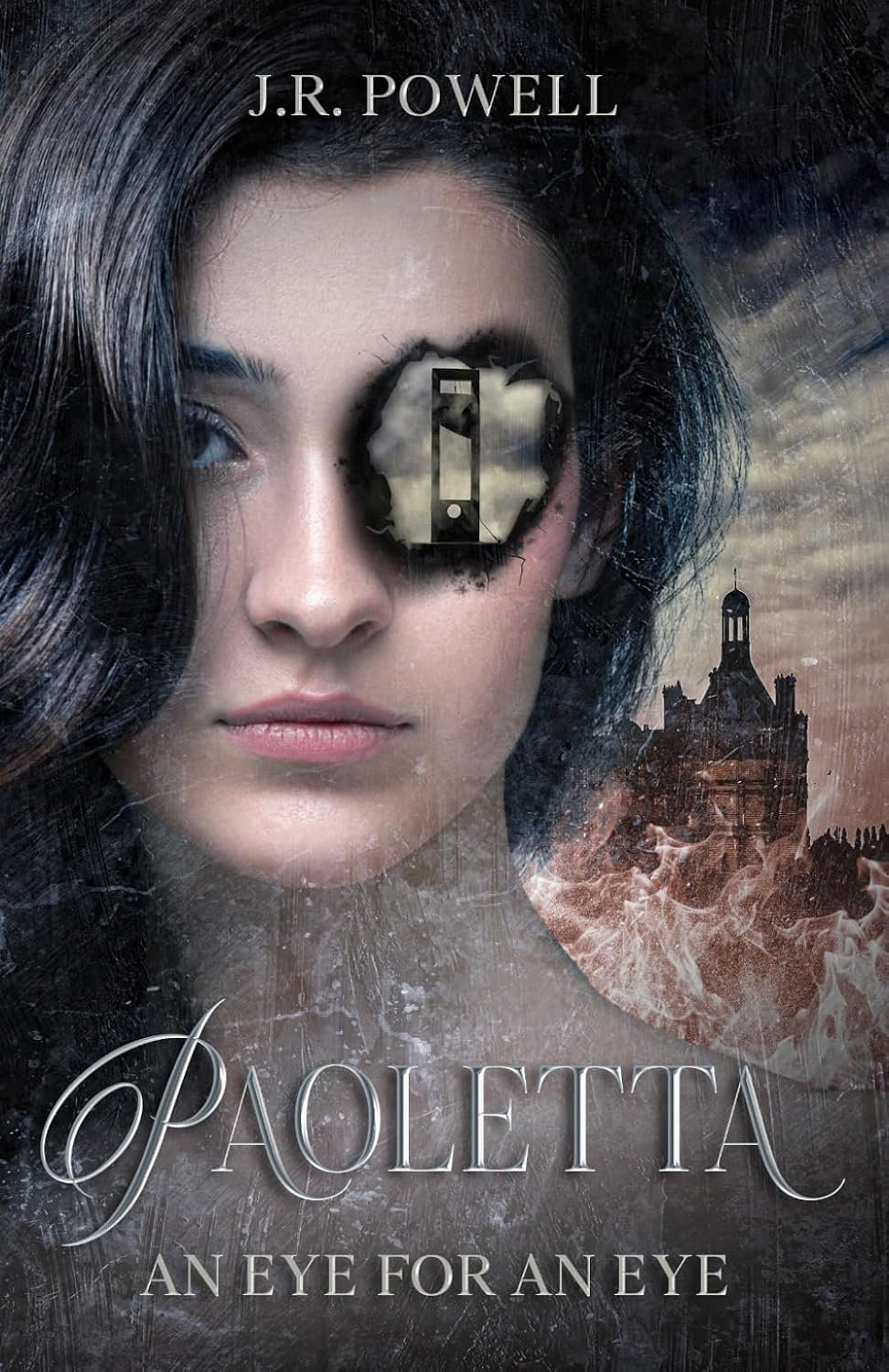
The published book materials emphasize a Paris living beneath the threat of the guillotine. The image suggests the machinery of state violence and the fragility of apparently secure social positions. Powell’s chosen setting carries a long historical record of ideals tested by fear, rivalry and public punishment. The novel does not need a simplified lesson about the French Revolution to use these pressures. A character who travels toward such a city seeking justice confronts an uncomfortable problem: political movements often claim to administer justice even as they produce new victims.
That distinction makes the story more complicated than a conventional vendetta. Paoletta may believe that identifying those responsible for her family’s tragedy will return agency to her. Yet in a setting where the terms of guilt and innocence themselves can be manipulated, personal certainty can become dangerous. Readers may find the central tension in the distance between what she is owed and what retaliation demands. The synopsis does not establish a definitive moral verdict on her decisions; it promises a confrontation with their cost. That is an appropriate place for a spoiler-conscious feature to stop.
Survival Changes the Meaning of Identity
Public descriptions make a point of Paoletta’s scars. Such a detail can operate at two levels: the visible record of violence and a changed relationship with one’s former life. The family that knew her has been destroyed, and the dream of returning home on familiar terms is gone. She must act in a society where appearances can influence who is believed, who is protected and who is vulnerable. The story’s historical context heightens those stakes. A woman’s choices are shaped not only by her private strength but by the constraints of the environment around her.
A responsible discussion of the character should avoid equating bodily injury with moral corruption or treating trauma as an automatic source of strength. The information available says she survives and chooses to investigate; it does not make pain a desirable path to empowerment. What gives Paoletta narrative agency is the decision to pursue truth in spite of the risks attached to it. That choice is morally charged because vengeance can consume attention that might otherwise go toward safety, friendship or a future beyond the original wrong.
Secrets, Alliances and the Performance of Trust
The book’s description names political intrigue, secret societies and dangerous alliances as forces Paoletta encounters. These elements belong naturally to a thriller about revolutionary upheaval. Different people may seek to use the same information for incompatible purposes. A sympathetic helper can have an agenda, while a suspicious stranger might know something essential. In such fiction, knowing the truth requires attention not only to what someone says but to the incentives shaping their words. Paoletta’s determination may keep her moving, but determination alone cannot guarantee that every conclusion is correct.
The author has supplied excerpts through historical-fiction blog tours, including material involving a theatre and people preparing to perform. That public material points toward settings where the boundary between presentation and reality may matter. It is tempting to turn a fragment into a large claim about the whole novel; this feature resists doing so. What can be said is that the narrative inhabits a world in which performance, public speech and political identity carry consequences. In the French Revolution, an audience might be entertained by a scene one night and persuaded by an argument the next.
Revenge Versus the Search for Truth
The subtitle’s phrase An Eye for an Eye makes the question of proportionality central. Readers encounter a protagonist who has suffered a catastrophic injustice. Sympathy for her anger is understandable, but sympathy does not decide whether every method of revenge will be justified. Historical thrillers are often strongest when they refuse to make the moral equation simple. Paoletta’s need to know what happened to her family can be urgent and legitimate even while the steps she takes to obtain answers place others, and herself, in danger.
In an interview, Powell described wanting difficult scenes to retain their disturbing force rather than smoothing away the brutality of ambition. The author’s remarks also identify grief over the loss of Paoletta’s family as emotionally demanding to write. Those comments help establish his interest in the violence’s consequences. The novel’s premise is not merely a license for spectacle. It asks what happens to people when political calculation and personal cruelty intersect. For a reader, the relevant suspense is as much about whether Paoletta can retain a sense of herself as whether she can identify an enemy.
The Research Behind a Dangerous Paris
Powell’s publicity materials identify him as UK-born, living in Germany and working as a translator and editor. He has also described drawing on time spent in Paris while preparing this historical thriller. Such a background does not make every incident factual, nor should readers confuse his characters with historical figures. It does suggest a writer attentive to the textures of place and to the challenge of making a period feel inhabited rather than merely decorated with famous names.
The debut appeared in 2024 according to book-tour material, and publicly advertised page counts establish it as a substantial historical thriller. Its settings and historical violence will attract readers seeking atmosphere, but the authorial intent extends beyond costume and scenery. The revolutionary crisis puts pressure on ideas of belonging, justice and legitimacy. Readers who appreciate historically grounded suspense can pay attention to how the public world’s instability alters the private meaning of each promise. The book asks who can be trusted when the institutions designed to judge wrongdoing may themselves be implicated in it.
Content and Reader Expectations
Some public tour materials explicitly flag violence, sexual assault and rape, as well as substance use and language reflecting historical attitudes. These are important reader notes, not marketing embellishments. A feature about the novel should acknowledge difficult material without reproducing graphic scenes or portraying sexual harm as an entertainment attraction. Readers vary in what they wish to encounter on the page. Knowing the broad content before starting allows them to make an informed choice about whether the book suits them.
There is also a difference between introducing a historical thriller and reviewing its execution after reading it. This feature draws on publisher-style synopsis, author interviews, excerpts and published commentary, not an independently verified complete reading. That is enough to identify the central cast, setting and conflict. It is not enough to announce exactly how the plot balances all of its strands or whether a twist is earned. Good editorial restraint protects both the prospective reader’s surprises and the novel’s integrity, while still explaining why its moral stakes are compelling.
The Price of an Answer
Paoletta: An Eye for an Eye offers readers a protagonist in motion between two forms of loss: a vanished family life and the possible loss of humanity that revenge may demand. Caribbean exile begins as an interruption from which Paoletta hopes to return. The catastrophe destroys that simple future. Her journey toward revolutionary Paris becomes a pursuit of answers through a landscape where official claims of virtue and the practice of violence coexist uneasily. Powell’s historical backdrop makes the cost of every alliance feel consequential.
Readers drawn to ambitious historical thrillers, resilient but morally complicated heroines and conspiracies shaped by public upheaval have a clear reason to look at this book. The most persuasive promise is not that justice will arrive easily. It is that Paoletta must confront what justice would mean in circumstances where revenge appears both understandable and corrosive. The published premise leaves her ultimate decision open, as it should. Her search invites the reader to enter the story asking not only who committed the original wrong, but what kind of person she can choose to be afterward.
About the book.
Paoletta Cadoville and family live in exile on a Caribbean island; after a devastating tragedy leaves her alone and scarred, she seeks truth in Revolution-era Paris and confronts clandestine alliances and the moral cost of revenge.
Editorial book feature, not paid sponsorship. Research-based commentary from named public sources, not a first-hand complete-book review. The cover placeholder will be resolved by the owner’s publishing automation.
Found a book worth opening?
Books worth discovering. Authors worth knowing.
Return to the Journal →