
Porn Exposed
Nevaeh Keitt offers a Christian, solution-oriented personal testimony about a private struggle and the hope of change.
Books worth discovering. Authors worth knowing.
Nevaeh Keitt offers a Christian, solution-oriented personal testimony about a private struggle and the hope of change.
Source-based review: verified bibliographic facts and independent interpretation, without a claim to full-text reading.
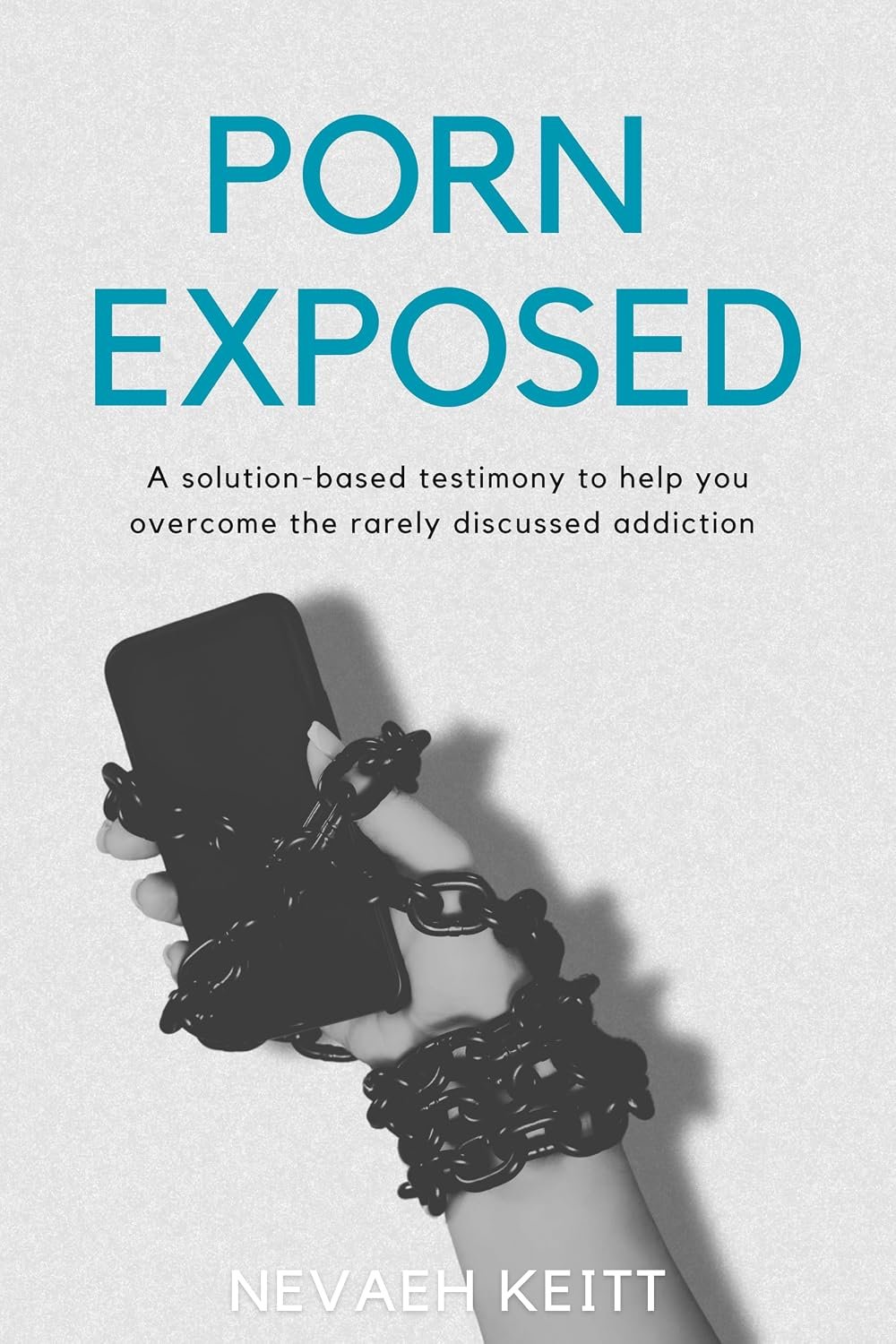
The title Porn Exposed sets out its purpose with unusual directness. Nevaeh Keitt’s book is identified as a solution-based personal testimony intended to help people address pornography use that they experience as an addiction. A public introduction to the author also places her testimony within her Christian faith. These details give the work a discernible position: it is not presented as a neutral survey of all research into sexual behaviour, nor should it be mistaken for a clinical treatment manual. Its advertised form is a personal account offered in the hope that difficult experience can be made useful to somebody else. This review considers that promise, and the limits of what the available description can establish.
A testimony rather than a universal prescription
The word testimony matters. It asks the reader to encounter one person’s account of a struggle and the meaning she attaches to change. It does not promise that every reader has the same history, values, or problem. Keitt’s subtitle brings together two elements that are often separated in public discussion: a wish to speak frankly about behaviour people may hide, and an emphasis on possible responses rather than despair. Her religious framing is part of the identifiable book, not an incidental label that an editor should erase. Readers who share those beliefs may understand the language of change through prayer, personal responsibility, and their faith community; others can recognize the personal nature of the narrative without accepting its entire framework.
Calling something an addiction is more complicated than using the word in everyday speech. Personal distress, compulsive patterns, sexual attitudes, and religious conflict are not interchangeable. A reader should not use a book title alone to diagnose themselves, or conclude that everyone who views sexual material has a disorder. The useful distinction is between the author’s own account and claims that would require independent clinical evidence. A strong testimony can make someone feel less isolated, but it cannot determine what support every individual needs. This boundary protects both the book’s sincerity and the reader’s freedom to consider other forms of help.
The difficulty of speaking about shame
One reason a private struggle can be hard to discuss is that the language surrounding it quickly becomes moralized. People may fear being judged for admitting behaviour that conflicts with their expectations for themselves. Keitt’s stated intention to address a rarely discussed issue suggests an audience for whom silence has become part of the problem. The most constructive question to bring to the book is not whether its author can solve every reader’s difficulty, but how she creates room for honest disclosure without reducing a person to one habit. The title invites candour; it does not establish what specific exercises, conversations, or steps the text includes.
A thoughtful reader can also hold two ideas at once: people can take responsibility for conduct that troubles them, and they need not be shamed into thinking that change is impossible. Such a distinction is especially important in faith-centred personal writing, where moral language may be emotionally powerful. Accounts of struggle are at their most humane when they leave space for setbacks, conflicting feelings, and different paths to support. Whether Keitt’s book achieves this on every page cannot be assessed without the complete text. It remains a worthwhile question for anyone approaching a testimony whose promise is practical and personal at the same time.
What a solutions-oriented book can offer
The phrase solution-based suggests a forward-looking purpose. It directs attention toward what someone may do next, rather than asking them only to recount what went wrong. That is a meaningful ambition for personal nonfiction. A solution can be as ordinary as becoming more aware of triggers, arranging a supportive conversation, or asking for professional assistance when behaviour causes significant distress; these are examples of the larger subject, not verified instructions from this particular book. The exact methods Keitt recommends have not been documented in accessible excerpts, and readers should not be told she advocates a specific programme without evidence.
This uncertainty makes reading critically more important, not less. Readers can look for how the author defines success, whether she recognizes different circumstances, and how she distinguishes her story from advice for others. They can ask whether the narrative makes space for meaningful choice, supports private boundaries, and treats relationships with care. No personal account is diminished by acknowledging that its author’s path is one path. Indeed, that modest framing may make the testimony more credible to those who have been disappointed by promises of effortless change.
Faith, agency, and care
The publicly available author introduction speaks about Keitt’s commitment to Jesus Christ. In this context, faith is an interpretive lens through which the writer may discuss motivation and hope. A respectful review need not endorse or dismiss that lens. It can ask how belief helps someone understand responsibility, whether a spiritual vocabulary opens possibilities for compassion, and how a book can address behaviour without presenting its author’s convictions as a universal measurement of health. For some readers the religious dimension will be essential; for others it will signal that this is not the right starting point for them.
There is also a practical ethics of reading sensitive material. People who are worried about sexual behaviour, relationships, or mental health deserve privacy and evidence-based options where necessary. A testimony can complement supportive community and professional guidance, but it should not replace individualized assessment. The book’s advertised aim is encouragement through experience. Nothing in its verified metadata justifies a promise of recovery, a percentage success rate, or a claim that a particular intervention works for everyone.
Who might find value here
Porn Exposed is likely to interest readers seeking an explicitly Christian personal testimony about pornography use, secrecy, and the hope of change. It may be particularly relevant to someone who wants to hear an individual speak about a taboo experience rather than read only abstract debate. The emphasis on a solution-based account also invites readers who value practical reflection, though the precise tools offered remain unverified. People seeking a medical definition of behavioural addiction, treatment tailored to their needs, or a comprehensive review of sexual-health evidence should look beyond one testimony and consult appropriate professionals. Readers who do not share the author’s faith may find the perspective less closely aligned with their needs, even if the underlying themes of honesty and agency remain familiar.
As a review based on the verified title, subtitle, cover, and public description of Keitt’s testimony, this article does not pretend to judge the book’s pacing, chapters, anecdotes, or ultimate conclusions. Its identifiable distinction is the decision to make a private difficulty speakable within a religious and solutions-oriented frame. Whether that frame feels compassionate, persuasive, or challenging will depend in part on the reader’s own experience. The soundest approach is to encounter the book as one woman’s invitation to conversation—not as a verdict on everyone else.
About the book.
Nevaeh Keitt offers a Christian, solution-oriented personal testimony about a private struggle and the hope of change. Review framing reflects documented descriptions and clearly limited sources.
Non-sponsored book: the MarketAnyBook source queue marks this listing as non-sponsored. This is a research-based review-style editorial discussion and not an assertion that the writer read the complete book. When interior text was unavailable, analysis of themes or possible reading questions is explicitly interpretive and not presented as documented plot.
Found a book worth opening?
Books worth discovering. Authors worth knowing.
Return to the Journal →