
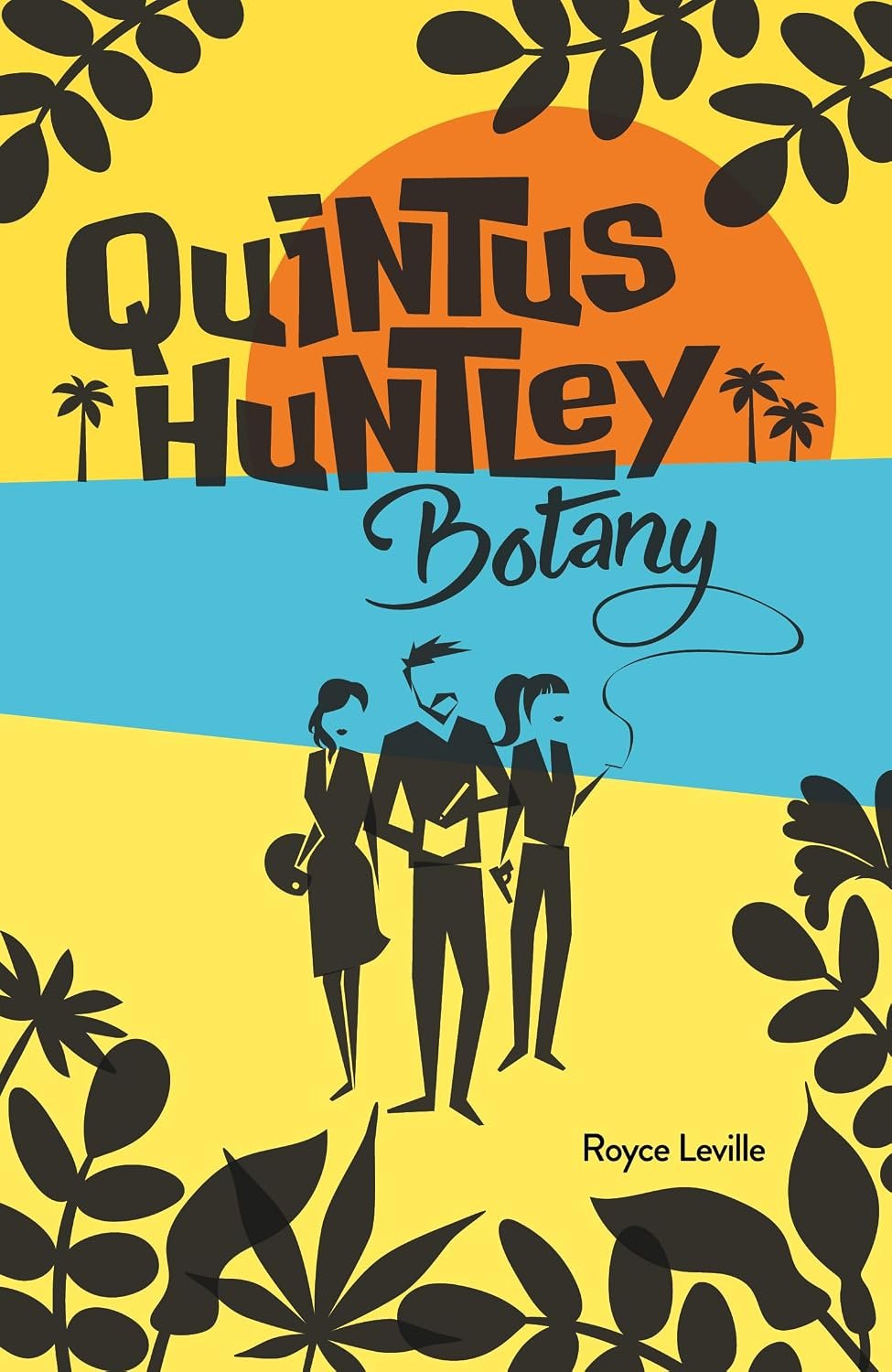
Quintus Huntley: Botany
A poet becomes a murder suspect when his book is found near a slain violinist. That is the improbably apt beginning of Royce Leville’s Quintus Huntley: Botany, a crime-comedy set among the cultural…
Books worth discovering. Authors worth knowing.
A poet becomes a murder suspect when his book is found near a slain violinist. That is the improbably apt beginning of Royce Leville’s Quintus Huntley: Botany, a crime-comedy set among the cultural and political factions of Perth. Quintus is a university lecturer and failed or at least struggling literary figure who attempts to clear his name by…
Considered reviews, grounded in the book’s documented promise.
A poet becomes a murder suspect when his book is found near a slain violinist. That is the improbably apt beginning of Royce Leville’s Quintus Huntley: Botany, a crime-comedy set among the cultural and political factions of Perth. Quintus is a university lecturer and failed or at least struggling literary figure who attempts to clear his name by solving the crime; Detective Elenore Everest, public-relations writer Aphra Massey and an elderly hacker named Henrikson complicate the investigation. A distinctive hook makes the book more than an eccentric whodunit: poetry, usually regarded as useless in a practical emergency, becomes a way of noticing motive and pattern.
A suspect who reads the world in stanzas
Quintus’s literary training is not an implausible superpower so much as an alternative habit of attention. A poet may be accustomed to interpreting repetition, ambiguity and words that conceal more than they say. A conventional investigator needs timelines and physical evidence; a poet might notice which story someone is trying too hard to tell. The public synopsis explicitly describes Huntley using his sense of narrative to infer motive. The risk, of course, is that metaphor could become a magic shortcut, enabling brilliant guesses where credible investigation should be required. That tension is what makes the setup interesting. A strong crime comedy can acknowledge the absurdity of its amateur detective while letting his odd perspective produce something real.
Perth is not interchangeable scenery
Independent reviews place the story in Perth’s Peppermint Grove, with a plot extending into contested development, politics and the creative world. The setting allows the novel to examine how a city explains itself to outsiders and how its insiders preserve status. Cultural organizations, property interests and social aspiration can all become sources of motive. An Australian urban novel that uses local speech and neighborhoods well has a specificity no generic city thriller can reproduce. The question for the reader is whether social satire does more than provide colorful suspects—whether the motives arise from recognizable pressures and contradictory ambitions. Published critical discussion suggests that this connection between crime and cultural hierarchy is a central feature of Leville’s approach.
The murder of an artist
The deceased violinist and the pen or poetry connected to the crime turn artistic ambition into a possible instrument of violence. There is a productive irony in the difference between art’s self-image and its surrounding world: artists may speak in the language of authenticity while institutions trade in prestige, patronage and exclusion. An investigation among academics and performers can make that discrepancy visible. The book’s comic promise is not merely that artistic people behave badly; it is that the professions most invested in interpretation may be least willing to interpret themselves with honesty. This is why the protagonist’s failure as a poet might be more revealing than an effortlessly gifted detective would be.
Comedy beside danger
Crime comedy is a difficult balance. If the murders become weightless, the mystery loses moral pressure; if the stakes are played with unbroken gravity, the eccentric ensemble can look like an intrusion. Reviews of Botany point to dry humor and social observation, and the plot supplies real jeopardy through poisoning and institutional power. The test is whether the laughter clarifies human weakness rather than cancelling victims’ suffering. Quintus’s awkwardness, the detective’s professional patience and the hacker’s unlikely resourcefulness provide a plausible ensemble for different registers of comedy. The actual exchanges deserve close reading, but the structure promises more variety than a one-joke protagonist.
The value of the unlikely detective
The greatest pleasure of an unconventional investigator is the possibility of seeing familiar systems differently. Quintus is not the ideal modern policeman or the invincible genius; his vulnerabilities are part of the concept. In a culture quick to assign people value by institutional recognition, a marginal poet becomes unexpectedly useful. The crime is still a crime, and a convincing solution still needs evidence, but the novel’s wider artistic proposition is that someone may understand the world precisely because he has failed to prosper inside its usual hierarchies.
Whose stories count as clues?
The poet-detective premise invites a particularly enjoyable question: when does someone’s habitual way of telling a story reveal more than their formal testimony? Artists and officials alike may have explanations that present themselves as coherent, while their contradictions expose private ambition. Quintus’s marginal position in Perth’s literary hierarchy could make him alert to these performances precisely because he is accustomed to being overlooked. The fact that his poetry is connected to the initial murder makes interpretation personally dangerous rather than intellectually ornamental. Crime fiction has long valued the eccentric outsider, but Leville’s literary angle gives that figure a local cultural meaning. The reader is invited to enjoy the absurdity without abandoning the requirement for a fair solution.
Satire as a form of affection
A city novel that mocks its cultural institutions can turn sour if every artist or official is presented as a fraud. The independent accounts of Botany suggest a more complex tonal intention: sharp observation alongside recognizable attachment to Perth’s peculiarities. Satire works best when its targets remain human enough to resist complete dismissal. This is especially important when a murder mystery uses an entire social world as a suspect pool. The delight lies in seeing plausible vanity and genuine creativity occupy the same person. The published reviews give reason to expect this duality, but their praise should not be confused with a substitute for a fresh close reading of every scene.
Who will value this book
Readers who like witty Australian crime fiction, unconventional amateur sleuths and satire of the arts establishment should be especially receptive. The available independent criticism is unusually informative, but this account distinguishes reviewers’ observations from judgments based on a complete personal reading.
Scope of this assessment
This is a research-based editorial review drawn from identified bibliographic, author and publisher sources. It considers the work’s documented premise and the critical questions it invites, without claiming a complete firsthand reading. No unverified scene, character action or ending is asserted.
About the book.
An evidence-bounded critical introduction to comic literary crime mystery. Published descriptions support the stated premise; interpretations are identified as editorial analysis, not confirmed plot details.
This is an unsponsored, research-based editorial review, not a claim to firsthand reading of the complete book.
Found a book worth opening?
Books worth discovering. Authors worth knowing.
Return to the Journal →