
The Prince of New York
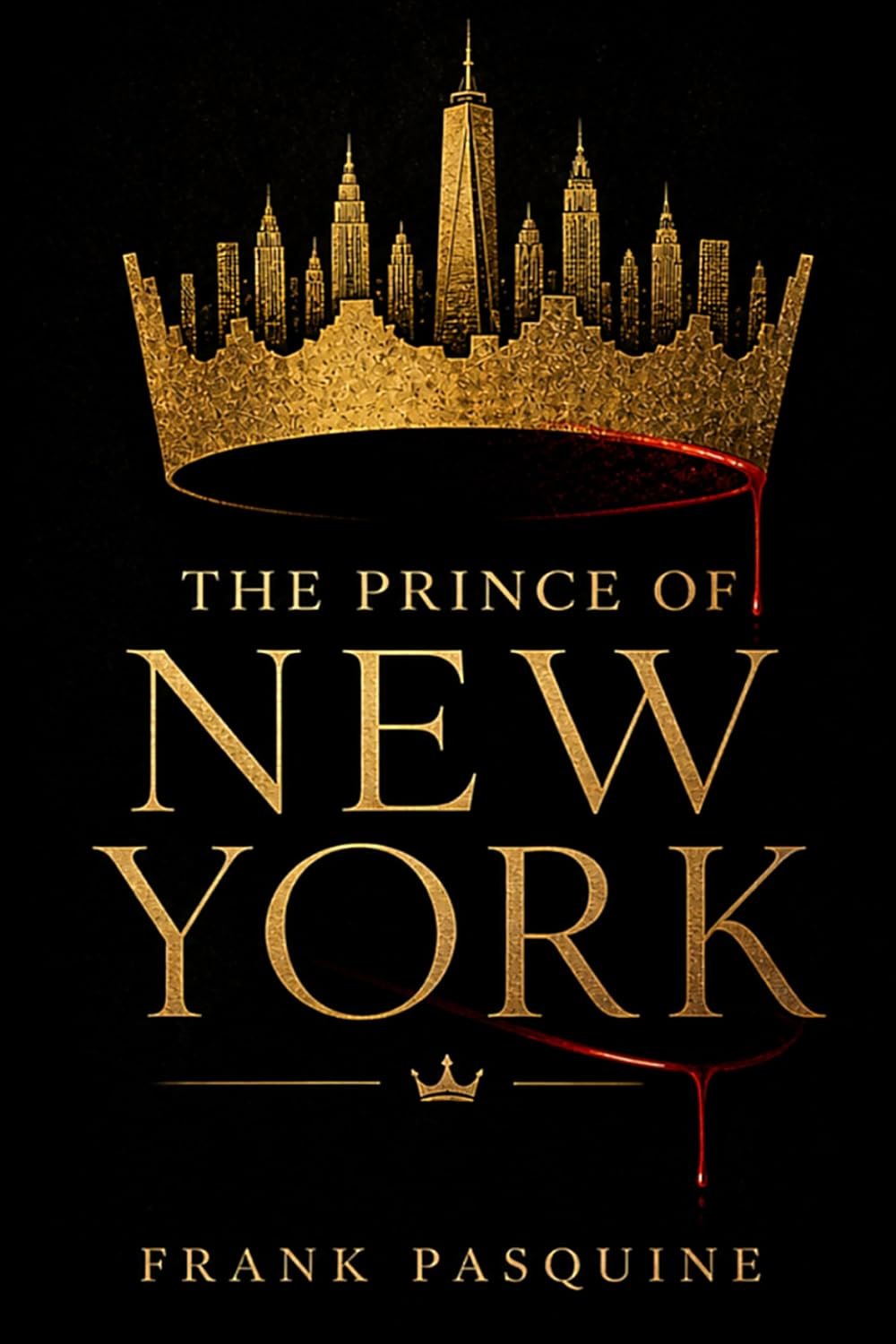
Frank Pasquine’s The Prince of New York takes the phrase “born to power” almost literally. David Whitmore has been raised inside a wealthy Manhattan dynasty, given the schools, protection and…
Books worth discovering. Authors worth knowing.
Frank Pasquine’s The Prince of New York takes the phrase “born to power” almost literally. David Whitmore has been raised inside a wealthy Manhattan dynasty, given the schools, protection and carefully scripted future that privilege can purchase. When he begins experiencing visions linked to buried truths and meets Ofelia Ortiz after a near-fatal…
Considered reviews, grounded in the book’s documented promise.
Frank Pasquine’s The Prince of New York takes the phrase “born to power” almost literally. David Whitmore has been raised inside a wealthy Manhattan dynasty, given the schools, protection and carefully scripted future that privilege can purchase. When he begins experiencing visions linked to buried truths and meets Ofelia Ortiz after a near-fatal incident in a Bronx subway station, his understanding of the family empire starts to fracture. Ofelia’s father has been imprisoned for a crime he maintains he did not commit. Their alliance promises a thriller in which an inherited social position becomes an ethical problem rather than a comfortable ending.
Manhattan and the Bronx as competing accounts
The novel’s geographical opposition is immediately legible: Upper East Side security on one side, Bronx resilience and vulnerability on the other. The strongest version of that contrast will not render one neighborhood as unblemished privilege and the other as a repository of automatic authenticity. The city’s power lies in its mixed and overlapping social realities. David’s encounter with Ofelia can test how much he has been trained not to see, but he must also learn that another person’s experience is not raw material for his moral education. The publicity confirms that their relationship crosses class lines and brings him into conflict with the family; how fully the narrative grants Ofelia an independent perspective remains a matter for a full reading.
The prince who can refuse a crown
Pasquine has described his project in terms of a contemporary, Hamlet-like family conflict. This comparison is useful not because the book is necessarily a direct retelling, but because it identifies the central predicament: inheriting power can require inheriting a lie. David’s visions turn buried history into something he literally cannot ignore. Their supernatural or speculative quality may intensify a psychological truth familiar from family sagas: a privileged child can sense cracks in an official account long before he has proof. The moral question is whether he will surrender comfort to investigate them. A persuasive novel should make that cost concrete, not simply celebrate rebellion because rebellion is fashionable.
Ofelia and the politics of belief
A parent’s alleged wrongful conviction gives Ofelia more than a romantic reason to challenge David’s social circle. Her story implicates institutions and the unequal credibility assigned to different people. In a thriller, the investigation will be satisfying only if evidence and testimony matter, rather than the protagonist’s exceptional status alone. It would be dramatically easy for the rich heir to solve everything because he possesses the resources of the elite; that could repeat the hierarchy the story wants to question. The interesting possibility is a partnership in which Ofelia’s knowledge and choices change the inquiry on equal terms. The synopsis supports her presence and the conviction claim, but not the mechanics of the investigation.
Visions as a narrative risk
Premonitions can be a useful way to represent the past’s return, but they also threaten the fairness of a mystery. If a vision provides any answer the plot happens to need, the reader loses the chance to examine competing explanations. Pasquine’s premise is strongest when the fragments open questions and impose moral pressure while leaving real work to human inference. The family’s hidden actions, rather than paranormal spectacle alone, should be what gives the revelations weight. The author’s public comments link the story to power and contemporary inequality, so the supernatural element ought to enhance those concerns rather than divert attention from them.
A modern dynasty narrative
The work’s stated audience spans older young adults and adult readers interested in political and romantic suspense. The age range is plausible because its central dilemma is recognizable across generations: how much of a life arranged by others can be accepted without becoming complicit in its values? The premise has momentum, but a critical verdict on characterization, language and whether its politics are nuanced requires the entire book. What is established is a distinctive ambition to fuse class conflict, family secrets and a partially uncanny mystery.
Inherited visibility and unseen lives
David has grown up in a world where cars, schools and institutions are arranged around his needs. Ofelia’s story may reveal how the same city offers very different forms of visibility: the wealthy are publicly recognizable while the less powerful can struggle to have their accounts believed. The alleged wrongful imprisonment of her father creates a concrete basis for that contrast. A compelling narrative should show what David has failed to notice and what he must learn to investigate rather than simply rewarding him for changing his opinion. The most serious version of the book would acknowledge that private goodness does not on its own correct a system structured to distribute credibility unequally.
The danger of a dynasty fantasy
There is a fine line between criticizing a powerful family and making its handsome heir the only person capable of saving everyone else. A Hamlet-like structure naturally centers the privileged child’s crisis. Pasquine’s challenge is to prevent the political material from becoming another vehicle for his exceptionalism. Ofelia and other characters need objectives that do not exist merely to help David become a better man. The novel’s visions are a promising device for exposing hidden history, but knowledge earned through other people’s labor must still matter. That distinction is fundamental to the story’s stated concern with class, inheritance and public consequence.
The ethical center of the chase
The most credible danger in this premise is not merely that David may lose an inheritance. It is that he may discover how many other lives were sacrificed to sustain it. That scale matters when judging the novel’s suspense and its political seriousness.
Who will value this book
This should appeal to readers of contemporary dynastic suspense, class-crossing romance and mysteries with a political edge. It is not possible from a press release and retail synopsis to certify the resolution or the treatment of the Bronx. The present assessment evaluates the documented narrative design and its ethical stakes.
Scope of this assessment
This is a research-based editorial review drawn from identified bibliographic, author and publisher sources. It considers the work’s documented premise and the critical questions it invites, without claiming a complete firsthand reading. No unverified scene, character action or ending is asserted.
About the book.
An evidence-bounded critical introduction to contemporary young-adult political suspense. Published descriptions support the stated premise; interpretations are identified as editorial analysis, not confirmed plot details.
This review concerns a book marked sponsored in the current MarketAnyBook queue. Sponsorship is disclosed, and all observations remain research-based.
Found a book worth opening?
Books worth discovering. Authors worth knowing.
Return to the Journal →