
Red Teeth Silent Scream
A covert military mission that turns into a hunt by something inhuman changes the meaning of danger. F. Charles Maree’s Red Teeth Silent Scream , identified.
Books worth discovering. Authors worth knowing.
A covert military mission that turns into a hunt by something inhuman changes the meaning of danger. F. Charles Maree’s Red Teeth Silent Scream , identified.
Evidence-conscious literary criticism, not a claim of firsthand full-text reading.
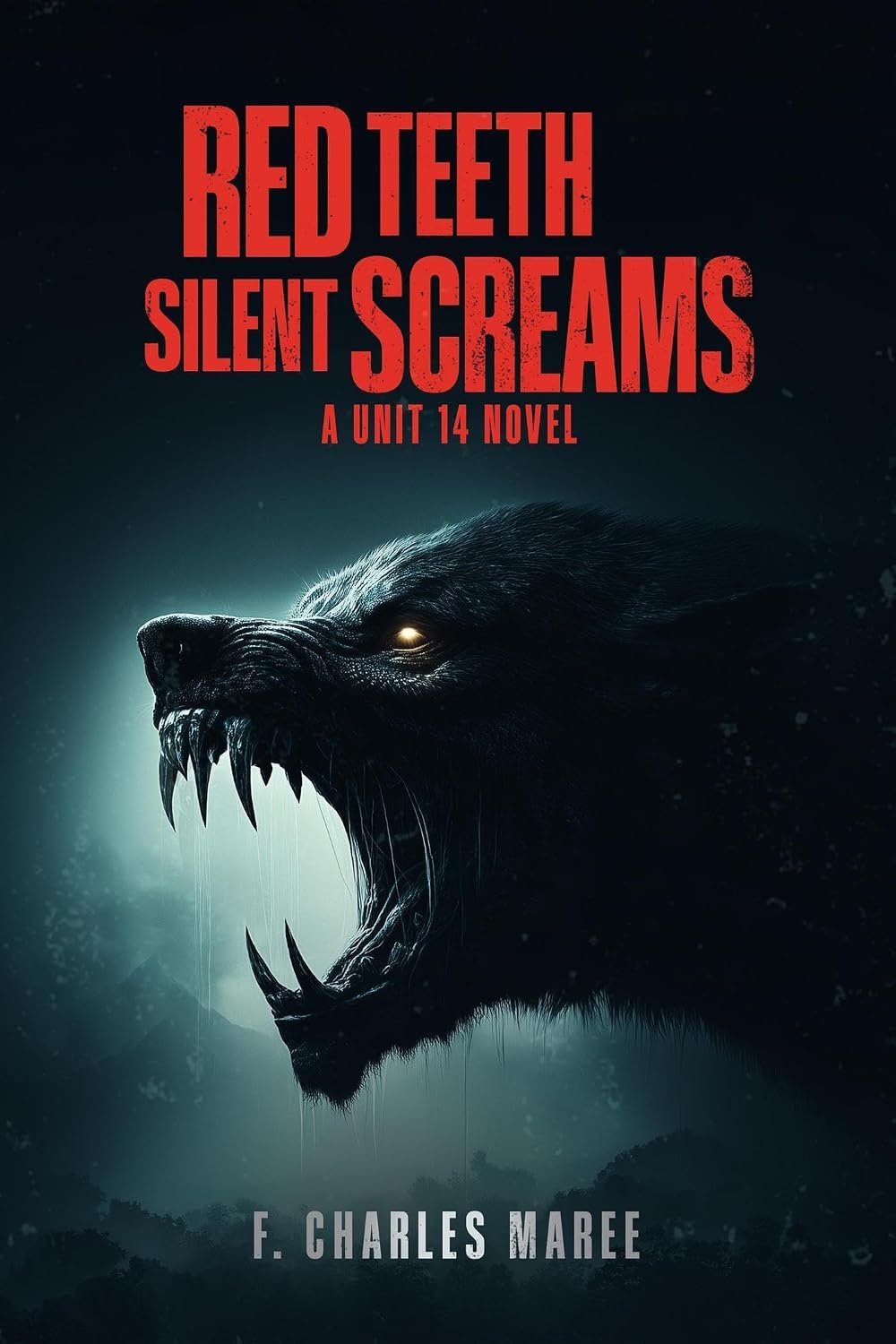
A covert military mission that turns into a hunt by something inhuman changes the meaning of danger. F. Charles Maree’s Red Teeth Silent Scream, identified as a second UNIT 14 entry, is described as beginning in the violence of Angola during the 1970s. A South African special-forces team sent by a clandestine intelligence organization is supposed to monitor enemy movements. Instead, a creature begins killing soldiers and then stalking the reconnaissance unit. The premise sets human conflict beside a threat that makes the familiar tools of war seem suddenly inadequate.
Two enemies, two kinds of fear The publisher listing gives Captain Gavin Martins command of a team trying to reach friendly lines while avoiding both combat encounters and attacks from an unidentified predator. By day the danger comes from troops, ambush and ordinary military limitations; by night it becomes the hunt by something beyond the men’s expectations. That alternation has strong structural potential. Readers can be given no real respite, only a change in the rules by which they are endangered.
Horror regularly exploits a professional group’s training. These soldiers are not inexperienced people wandering into danger; they are equipped for a particular world of hazards. The monster threatens their expertise as much as their lives. Weapons, reconnaissance skills and disciplined command may help them survive combat but may not explain or stop an adversary that does not obey recognized categories. A credible story can make this failure of knowledge more frightening than the creature’s physical appearance.
The shadow of history The location and period require special care. Angola’s wars, South African involvement and covert intelligence operations are historically charged matters, not merely exotic backdrops for terror. The listing describes a fictionalized unit and a monstrous pursuit, but a responsible review should not treat its plot as a historical record. Nor should the reality of conflict be reduced to atmosphere without considering what the story does with the people and politics of the setting. A full reading is needed to assess how those historical complexities are handled.
Military horror can be morally challenging because it tends to invite readers to identify with a small armed group under threat, leaving everyone outside that group as a source of danger. A thoughtful novel might complicate that view even while sustaining fear. Martins and his soldiers will inevitably want to survive; the narrative’s responsibility is to make their immediate goal legible without erasing the larger war. Whether Maree succeeds cannot be known from the sales description alone.
The creature in the darkness The public summary foregrounds red-stained teeth, a moonlit apparition and an adversary that kills repeatedly. Such images are effective as a promise of visceral horror, but the suspense cannot be sustained by repetition alone. Once readers know the threat is relentless, the story must change the terms of engagement: understanding, strategy, sacrifice or uncertainty about the monster’s origin. The listing indicates that the unit questions what it is dealing with, an opening for mystery to work alongside action.
The second-volume designation raises a further question about continuity. A reader may want to know whether the clandestine organization has a developed history from the earlier installment, or whether this story can function independently. The local queue identifies a distinct title and volume; nothing warrants collapsing it with another UNIT 14 book because of their shared premise.
Tactical clarity as a source of dread A good military sequence establishes what characters know: where their objective lies, what resources remain and which uncertainties they are trained to tolerate. Horror arrives when those calculations cease to help. Maree’s published premise gives the team a clear goal of returning to friendly lines and an opposing force that appears to defy their expectations. The most effective version of this narrative would preserve enough tactical clarity for readers to feel the disaster of each failed plan. Confusion can be frightening, but merely confusing the audience is not the same as creating dread.
The changing day-and-night pattern offers a natural clock. Daylight provides visibility without safety because human adversaries still occupy the terrain; darkness obscures a predator whose habits the soldiers cannot predict. By repeating that alternation, the story can build dread through anticipation. Readers may begin to fear sunset not because the creature’s next attack is known, but because the men have had another day to imagine it. The critical question is whether repetition sharpens the suspense or eventually dulls it.
History should not become camouflage The Angolan setting is more than heat, jungle and the sound of gunfire. The political conflict shaped real communities, soldiers and civilians, and a fictional deployment viewed through the perspective of South African operatives is necessarily selective. A source-based review cannot judge the novel’s historical balance without examining it, but it can insist that the question matters. War horror risks aestheticizing violence already endured by real people when it treats the landscape simply as an empty stage for a monster.
The clandestine agency designation, UNIT 14, also raises possibilities about secrecy and accountability. Covert operations involve characters taking orders they may not fully understand, and this can parallel the story’s supernatural uncertainty. The team may have been trained to accept incomplete information from command; the creature confronts them with a different kind of ignorance. Such an echo would be a compelling organizing principle if the book develops it.
Who should read with the lights on? <em>Red Teeth Silent Scream</em> is aimed at readers comfortable with graphic violence, military action and creature-driven suspense. The threat is explicitly lethal and the historical theatre severe; it is not a subtle domestic mystery. Readers who value documentary accuracy may wish to verify the novel’s handling of the setting separately from its speculative elements. Those expecting psychological horror without gore may find the advertised imagery a useful warning.
On the available source evidence, the book’s most compelling formal possibility is the collapse of military certainty under a supernatural pressure. Its strongest possible achievement would not be to make trained men helpless, but to show what remains of discipline and humanity when every established rule of survival has been challenged. This is a researched review of the premise, not a claim to have assessed the complete novel.
About the book.
The title, contributors, routing category, original retailer link and unique Drive image file were checked against the live queue. The review is based on publicly available evidence and original editorial analysis.
This is a sponsored book review. Sponsorship does not alter our standards for evidence and critical independence. This research-based critical review interprets the verified book listing and available external descriptions; it does not claim a complete reading.
Found a book worth opening?
Books worth discovering. Authors worth knowing.
Return to the Journal →