
Sacred Synthesis
A book recovered from the future is an unusual place to put a manual for living in the present. Sacred Synthesis is presented by The Collective Press as both a fictional archive from the year 2100…
Books worth discovering. Authors worth knowing.
A book recovered from the future is an unusual place to put a manual for living in the present. Sacred Synthesis is presented by The Collective Press as both a fictional archive from the year 2100 and a practical system for personal and communal transformation. Its imagined documents describe a civilization experimenting with governance by…
Considered reviews, grounded in the book’s documented promise.
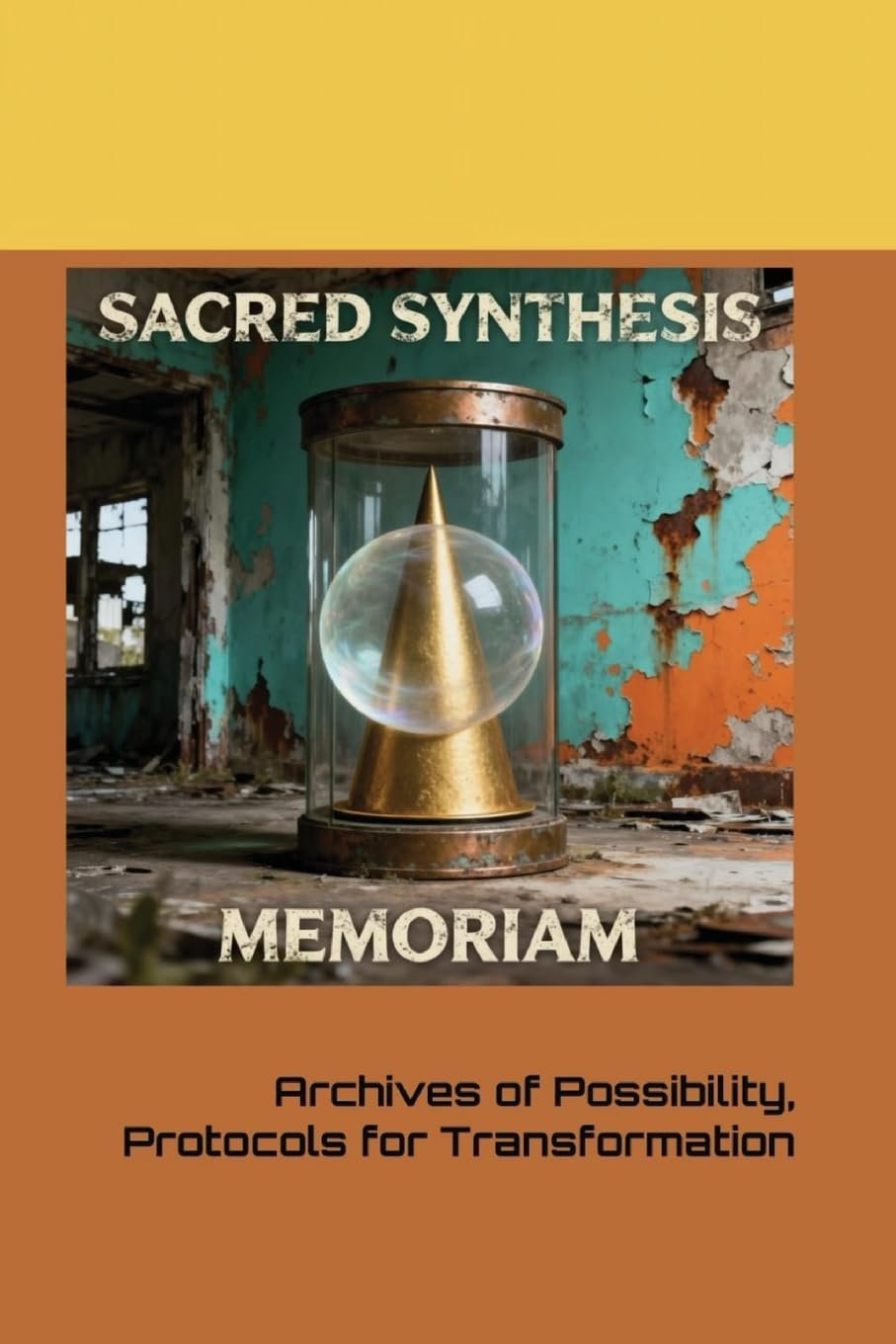
A book recovered from the future is an unusual place to put a manual for living in the present. Sacred Synthesis is presented by The Collective Press as both a fictional archive from the year 2100 and a practical system for personal and communal transformation. Its imagined documents describe a civilization experimenting with governance by consciousness rather than coercion; its nonfiction-facing apparatus sets out constitutional assessments, daily practices and methods of collective decision-making. The most interesting question is not whether this imagined future can be taken literally. It is whether narrative can make a complex ethical programme less abstract without quietly treating a compelling story as proof that the programme works.
Two books occupying one form
The publisher explicitly calls Sacred Synthesis two books sharing one spine: a post-apocalyptic chronicle and a manual. That design deserves more than the convenient label of genre-blending. A recovered archive supplies distance, fragment and retrospective judgment; a practice manual asks for direct action, clarity and repeatability. The reader moves between interpreting a past that never happened and considering instructions meant to operate now. The tension is productive if each side interrogates the other. Fiction can expose what a philosophical ideal costs in practice, while procedural material can prevent the fictional utopia from floating free of social detail. The danger is equally clear: instructional sections may interrupt dramatic curiosity, and fictional success may make practices appear validated merely because invented characters succeed with them. The architecture is audacious, but the success of the transition depends on precise distinctions of evidence and purpose.
The appeal and hazard of a constitutional typology
The publisher describes a 125-question assessment dividing temperamental or constitutional patterns into Electric, Magnetic and Neutral types, and then adapting daily protocols to those categories. Typologies can be inviting: they replace a vague injunction to transform oneself with a set of apparently legible starting points. Yet the attraction of being accurately named can make a system seem more empirically settled than it is. A critical reader should ask how the types were derived, how reliability is tested and what happens to people who do not fit a category. The book also invokes traditional correspondences from multiple cultures. That breadth may prompt useful comparison, but analogy is not proof of equivalence. Sacred Synthesis becomes more intellectually persuasive when its classifications are offered as practices or metaphors to investigate rather than as unexamined scientific results.
From private discipline to public power
The manual’s proposed non-hierarchical decision-making procedures are arguably its boldest dimension. Inner work is often described as a private matter; this project explicitly places it next to conflict resolution, mutual aid and community organization. Its fiction can therefore ask a difficult political question: how does a group distribute authority when individual insight varies, interests clash and a decision affects people who have not consented to a spiritual framework? An egalitarian vocabulary does not itself neutralize power. The strongest version of the project would acknowledge dissent, material scarcity, unintended harms and the mundane administrative burden of keeping a community fair. Such questions are not objections to its aspirations; they are the conditions under which the aspirations become interesting. The promised chronicle may dramatize these tensions, but the public synopsis does not permit a verdict on the episodes themselves.
The recovered document as literary device
Placing the archive in 2100 also changes the reader’s role. Rather than watching an author deliver a blueprint from above, readers may feel like historians assembling a shattered civilization’s experiment. This allows ambiguity to enter a work otherwise committed to explicit instruction. Archives have gaps and their keepers have motives. One might read a preserved manual as evidence of aspiration, not as a complete account of what ordinary people lived through. The creative opportunity is to let apparent certainty on one page become an open question on the next. Whether the finished book achieves that ambiguity must be tested in its actual prose; the publisher description supplies the organizing device, not an account of how consistently the device is handled.
What would count as transformation?
The promotional language invokes contemplative science, historical synthesis and professional applications. These are large claims with different standards of evidence. An inner experience can be meaningful without establishing a clinical effect; an elegant comparison of traditions can be enlightening without amounting to a controlled cross-cultural study. A rigorous reader will want to separate the exercises they can try, the philosophical arguments they can debate and the factual claims requiring independent corroboration. That separation need not drain the project of inspiration. It may be the most respectful way to engage it: imaginative generosity toward the archive, intellectual scrutiny toward the research claims and practical care where recommendations could affect health, organizations or other people.
A question of who may dissent
Any programme that proposes methods for governing communities must say what happens when somebody opts out. Sacred Synthesis is advertised as a system for decision-making among equals, but equality has a procedural as well as a spiritual meaning. Is a person’s refusal evidence of insufficient awareness, or a legitimate exercise of autonomy? Can a practice be altered by those whose lives it governs? These questions become particularly urgent when a project moves from private meditation to education, healthcare or organization. The book’s archive may provide imagined answers. A reader should distinguish those answers from evidence that a method has worked under independent observation. Such scrutiny is not inimical to imagination; it treats the stated ambitions as serious enough to test.
Who will value this book
Sacred Synthesis is worth investigating for readers drawn to speculative futures that argue with the present, and for philosophically curious people who enjoy systems of contemplative practice. It is less well suited to readers wanting a conventional uninterrupted novel, a clinically validated therapeutic protocol or a brief self-help book. The publisher presents a substantial hybrid project, so the best approach may be exploratory rather than devotional: encounter its narrative as an imaginative proposition, test its claims against outside evidence and ask whether the procedures respect people who disagree. The review rests on the publisher’s public architecture and does not claim evaluation of every exercise or fictional passage.
Scope of this assessment
This is a research-based editorial review drawn from identified bibliographic, author and publisher sources. It considers the work’s documented premise and the critical questions it invites, without claiming a complete firsthand reading. No unverified scene, character action or ending is asserted.
About the book.
An evidence-bounded critical introduction to hybrid speculative documentary fiction and contemplative practice. Published descriptions support the stated premise; interpretations are identified as editorial analysis, not confirmed plot details.
This review concerns a book marked sponsored in the current MarketAnyBook queue. Sponsorship is disclosed, and all observations remain research-based. The publisher’s references to science and professional applications are claims made by the project, not independently established effectiveness.
Found a book worth opening?
Books worth discovering. Authors worth knowing.
Return to the Journal →