
The Enchantment of Words & Time
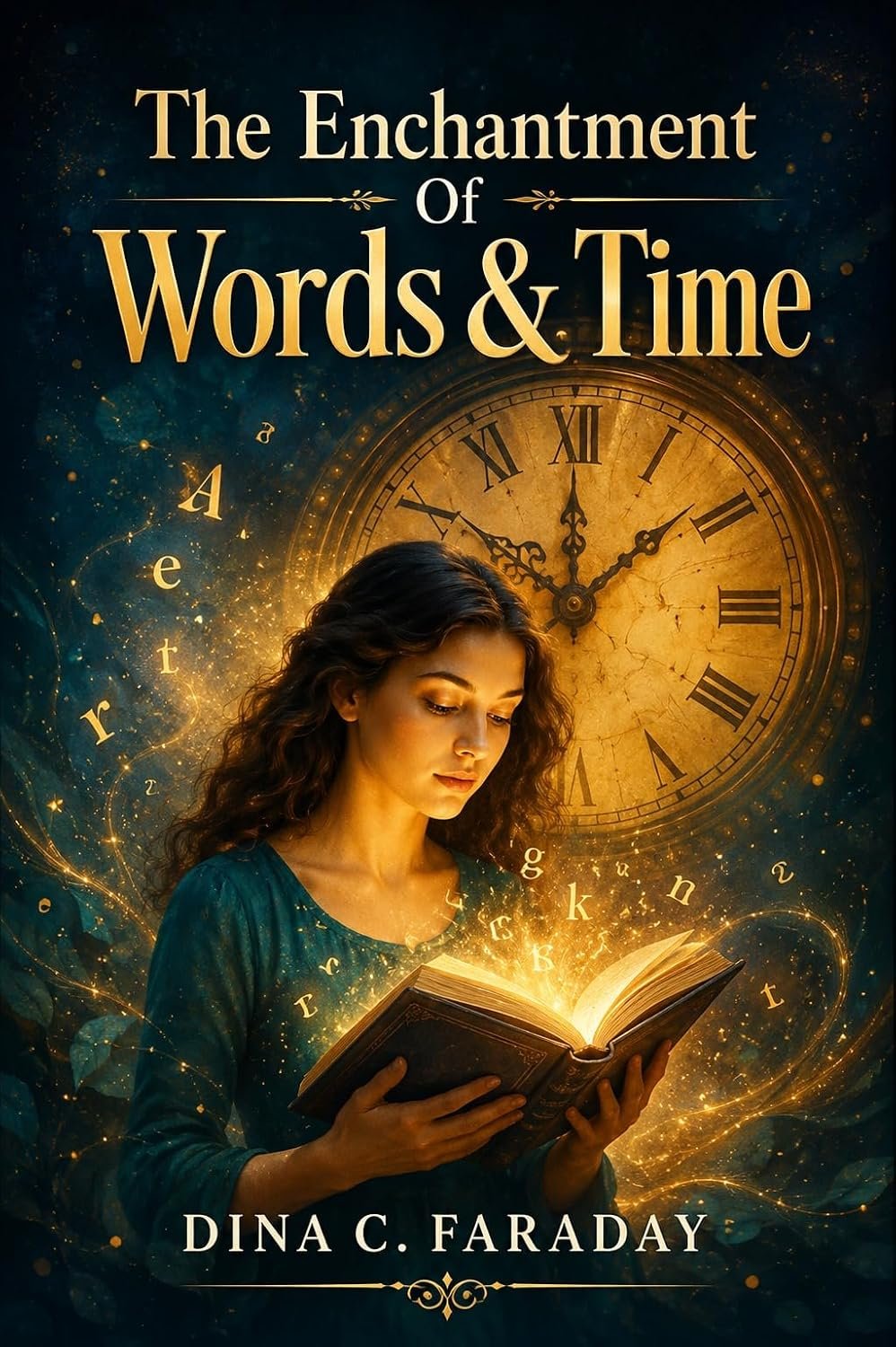
In The Enchantment of Words & Time, escape from one danger becomes an encounter with a much older history. Dina C. Faraday’s public synopsis introduces Emma Jade, a music teacher in New York, who flees after…
Books worth discovering. Authors worth knowing.
In The Enchantment of Words & Time, escape from one danger becomes an encounter with a much older history. Dina C. Faraday’s public synopsis introduces Emma Jade, a music teacher in New York, who flees after a frightening confrontation and reaches New Hope, a Canadian town associated with her family. An old diary and a mysterious melody open a path…
Book-specific criticism, grounded in what the available sources support.
In The Enchantment of Words & Time, escape from one danger becomes an encounter with a much older history. Dina C. Faraday’s public synopsis introduces Emma Jade, a music teacher in New York, who flees after a frightening confrontation and reaches New Hope, a Canadian town associated with her family. An old diary and a mysterious melody open a path toward ancestral secrets, elemental magic and travel through time. The story also names Jackson McGilvary and a circle of women as important figures in Emma’s new understanding of herself.
Music as a crossing point
The use of a melody as a key to hidden knowledge offers an elegant alternative to the familiar magic artifact. Music exists in time; it survives only when it is performed again, by someone who can hear and carry it. For a protagonist whose ordinary life involves teaching music, such a device could make supernatural discovery an extension of skill rather than a sudden entitlement. The available description establishes the melody’s role but does not let us judge how precisely its musical qualities shape the narrative. That question matters because magic is most persuasive when it grows from the particular character at the centre of the tale.
Inheritance and personal agency
A family diary can both disclose and distort the past. It contains what someone decided to record, what they could not say and what subsequent generations are prepared to believe. Emma’s retreat to an ancestral community suggests that her personal danger intersects with an inherited structure of knowledge. A prophecy may appear to settle who she is, but the more interesting dramatic possibility is that it complicates a life she was already attempting to reclaim. The distinction is crucial: a heroine becoming extraordinary should not require the narrative to deny the value of the ordinary identity she possessed before discovering magic.
Time travel as moral imagination
The summary places part of the action in 1920s New Orleans, a city with a rich cultural history that can make period fantasy especially evocative. Such a setting, however, calls for more than costumes and atmosphere. Time travel forces a storyteller to decide what modern characters understand about the people and social conditions they enter. The past can become a place of escapist glamour or a realm with consequences that resist easy intervention. Faraday’s advertised mix of romance, elemental magic and historical mystery creates several paths through that problem, but the actual depth of its historical engagement remains to be assessed.
A community of women
The identified circle of powerful women suggests that Emma’s transformation is not solely dependent on an enigmatic male guide or romantic interest. An ensemble of female figures can give a fantasy lineage texture, especially if the women disagree about the duties that come with knowledge. Romantic time-travel stories sometimes make destiny indistinguishable from a predetermined relationship; a richer treatment allows the protagonist to choose which attachments and obligations she will accept. Whether Jackson and the wider community receive such complexity is a question for the full narrative. The description offers an inviting architecture rather than evidence of completed character arcs.
An ending that should be earned
The novel advertises courage and the recovery of hidden legacies. That combination is effective because it can make an apparent flight turn into a deliberate return to difficult truths. The critic’s reservation is that prophecy-driven fantasy can overexplain the heroine’s significance, leaving her too little freedom to surprise us. The best interpretation of the documented premise would make Emma’s skills, relationships and decisions necessary to her future rather than treating ancestry as a complete explanation of her fate. The accessible synopsis does not establish the outcome, and this review does not pretend otherwise.
The danger behind the invitation
The synopsis’s frightening opening confrontation should not be treated merely as a convenient mechanism for transporting Emma to a magical landscape. A heroine’s flight can carry consequences that remain after her external circumstances change. The story’s potential depth lies in whether the fantasy grants her agency without pretending that discovery of a hereditary gift erases vulnerability. New Hope is an especially pointed place-name for this passage. It promises a new beginning, but a narrative that earns the name would need to show how recovery is made through decisions and relationships, not delivered by location alone. The published summary does not tell us whether the story undertakes that emotional work, making it an important reservation in the recommendation.
The diary and the voice of the past
A diary’s intimacy makes it an effective literary object. Unlike a formal history, it can preserve embarrassment, longing and contradiction. Yet an old diary should also remind readers that every account is partial: its author could be mistaken, self-protective or unaware of the consequences of an event. Emma’s discovery of ancestral writing might therefore open as many interpretive problems as it solves. In a time-travel fantasy, this is an attractive source of tension. To return to the past is not automatically to understand it. Knowledge arrives through the gap between an inherited version of events and the circumstances one encounters. A well-developed novel could use that gap to give Emma something to interpret rather than merely something to inherit.
The meaning of the book’s title
Words and time share a peculiar power: both allow people to revisit an experience without actually returning to it. A diary preserves language from a vanished moment, while music makes a former sound present again through repetition. Faraday’s chosen magical devices thus possess an attractive thematic coherence before any supernatural explanation is supplied. If the story uses that connection with care, its fantasy machinery could intensify the emotional experience of memory rather than merely decorate it. The title makes that possibility especially worth investigating.
Who will find value here
Readers attracted to contemporary heroines, family mysteries, romantic fantasy and shifting historical periods have a concrete, appealing premise here. Those who prefer rigorously rule-bound science-fiction time travel should expect a magical rather than technological framing. The book looks most interesting where music and inheritance intersect, although a final judgment on its storytelling and historical texture requires direct reading.
What this review can establish
This is an independent, research-based editorial assessment of the identified book, informed by the listed publisher, author and bibliographic materials. The analysis identifies documented premises, meaningful genre expectations and open critical questions. It is not a firsthand claim to have read every chapter or inspected the entire illustrated edition; judgments about the quality of prose, plot resolution and any unverified interior material are reserved for a full-text review.
About the book.
A limited-source, independent editorial evaluation of romantic time-travel fantasy. Facts are drawn from the listed book record and separately identified public descriptions; speculative editorial questions are not presented as plot facts.
This is an unsponsored editorial review based on verified public descriptions and bibliographic materials, not a claim to firsthand reading of the complete book.
Found a book worth opening?
Books worth discovering. Authors worth knowing.
Return to the Journal →