
Sibling Gods: The Beginning
Four siblings with extraordinary powers confront a dangerous inheritance in Patrick Browne’s science-fantasy debut.
Books worth discovering. Authors worth knowing.
What if the most difficult legacy a family could inherit were an ability too powerful to control?
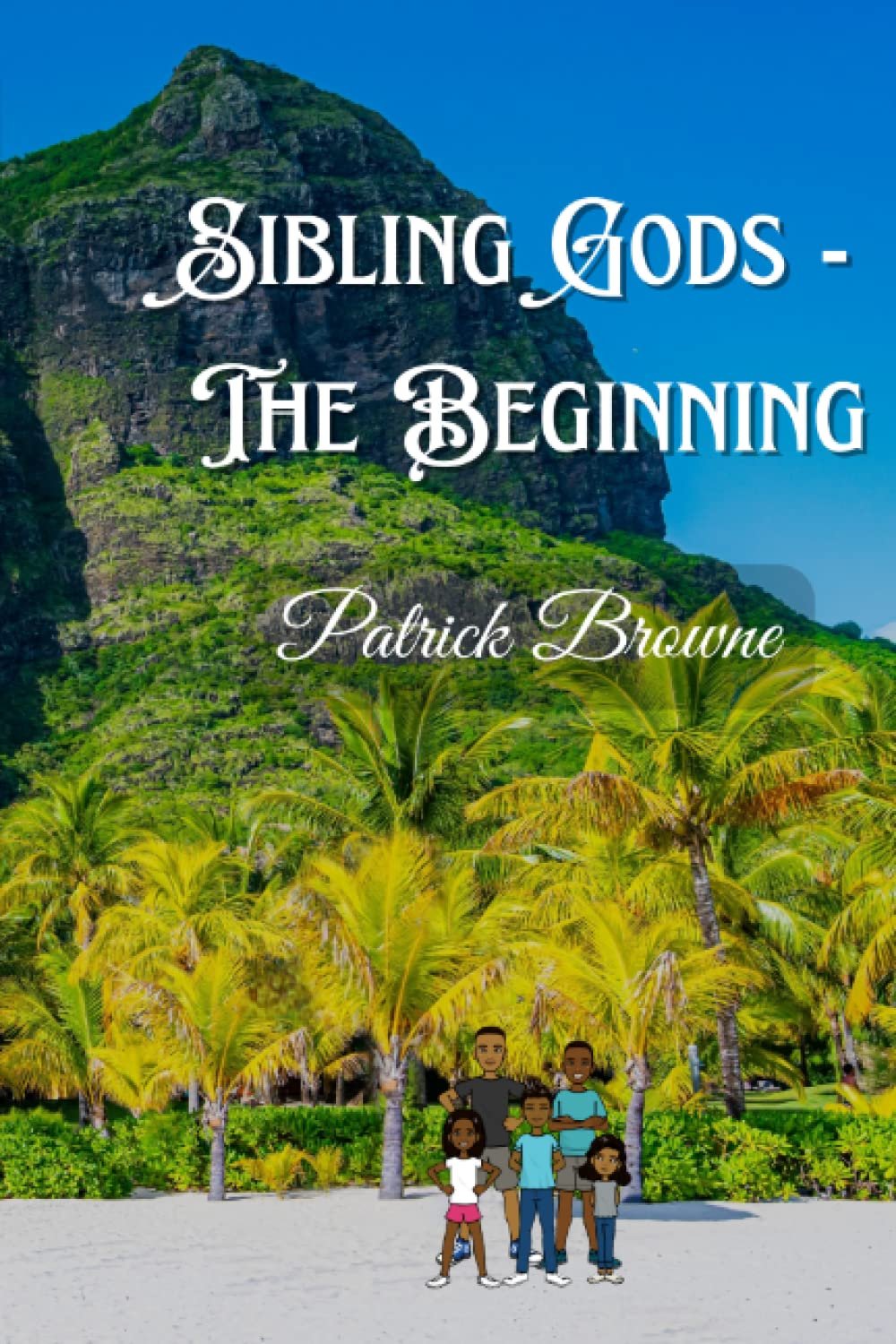
Four African American siblings, children of a Los Angeles chef and an Egyptian prince transformed into a god, discover escalating powers and face threats related to those abilities.
A family can pass down heirlooms, stories, obligations and hidden tensions. In Patrick Browne’s Sibling Gods: The Beginning, the inheritance is stranger: four African American siblings possess different extraordinary abilities that intensify as they grow older. Their mother is a chef in Los Angeles; their father, according to the author’s description, is an Egyptian prince who evolved centuries ago into a godlike being. Such a premise pulls science fiction toward mythology while preserving a familiar emotional center. Children do not choose the circumstances of their birth, but they eventually have to decide what to do with the possibilities those circumstances give them.
Browne presents his debut as science-fantasy in an alternate reality where human evolution can continue toward seemingly divine abilities. That is a declared fictional concept, not a scientific claim about actual biological evolution. The author’s site frames the siblings’ central problem in sharply consequential terms: can they learn to control increasing power, or will others believe they should be destroyed? The public premise gives the drama three connected scales—private family life, dangerous personal transformation and a wider world that fears what it cannot contain. It does not verify individual fight scenes, powers assigned to particular children or the novel’s ending.
A household with two competing inheritances
The contrast between a Los Angeles chef and an Egyptian prince who became a god is an imaginative leap, but an interesting one. A chef’s work is recognizable, tactile and dependent on meeting ordinary daily needs. A godlike ancestor suggests distance, mystery and nearly unlimited capacity. Bringing those identities into one family creates a question about which legacy shapes a child more: the extraordinary ability that sets them apart or the everyday care that teaches them how to live with other people. The story’s marketing does not settle that question, yet it establishes enough of the parents’ backgrounds to make the contrast meaningful.
A sibling ensemble also allows inherited power to become a relational matter. Four children born with different abilities may not receive identical attention, confidence or fear from adults. One ability could appear useful while another seems dangerous; one child may welcome attention while another wants privacy. These are potential tensions within the advertised setup, not descriptions of named scenes or family arguments. Readers can ask whether the novel treats difference as a source of competition, cooperation or both. The title Sibling Gods points first to a group, suggesting that even remarkable individuals are being defined through their relationship to one another.
The Egyptian royal element opens a second imaginative pathway. Mythic storytelling often describes power through dynasties, divine descent and the responsibilities of rulers; modern superhero narratives frequently recast those concerns through mutations, experiments or secret identities. Browne’s premise is positioned at their intersection. It is important, however, not to conflate a fictional Egyptian prince with reliable history or to claim the novel reproduces a particular ancient religious tradition. The source describes an evolved prince and a speculative godhood. That is enough to discuss the way ancestry can raise narrative stakes while leaving actual cultural representation to be evaluated from the book itself.
The problem of growing stronger
Many coming-of-age stories are about learning that ability brings responsibility. In this one, power intensifies over time, so maturing is not simply a question of receiving new privileges. The very process of growing older changes what the siblings can do and how risky an error might become. A reader can approach the book with an eye toward control: does the fictional world define mastery as restraint, disciplined practice, teamwork or something else? The author’s introduction makes control a central concern without establishing a particular training sequence or mentor figure. No fabricated academy or spectacular trial is needed to find narrative interest in that dilemma.
Fear from outsiders could be just as consequential as the siblings’ own uncertainty. The author asks whether they can learn control or should be annihilated, wording that makes the stakes extreme. A population confronted by unfamiliar powers might react through awe, hostility or attempts to regulate what it does not understand. That is a classic science-fiction route into questions of prejudice and social responsibility. Readers should resist assuming that the story depicts a particular government programme, villain or massacre; the available source does not supply one. The verified conflict is broader and more unsettling: the children’s existence itself appears to become a contested question.
The word gods can tempt readers to assume unlimited ability. Yet stories about extraordinarily powerful characters often become interesting at the limits of that power. Limitations may emerge from moral commitments, other people’s fears, personal relationships or rules of the imagined world. Browne’s premise mentions escalating abilities but offers no system of costs or exact capacities. Rather than invent one, a prospective reader might ask whether the author’s imagined evolution is primarily a source of spectacle or a means of dramatizing self-restraint. The novel is the appropriate place to see the answer, and the marketing’s open question makes restraint seem at least a plausible concern.
Science fantasy as a language of possibility
The author describes a world where evolution can yield godlike capabilities if certain abilities are mastered. This is not how scientists establish evolutionary mechanisms, which concern inherited variation and population-level change over generations. In fiction, however, the word evolution can serve as a speculative metaphor for transformation and unrealized human potential. Readers who prefer hard science may want to note the distinction early. The book is more responsibly positioned as a science-fantasy adventure inspired by an expansive what-if than as a scientifically grounded forecast of the human future.
The combination of family life and imagined transcendence also offers a way to examine authority. People with overwhelming power can influence everyone nearby, whether invited or not. A story about young people learning to control that power can ask what gives someone the right to make decisions for others. Is possessing an unusual gift enough, or must authority be earned through judgment and empathy? The public synopsis provides no evidence about the siblings’ political ambitions; these are reader-facing questions suggested by the setup. They are useful because they direct attention toward character ethics without inventing a hidden plot.
Family stories often turn on a balance of individuality and solidarity. In a group of four, each person can have a distinctive gift while needing the other three to interpret the world or face a threat. Browne’s description emphasizes that every child has a different ability, a choice that gives potential to cooperation rather than a single dominant hero. That does not establish any rivalry or alliance as fact. What it does establish is a framework in which individual talent and collective belonging can pull in different directions. Readers who enjoy team-based adventures may find that tension especially promising.
Who might enter this world?
Sibling Gods: The Beginning is a natural option for readers attracted to superpowered families, science fantasy, myth-inflected speculative fiction and stories about young people whose identity changes faster than their understanding. Its premise places African American siblings at the center and joins Los Angeles domestic life to an extraordinary paternal ancestry. Readers seeking meticulously documented Egyptian history or realistic evolutionary science should approach those features as invented narrative devices. Those who enjoy asking what responsibilities accompany great gifts, and how a family remains a family when every member is different, have clear reasons to explore Browne’s debut.
Patrick Browne identifies himself on his own website as a writer from Trinidad and Tobago and names this title his debut. The same official page supports the basic family description and the escalating-powers conflict used throughout this feature. Details beyond it—including who uses a particular power, how enemies emerge and what choices resolve the danger—have intentionally been left unclaimed. The attraction lies in the initial dilemma: if four children can become almost godlike, can they still build an ordinary moral vocabulary for how to live together?
About the book.
Science-fantasy family adventure. Four African American siblings, children of a Los Angeles chef and an Egyptian prince transformed into a god, discover escalating powers and face threats related to those abilities. Source-based feature, not a firsthand review.
Independent editorial book feature; not designated sponsored. This article uses verified public descriptions and reasoned reading context; it does not claim a full firsthand reading. WordPress cover media fields await publisher automation.
Found a book worth opening?
Books worth discovering. Authors worth knowing.
Return to the Journal →