
Single Ladies
Five longtime friends navigate loyalty, single parenthood, intimacy and hard choices in Blake Karrington’s urban drama.
Books worth discovering. Authors worth knowing.
In this ensemble story, the promise of friendship must survive the pressures of love, money and second chances.
A five-friend inner-city ensemble including Tammy, Falisha, Kim and Lisa faces relationship upheaval, parenting strain and old romantic ties.
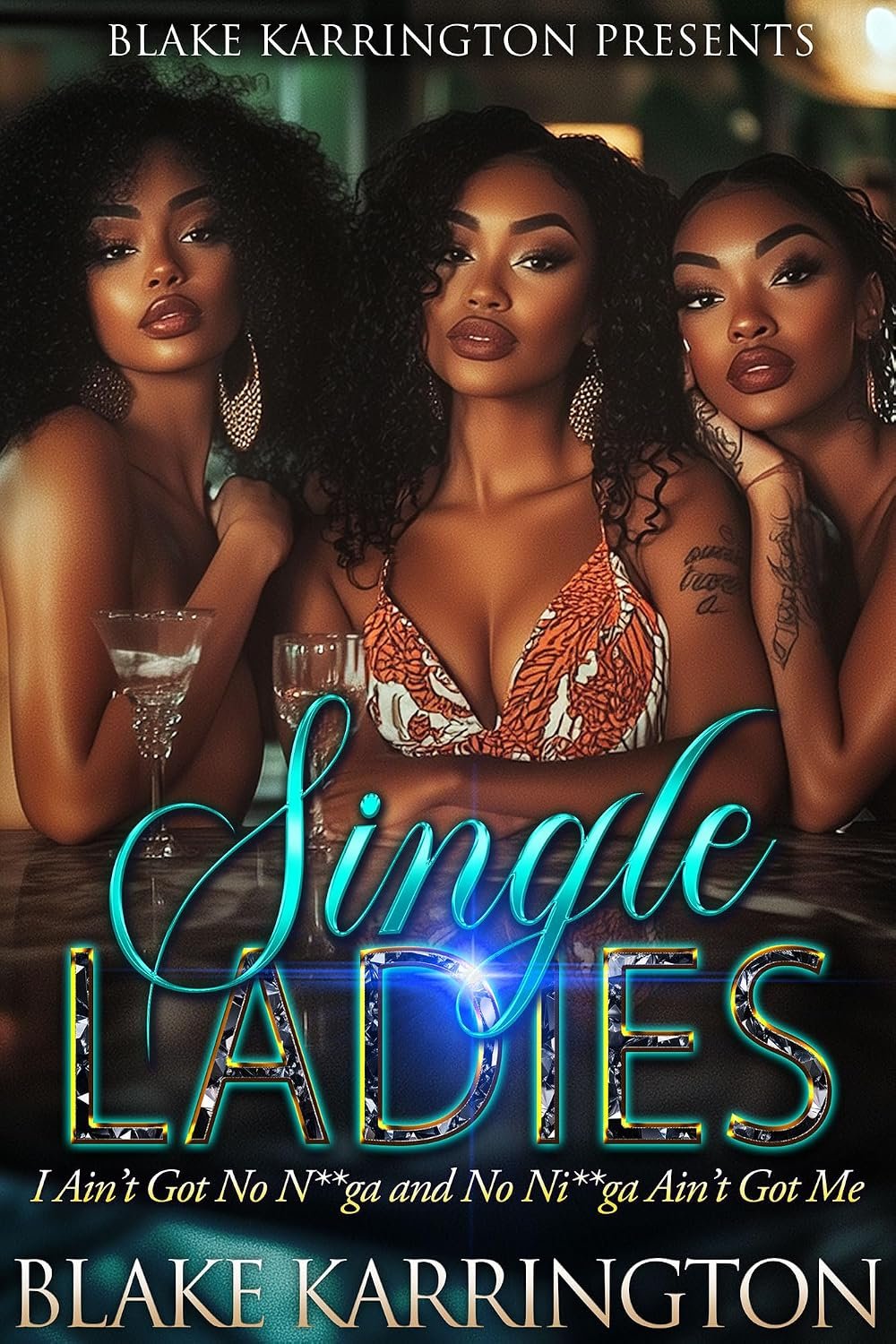
Blake Karrington’s Single Ladies is an ensemble drama whose title sounds breezy until the public publisher synopsis begins stacking up the complications. Five longtime friends are navigating single parenthood, incarceration, intimacy, work and renewed claims from relationships they thought they understood. Their lives do not progress as isolated romantic subplots. They overlap, and friendship becomes the shared structure through which each woman tries to make sense of choices that carry emotional and material consequences. Urban Books presents the story as candid adult fiction, open about sexual relationships and the painful mixture of trust, betrayal, money and respect.
The published description gives readers several starting points. Tammy is raising two daughters while their father, Chris, has been incarcerated. Lamar and Falisha have moved beyond friendship into a sexual relationship. Kim is so focused on her career that romance has fallen away from her priorities. Lisa faces the return of former boyfriend Dre from prison, with his insistence that they resume their connection. Those are identifiable threads, but the synopsis does not reveal how every woman ultimately decides, which alliances endure or what happened between every character in earlier years. A responsible feature works with the relationships that are described and allows their outcomes to remain inside the book.
Five friends, five kinds of pressure
A group portrait changes the meaning of a romance story. One person’s decisions may be discussed, challenged or misunderstood by someone who is confronting a different set of constraints. A friend with children may think about time and security in a way that differs from a friend devoting her energy to career advancement. A woman negotiating boundaries with an ex-partner will have a different vocabulary of risk from one exploring intimacy with an established friend. Karrington’s marketed ensemble promises this variety. It invites readers to compare the kinds of freedom available to people in very different situations, not merely to count the romantic successes and failures.
Tammy’s situation makes the material burden of relationships visible. Raising two children while Chris is imprisoned places parenting and partnership under pressure even before the larger conflicts of the series appear. The public description confirms Chris’s incarceration but gives no reliable justification for his sentence or Tammy’s complete response. It is enough to note that childcare, finances, loneliness and expectations from family can shape decisions in circumstances like these. The central reading question becomes how Tammy protects her own needs while caring for two young people dependent on her. A fictional portrait may illuminate such tension without serving as a general account of single motherhood.
Falisha and Lamar provide a different test of closeness. Their movement from friendship to sex, as the publisher describes it, introduces uncertainty into a previously established bond. Sexual attraction might deepen familiarity or expose mismatched assumptions about what each person wants. There is an ethical difference between enjoying such dramatic complications and prescribing a simple moral verdict for every real-world relationship. The synopsis does not disclose a commitment, betrayal or reconciliation between these particular characters. Readers can instead watch how the story handles communication, expectation and the possibility that two friends enter an intimate decision with different emotional understandings.
Kim’s career focus helps widen the range of female experience presented. She is not described as necessarily unhappy without a romantic relationship; rather, she currently has little time to invest in one. An ensemble titled Single Ladies can then challenge the assumption that every character must be evaluated chiefly by who is dating whom. Ambition is a legitimate organizing force in a person’s life, even if it competes with social and emotional expectations. Whether Karrington sustains that perspective throughout the book can only be judged from the full novel. The available setup at least gives Kim a distinct priority among the interconnected friends.
Old relationships and difficult boundaries
Lisa’s thread is especially charged because Dre returns from prison demanding to revive their relationship. A demand is not the same as an invitation, and his stated desire does not settle what Lisa wants. The synopsis does not permit a diagnosis of his character or an assertion that a particular act of violence occurs. It does establish a potentially coercive imbalance in the way the request is framed. That makes questions of consent and boundaries relevant for contemporary readers: what does an ex-partner believe is owed, and what authority should a shared past have over someone else’s present? Adult relationship fiction can dramatize such conflicts without supplying simple answers.
Prison appears in two of the advertised storylines. It would be simplistic either to erase the social consequences of incarceration or to use them as shorthand for the whole moral identity of the men involved. A more attentive reading can watch how absence, return, obligations and expectations alter family and romantic life. The publisher’s inner-city setting and candid subject matter make those consequences part of the surrounding atmosphere. Yet the sources offer no detailed institutional critique from the novel and no basis for inventing legal histories. The feature can acknowledge the backdrop while avoiding sensational claims dressed up as plot knowledge.
The repeated emphasis on money, power and respect in the publisher’s description also matters. Relationships are not played out in a vacuum of private feelings. Economic vulnerability can intensify conflict; status can make a person reluctant to admit a mistake; loyalty can be both a resource and a pressure. In an ensemble, these forces may expose differences between the advice friends give and the choices they make themselves. That potential is grounded in the advertised themes rather than a verified account of particular dialogue. The important promise is a story where affection exists alongside the practical complications of ordinary adult life.
An urban soap with an adult voice
The original presentation of Single Ladies emphasizes a serial urban-soap structure. A series can make room for relationships to change over multiple installments rather than forcing every emotional conflict into a tidy ending. Goodreads lists further entries carrying the Single Ladies name, while the publisher confirms the core book and author. Readers should still match their purchased edition to the supplied listing, because subtitles and reissued presentations vary. This feature uses the short public title Single Ladies while retaining the complete queue title, including its explicit quoted subtitle, in the source metadata and book-detail fields. A shorter display does not mean the underlying edition has been silently changed.
The publisher is direct about mature sexual content and raw language. That warning is useful, especially because a light-sounding title might otherwise suggest a gentler romantic comedy. Karrington’s book is presented as adult relationship drama, with intense interpersonal conflicts rather than a closed-door romance for younger audiences. Readers comfortable with frank depictions of sexual relationships, betrayal and unstable partnerships will be better positioned to appreciate the material as advertised. The presence of difficult choices does not imply that the author endorses every character’s behavior, nor does a feature need to reproduce explicit passages to describe the genre accurately.
Part of the appeal of an ensemble narrative is the question of who gets to narrate a shared crisis. Friends can remember the same event differently, overlook facts that unsettle their loyalties or recognize a pattern that the person involved cannot yet see. The supplied summary does not establish a specific point-of-view device, so it would be inaccurate to claim rotating narrators. It does establish simultaneous, intersecting lives, enough to invite attention to differences in perspective. Readers can assess whether the novel gives each woman room for distinct priorities instead of treating them only as accessories to one central romance.
The readers this drama calls to
Single Ladies should interest adult readers of contemporary urban fiction who enjoy emotionally direct ensemble stories, friendships under strain and romantic decisions that intersect with finances and family responsibilities. Tammy, Falisha, Kim and Lisa each enter the public synopsis with recognizable dilemmas, and the five-friend framework promises interactions beyond a single couple. Readers seeking restrained language, a gentle meet-cute or an uncomplicated triumph over adversity should note the publisher’s explicit warning about frank sexuality and interpersonal turmoil. The experience offered is closer to an ongoing dramatic series than an isolated, quietly resolved love story.
Blake Karrington is credited by Kensington’s Urban Books imprint as the author of Single Ladies, with related series entries catalogued separately. This research-based feature does not claim to know its ending or judge characterization from full reading. The lasting question raised by the advertised premise is how five people can remain friends while their definitions of love, independence and loyalty keep changing. That question gives the book its human center even amid the spectacular emotional confrontations its publisher promises.
About the book.
Adult urban contemporary fiction / relationship drama. A five-friend inner-city ensemble including Tammy, Falisha, Kim and Lisa faces relationship upheaval, parenting strain and old romantic ties. Source-based feature, not a firsthand review.
Sponsored book feature. This article uses verified public descriptions and reasoned reading context; it does not claim a full firsthand reading. WordPress cover media fields await publisher automation.
Found a book worth opening?
Books worth discovering. Authors worth knowing.
Return to the Journal →