
Switched
Cassandra Evans and Katie Sharp wake up living each other’s lives in a book adaptation exploring empathy and assumptions.
Books worth discovering. Authors worth knowing.
Cassandra Evans and Katie Sharp wake up living each other’s lives in a book adaptation exploring empathy and assumptions.
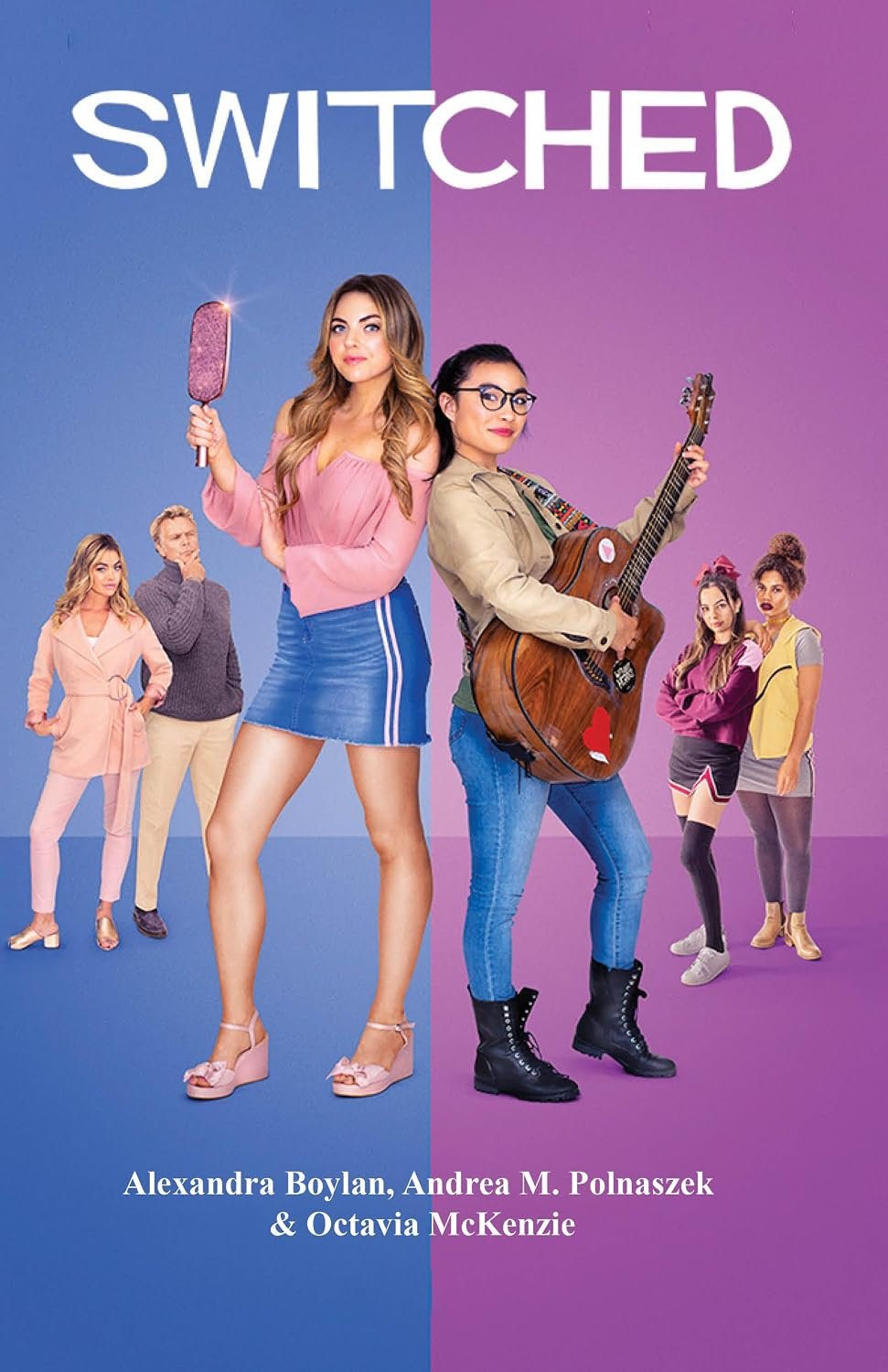
Switched by Alexandra Boylan, Andrea Polnaszek, and Octavia McKenzie begins with an instantly understandable impossibility: Cassandra Evans and Katie Sharp find themselves living in each other’s shoes.
One Morning, Another Person’s Life
Switched by Alexandra Boylan, Andrea Polnaszek, and Octavia McKenzie begins with an instantly understandable impossibility: Cassandra Evans and Katie Sharp find themselves living in each other’s shoes. The creators’ official website identifies the book as a novelization of the film Switched and emphasizes its concern with learning what another person experiences. A body-swap story offers easy opportunities for comedy because routines suddenly become unfamiliar and social expectations no longer fit. Yet the premise also has a serious dimension. It challenges a character to confront the gap between how someone appears from outside and the pressures they manage privately. The author’s public description presents Cassandra as mousy and Katie as notorious, suggesting that each has been reduced to a recognizable role in the eyes of others. Swapping perspectives promises a way to destabilize those labels without requiring a complicated fantasy explanation.
Cassandra and Katie as Public Images
Labels can feel efficient: one student is quiet, another is influential, a third seems to have everything under control. But such descriptions tell us more about what observers notice than about how a person experiences the world. The official synopsis contrasts Cassandra and Katie with deliberately sharp language. That contrast is useful to the story because it gives their exchange emotional friction before the details of their home and school lives become apparent. If someone who has been overlooked must suddenly occupy a highly visible identity, ordinary interactions can feel different. Likewise, a person accustomed to social power may discover forms of vulnerability they have not previously noticed. The source does not provide a complete list of scenes, so this is an interpretive lens rather than a reconstructed chapter sequence. What is verified is the novel’s use of exchanged lives to examine assumptions.
The Difference Between Seeing and Understanding
Stories about empathy can become preachy when they suggest that one surprising experience completely eliminates prejudice. Switched has an opportunity to present a more demanding form of recognition. Living through someone else’s routines might reveal obstacles, but understanding also requires listening and accepting that one’s first interpretation was incomplete. The creators describe the central idea in terms of loving one’s neighbor as oneself. That moral framing does not need to be treated as a shortcut to agreement on every issue. It can instead guide attention toward basic questions: what does another person fear, what do they want, and what is invisible from the outside? A reader may find humor in the characters’ confusion while recognizing that neither status nor shyness supplies a full account of someone’s character. The best use of the premise is to interrupt automatic judgments, not merely to reverse them.
From Film to Novel
The authors’ official site says Switched is a novelization of an existing film and that the book goes further into the minds of Cassandra and Katie. This information sets a specific expectation for readers who know the screen version. Film communicates through gesture, sound, editing, and visual contrast. Prose can linger inside a moment and make competing thoughts explicit. A novelization may therefore offer a different experience even while preserving the story’s essential setup. Readers who have seen the film may be interested in how characters’ internal reactions complicate actions that looked straightforward on screen. Newcomers can approach the book on its own, without requiring prior familiarity with the movie. The public description does not document which scenes have been added or altered, so it would be wrong to praise particular expansions as if they had been independently examined. The confirmed difference is the promised greater psychological access.
Comedy With an Ethical Point
The body-swap format is inherently fertile ground for absurdity. Two people forced into unfamiliar habits may misunderstand rules that once seemed obvious, creating clashes between public expectations and private knowledge. But if the comedy only humiliates its protagonists, the story’s advertised message of empathy would be hard to sustain. The writers’ stated intention points toward a more generous purpose: using extraordinary circumstances to question ordinary cruelty and snap judgments. That possibility is interesting because laughter and compassion are not opposites. Humor can expose how confident people are when they know so little about one another. The public website describes zany antics and a powerful conclusion, though it does not specify that conclusion. Readers should enter ready for both broad comic contrast and a more thoughtful reconsideration of how the characters see each other.
Multiple Creative Voices
The queue credits Alexandra Boylan, Andrea Polnaszek, and Octavia McKenzie as authors, with Renee Wurzer as editor. A public bibliographic discussion also lists the three writers for the book’s 2025 edition. These details matter because a novelization is often collaborative, drawing from an existing cinematic project as well as choices specific to prose. It would be an unsupported leap to assign chapters, dialogue, or particular creative decisions to one named contributor. The appropriate acknowledgment is collective authorship as presented in the edition metadata. The filmmakers’ website provides broader context for a storytelling approach concerned with family audiences and recognizable moral questions. That background helps readers understand the intended spirit of Switched, but the book’s particular literary effect would require reading rather than inferring it from the creators’ other works.
The Courage to Revise a Judgment
Many of the hardest interpersonal moments come when a person realizes that an apparently obvious judgment was made with incomplete information. A story that literally exchanges two lives makes that recognition visible and immediate. Yet its implication extends beyond the magical event: the opportunity to understand others should not require an impossible experiment. Readers can use the premise to consider what they assume about classmates, colleagues, neighbors, or family members before learning the details of their circumstances. The creative team’s description frames this as empathy rather than a competition to determine whose life is harder. That distinction is vital. Different kinds of vulnerability need not cancel each other out. The moral challenge is to recognize another person’s reality without denying one’s own. A comedy can explore that challenge with warmth while still acknowledging the discomfort of being corrected.
Who Will Enjoy Switched
Switched is a likely match for readers attracted to accessible body-swap comedy, film-to-book adaptations, and stories that combine lively misunderstandings with a clear ethical concern. The synopsis confirms Cassandra, Katie, the reversal of their everyday lives, and a theme of learning compassion through perspective. It does not authorize an invented resolution or a detailed scene-by-scene account. That leaves readers the pleasure of discovering how each character responds when familiar social advantages and disadvantages change places. The novel’s strongest advertised idea is simple but enduring: before deciding that someone else’s behavior is easy to explain, consider what remains hidden from view. The book approaches that lesson through imaginative reversal, where comedy makes the invitation less formal and the changing relationships give it weight. For readers who value a story with both laughter and reflection, that combination is the central appeal.
Readers familiar with screen adaptations may also appreciate that prose changes the rhythm of recognition. In a film, a character’s embarrassed expression or misstep can deliver a joke instantly. On the page, the same situation can allow reflection before the comic moment lands. That change of medium is not automatically an improvement or a loss; it alters what a storyteller can emphasize. The creators’ promise of deeper access to Cassandra and Katie’s minds gives a concrete reason to explore this version even after seeing the film. The novel invites attention to the thoughts that a camera can suggest but not always explain.
About the book.
Contemporary body-swap comedy, empathy-centered novelization. Cassandra Evans and Katie Sharp wake up living each other’s lives in a book adaptation exploring empathy and assumptions.
Editorial book feature, not paid sponsorship. Independent research-based commentary based on publicly available book details; not a claim of first-hand full-text review. The designated cover placeholder will be resolved by the owner’s publishing automation.
Found a book worth opening?
Books worth discovering. Authors worth knowing.
Return to the Journal →