
The Fixer: The Naked Man
A financially cornered student becomes a discreet problem-solver for powerful New Yorkers.
Books worth discovering. Authors worth knowing.
A financially cornered student becomes a discreet problem-solver for powerful New Yorkers.
Research-based literary perspective on a verified edition.
Katerina Mills needs money, and New York offers a way to earn it that is as dangerous as it is discreet. In Jill Amy Rosenblatt’s The Fixer: The Naked Man, a college student faces mounting tuition and housing pressure after personal relationships and family support collapse. The publicly available series description puts an exact and urgent figure on her problem: she needs $14,000 within two weeks. An offer to solve delicate problems for wealthy clients opens a strange new occupation. She becomes a fixer, someone paid to make inconvenient situations disappear. What begins as a practical response to financial precarity places her in a world whose rules are established by people who can afford to ignore consequences.
The economics of a bad choice
Katerina is not described as entering the criminal underworld out of a taste for glamour. The premise is far more grounded: she needs tuition and rent money after losing a relationship and a source of financial stability. This matters because crime fiction becomes more interesting when it distinguishes temptation from necessity. A person who has options may weigh risk differently from someone who believes a deadline is closing every door. The story’s financial detail gives the opening a tangible force, turning a potentially abstract moral decision into a problem with a calendar and an amount due.
That urgency does not erase personal responsibility, but it makes the cost of refusing an offer visible. When a character crosses a boundary under pressure, the reader can ask whether the boundary was equally firm for those who had more resources. Rosenblatt’s setup places the young student beside privileged people who can buy discretion. A transaction can look mutually beneficial while concealing a profound imbalance: the client keeps a polished public life; the fixer assumes the practical danger. This relationship is a distinctive engine for suspense because the fee is never the whole price.
Problems that money refuses to solve openly
The series synopsis describes Katerina following a socialite wife and then attempting to steal a VHS tape hidden in an antique chest. These assignments are striking because they are small enough to imagine taking place within an otherwise ordinary city, yet morally uncertain enough to reveal the world behind the work. Surveillance, privacy, property and secrecy begin to overlap. The wealthy client’s problem may not be the same as a justifiable public interest. A fixer needs contacts and nerve, but a reader should also watch for the point at which being useful becomes being used.
The old recording format and antique container are especially suitable objects for a crime caper. They suggest that secrets do not stop being consequential merely because their technology becomes outdated. Objects can outlive the agreements surrounding them, and information once considered safely hidden can become valuable when someone new learns where to look. We should not invent the contents of the tape or the reason it matters. Its documented role is enough to establish a compelling question: how does a person who begins by handling other people’s inconveniences come to understand the true consequences of what she has agreed to retrieve?
New York as a social map
In many urban thrillers the city is not just an attractive backdrop but a network of unequal access. Some doors open with money, others with familiarity or nerve, and many lead into situations where the rules are unclear. Katerina’s work among the wealthy and privileged suggests a New York divided between the people who order a service and those who perform it. The drama is intensified because the fixer must move between these worlds while belonging securely to neither. She is close enough to secrets to be dangerous, yet perhaps too far from established protection to control the outcome.
This kind of city fiction can expose the difference between public appearance and private demand. A client does not hire someone to fix an ordinary problem that can be solved transparently. Discretion creates a market precisely because respectable surfaces cannot accommodate what lies underneath them. Katerina’s encounters invite questions about whose reputations are protected, how far loyalty should extend, and what happens when the person who does the dirty work becomes inconvenient herself. Those questions follow from the advertised situation rather than from a claim to know each chapter.
Rules and the failure of rules
The public description advertises an early simplicity: collect payment, use contacts, fix the problem. It also warns that the real trade has no dependable rules or refunds. This contrast gives the novella its central threat. A list of instructions may make a dangerous job feel manageable, but the moral and practical landscape shifts when other people have their own plans. A client can withhold information; an ally may have different incentives; even an apparently completed task can generate new obligations. The most convincing suspense often comes from that disappearance of certainty.
The warning that there may be no exit is particularly potent for a student whose original goal is to remain in school. The occupation begins as an expedient means to continue her intended life. It threatens to become a life with entirely different demands. That reversal is more unsettling than a straightforward high-stakes chase. It suggests that each successful job can make the next refusal harder. The reader is invited to wonder not only whether Katerina will survive a particular assignment, but whether she can still decide what kind of person she wants to become.
An uneasy alliance
The description introduces Alexander Winter, a reclusive professional thief whose help becomes necessary for an assignment. The pairing is an obvious source of friction and potential chemistry, but it should not be converted into invented romantic scenes or outcomes. Its immediate function is to expose the limitations of Katerina’s new expertise. She may be quick to accept a challenge, yet some tasks require knowledge she does not possess. Turning to an experienced criminal raises the price of learning. Assistance can solve one problem while creating dependence on a person whose methods she cannot fully control.
In an effective caper, alliances are never only about technical competence. They also test trust. How much information can one person share before becoming vulnerable? Does professional skill imply a moral code, or only practice at avoiding consequences? Katerina’s relationship to someone who knows the terrain better than she does can sharpen the contrast between improvisation and experience. Readers seeking character-led suspense may find that contrast as rewarding as the eventual mechanics of an escape or heist.
Who may want to read it
Readers who like brisk urban crime, morally tangled bargains and heroines making imperfect decisions under pressure have good reasons to consider The Fixer: The Naked Man. Its opening financial predicament gives an accessible entry to a world of surveillance, theft and elite secrets. It may particularly suit readers who prefer a novella-scale caper or a series introduction built around one distinctive protagonist. The public sources identify this as the first Katerina Mills instalment, so it is a natural place to begin. Those seeking a conventional police procedural or a reassuring, consequence-free adventure may want to look more closely at the sample: the described appeal lies in uncertainty and compromised choices. The premise is strong enough to examine without claiming that every twist has been personally assessed.
Rosenblatt’s own site lists this book alongside later instalments in the Katerina Mills sequence. That context matters to a reader considering a longer commitment. The question at the centre of the first adventure is satisfyingly simple and difficult: if you accept payment to make other people’s problems disappear, who will help when the most dangerous problem becomes your own?
About the book.
A financially cornered student becomes a discreet problem-solver for powerful New Yorkers. The purchase link preserves the original listing in the queue.
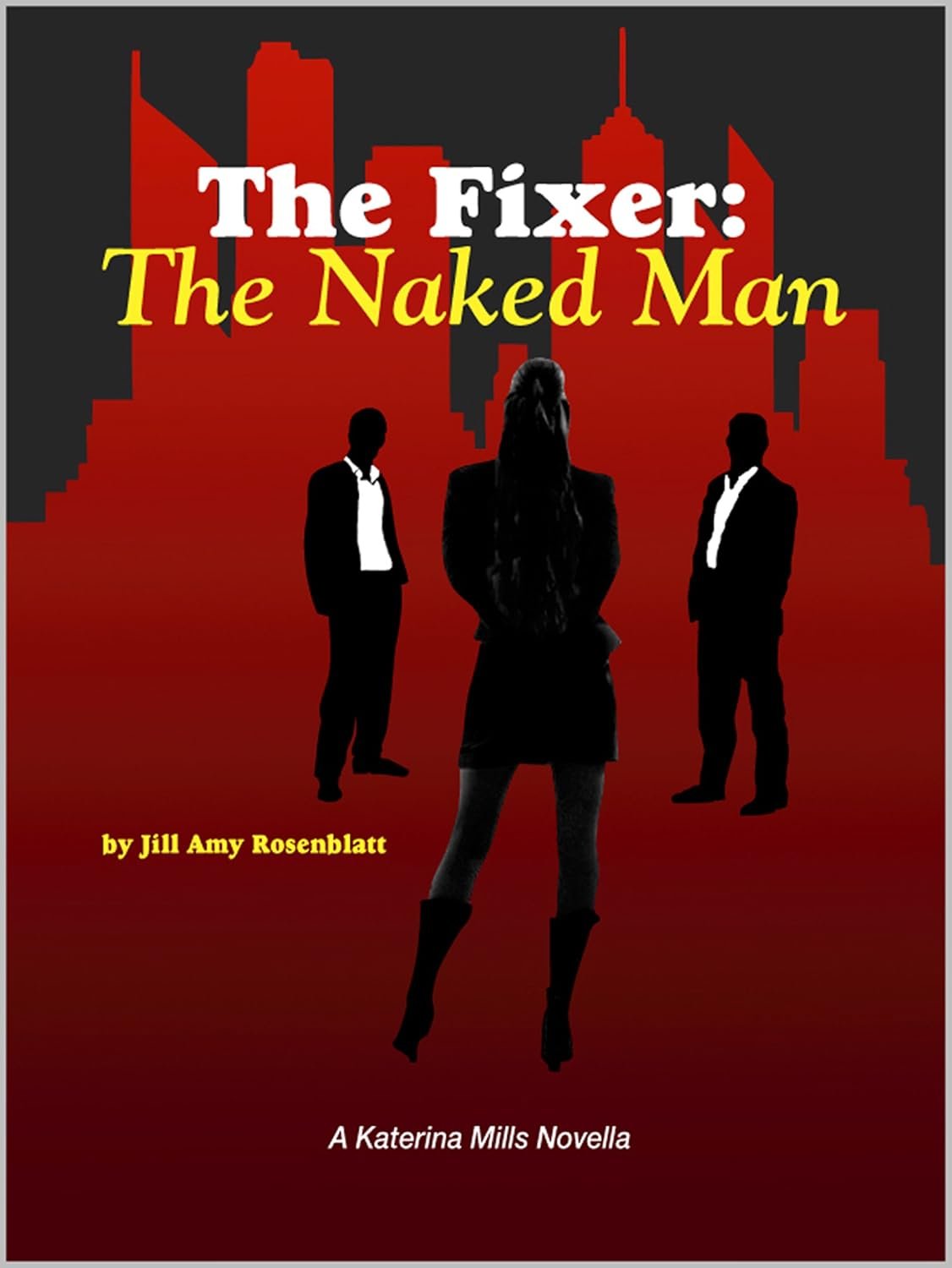
This is an independent research-based editorial introduction, not a claim to firsthand reading or a personal review of the full book. Sources comprise publicly available publisher, retailer or bibliographic descriptions and the verified queue and cover; detailed interior content has not been independently examined.
Found a book worth opening?
Books worth discovering. Authors worth knowing.
Return to the Journal →