
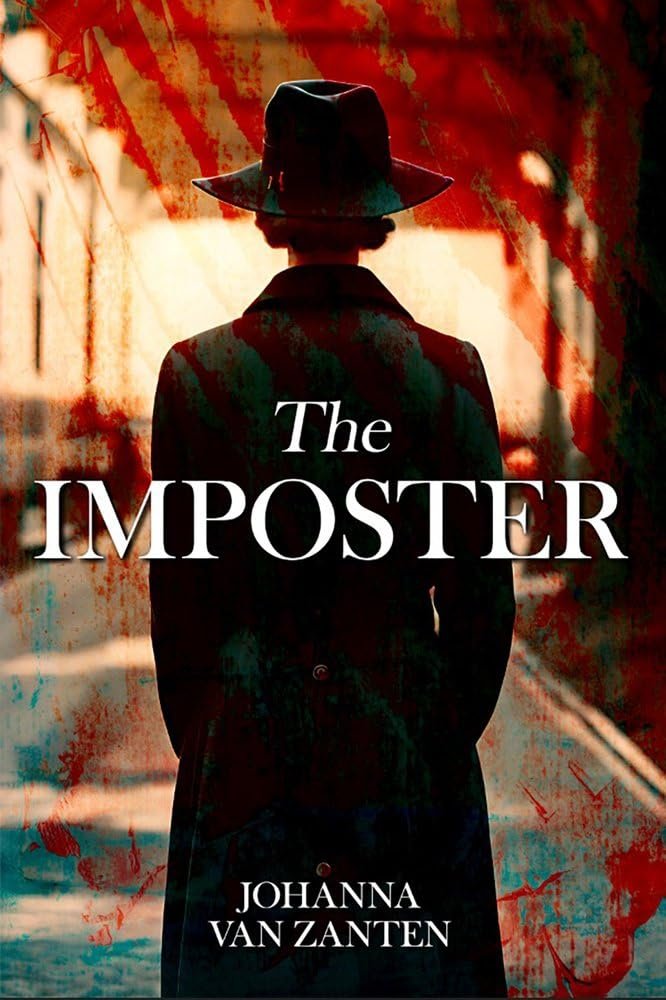
The Imposter
A Pomeranian-German woman conceals parts of her heritage as her life crosses borders, marriages and two world wars.
Books worth discovering. Authors worth knowing.
A Pomeranian-German woman conceals parts of her heritage as her life crosses borders, marriages and two world wars.
Johanna van Zanten’s historical novel The Imposter follows a woman born into a German world that repeatedly questions whether she belongs.
A Woman Between Two Histories
Johanna van Zanten’s historical novel The Imposter follows a woman born into a German world that repeatedly questions whether she belongs. The book draws on the life of the author’s grandmother, traveling from the late nineteenth-century German Empire through two world wars and eventually to the Netherlands. Its protagonist, Johanna, descends from a family with Pomeranian and Slavic connections. Her father is a shoemaker whose background becomes a source of stigma, and his daughter’s ambitions are shaped by the possibility that others may define her prospects through ancestry. The story is not only about changing countries. It is about the risk of being visible as the wrong kind of person within a community that claims the power to decide who counts. The publisher’s detailed synopsis and an independent Kirkus review agree on the broad historical structure. They also show why the novel’s central question is uncomfortable: what does someone lose when survival begins to depend on concealing the past?
Johanna’s First Lessons in Belonging
In the independent review, Johanna Münzke learns as a schoolgirl that classmates and teachers view her surname as evidence she is insufficiently German. The experience is a painful introduction to an arbitrary hierarchy: she has lived in Germany all her life, yet other people insist that ancestry outweighs lived identity. Later economic hardship narrows the future available to her. The publisher describes a strong-willed young woman unwilling to accept lifelong exploitation in domestic service. Her encounters with employers reveal vulnerabilities that cannot be understood through national history alone. Class and gender shape what kinds of work she may seek and how safely she can resist abusive power. The book’s historical frame makes these pressures specific, while its emotional question remains recognizable. A person can belong to a place through language and experience yet be rejected by it because of inherited labels. Johanna’s determination to escape poverty is inseparable from that larger struggle.
A Railroad Opens a Different Future
An important turning point comes when Johanna takes work running a concession shop for a railroad construction crew. The job moves her across northern Germany and introduces her to Hendrik, the Dutch construction superintendent who becomes her husband. This is a remarkable narrative setting because the railroad is both workplace and symbol of movement. Johanna has sought a path outside the narrow roles available to her, and the traveling operation offers a practical alternative. Yet mobility does not remove the constraints of family life. The publisher recounts that five children arrive within three years and the family’s railcar arrangement becomes impossible when officials prohibit the children from the worksite. Johanna must then make another adaptation, relocating with them into town. The events demonstrate how the freedoms of work, travel and marriage can change rapidly under the weight of caregiving and institutional rules. Rather than treating these changes as footnotes, the novel places domestic decisions within the machinery of an expanding modern Europe.
The Name That Helps Her Disappear
Johanna’s marriage to a Dutchman gives her a surname that helps conceal her mixed Slavic-German ancestry, according to the publisher’s account. A changed name may confer protection, but it also creates a difficult distance between the person known publicly and the history privately remembered. The title The Imposter raises the possibility that safety can be purchased through an identity others are willing to accept. That is an interpretive observation rather than confirmation of the author’s intended meaning in every scene. The public historical record and the novel’s premise make clear that ethnic classification affected opportunity and belonging in the German Empire. Johanna’s decisions arise under pressures she did not create. Still, a disguise that once helped a family survive may become hard to relinquish when political circumstances change. Readers are invited to examine how concealed information acquires a life of its own, shaping relationships long after the immediate danger appears to have passed.
From Wartime Germany to Neutral Holland
The First World War changes the couple’s calculations about where to raise their family. As the publisher tells it, Hendrik becomes determined to return to the Netherlands, and in 1917 they move to his hometown, where the family establishes a farm. For a time, the move offers stability and an environment in which children can grow and form their own families. Yet Europe does not remain at peace. The onset of Nazi occupation brings older divisions into the Dutch home Johanna has made. The story’s historical sweep matters because it prevents the protagonist from having only one identity crisis. Decisions made in the German Empire are reinterpreted under new political conditions; loyalties that appeared compatible earlier become difficult to sustain. An account spanning two wars must navigate enormous public events, but the novel’s focus stays close to what those events do to one household. History arrives not only through military movements but through conversations, suspicions and disagreements between people who share a family.
Loyalty Can Become a Form of Blindness
Kirkus emphasizes the discomfort of reading Johanna’s response to Nazi Germany. Having experienced prejudice herself, she still struggles to accept evidence of atrocities committed by the country with which she identifies. That contradiction makes her more challenging than a straightforward heroic survivor. A character may have courage in one part of life and refuse uncomfortable knowledge in another. Historical fiction can explore such inconsistency without inviting readers to excuse persecution or minimize victims. Johanna’s attachment to an idea of Germanness has helped organize her life, even as German society has repeatedly questioned her right to it. To acknowledge the regime’s violence would also mean reconsidering the story she has told about herself. The independent review treats that refusal critically, and a responsible feature should not soften it into a vague difference of opinion. The novel’s moral tension depends on recognizing that loyalty, denial and personal history can intersect in damaging ways.
A Family Memory Reimagined
Johanna van Zanten has explained in an interview that research for an earlier novel about her parents during the Second World War uncovered abundant material about her grandmother. That material and her admiration for the older woman inspired The Imposter. The author, born in the Netherlands and later an immigrant to Canada, worked as a social worker before developing a sustained writing career. These biographical details help explain the project’s origin without confusing a historical novel with a documentary transcript. Fiction can reconstruct dialogue, interior thoughts and scenes unavailable to the archival record. Readers interested in family history should therefore distinguish the grandmother who inspired the story from the protagonist as represented on the page. The publisher labels the book Imposter while the MarketAnyBook queue includes The; that minor edition-title discrepancy is documented for editorial accuracy. Neither variation changes the identity of the author or the historic arc presented in the verified sources.
The Costs of Passing as Someone Else
The Imposter may appeal to readers of sweeping historical fiction interested in ethnicity, migration, family loyalty and women making difficult decisions amid public upheaval. Its narrative covers more than the grand events of two world wars. It asks how a person trained to disguise part of herself responds when concealment begins to damage her relationships. Johanna’s desire for dignity and security is understandable; some of her later judgments, according to independent reviewers, are much harder to defend. That tension is what gives the book a moral dimension beyond its carefully reconstructed setting. The historical account also reminds readers that political pressures are experienced unevenly, with identities carrying different meanings across borders and generations. No synopsis can settle the novel’s final emotional effect, and this article does not present a firsthand page-by-page review. It identifies the verified story, its author’s documented inspiration and the questions that make Johanna’s compromised, enduring search for belonging worth serious consideration.
About the book.
Historical literary fiction rooted in two world wars. A Pomeranian-German woman conceals parts of her heritage as her life crosses borders, marriages and two world wars.
Editorial book feature, not paid sponsorship. Independent research-based commentary based on publicly available book details; not a claim of first-hand full-text review. The designated cover placeholder will be resolved by the owner’s publishing automation. The source edition is also catalogued under the shorter title Imposter.
Found a book worth opening?
Books worth discovering. Authors worth knowing.
Return to the Journal →