
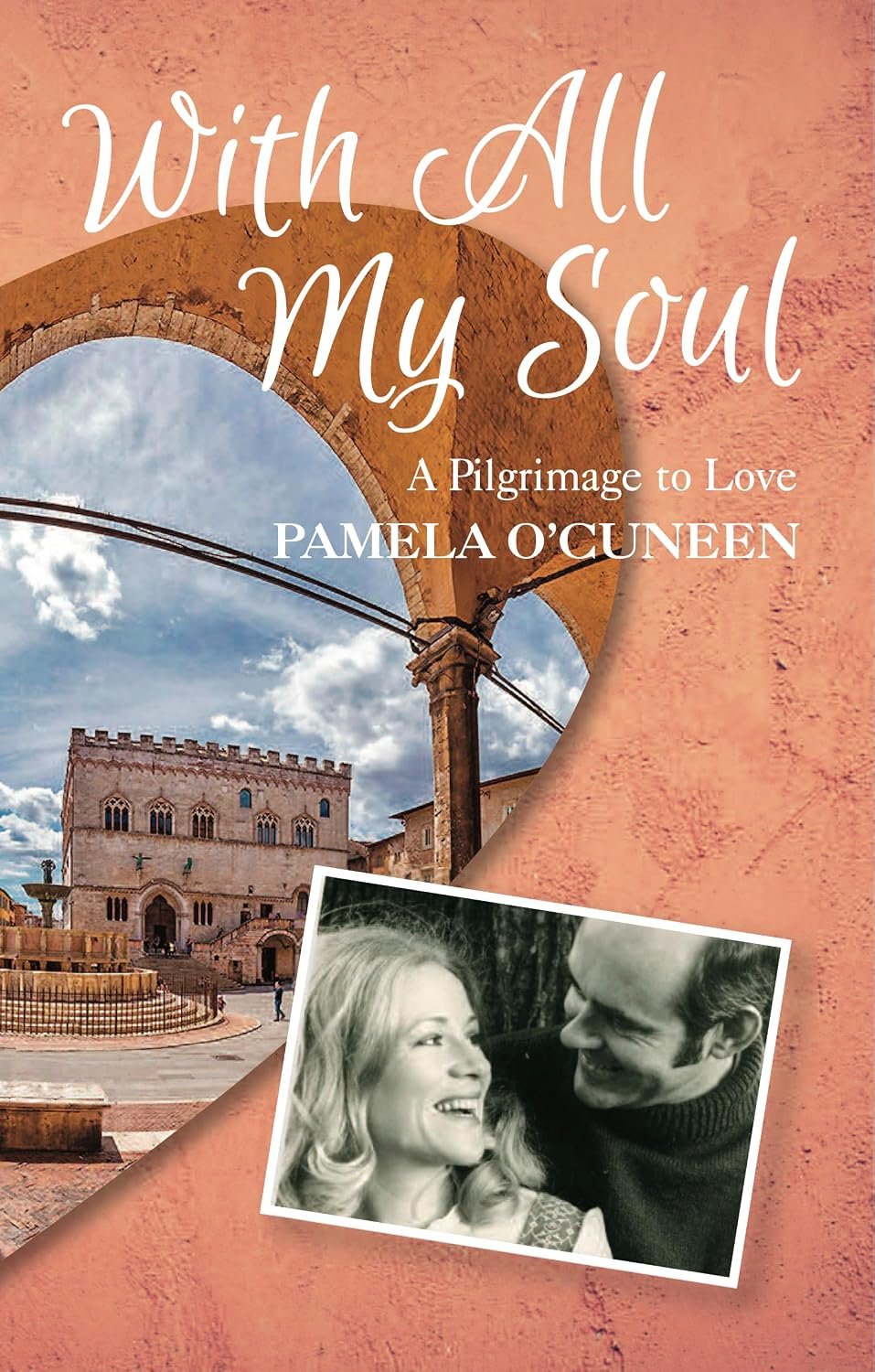
With All My Soul: A pilgrimage to love
Pamela O’Cuneen’s With All My Soul finds its central tension in a love that is emotionally immediate but institutionally impossible. In Perugia in 1968, a young Australian traveller meets Kieran…
Books worth discovering. Authors worth knowing.
Pamela O’Cuneen’s With All My Soul finds its central tension in a love that is emotionally immediate but institutionally impossible. In Perugia in 1968, a young Australian traveller meets Kieran O’Cuneen, an Irish Catholic missionary priest. They fall in love, but Kieran’s vows place a formidable boundary between desire and action. As he returns to…
Considered reviews, grounded in the book’s documented promise.
Pamela O’Cuneen’s With All My Soul finds its central tension in a love that is emotionally immediate but institutionally impossible. In Perugia in 1968, a young Australian traveller meets Kieran O’Cuneen, an Irish Catholic missionary priest. They fall in love, but Kieran’s vows place a formidable boundary between desire and action. As he returns to missionary work in Africa and she attempts to make a life in London, their separation becomes a test of how much freedom a person really has when faith, identity and devotion pull in different directions. The premise is true-life memoir rather than imagined romance, and its most compelling material lies in that resistance to easy resolution.
The room where two lives diverge
The described meeting in a sunlit lecture hall is a compact emblem of the late 1960s: travel as self-discovery, Europe as a place of intellectual possibility, and a life no longer expected to remain within its inherited boundaries. O’Cuneen had recently left convent education and was seeking work, culture and independence. The encounter with Kieran therefore does not simply present an obstacle to an otherwise settled existence. It complicates a project of becoming oneself. A careful memoir must show that personal freedom is not synonymous with getting everything one wants. Sometimes the discovery of love makes previously abstract commitments painfully concrete. The official accounts establish the encounter and its historical setting; they cannot by themselves verify every private exchange.
Faith as character, not scenery
A missionary priest’s vows might serve a conventional romance as nothing more than the inconvenient rule to be broken. The richer ethical question is whether a commitment can be both sincere and devastating to someone else. O’Cuneen’s story is described as a search involving faith and difficult decisions, not as a simplistic contest between the Church and the heart. This allows room to recognize Kieran’s religious identity as part of him, even when that identity frustrates the couple’s attachment. The memoir’s strength will depend on how it distributes sympathy: a reader need not endorse a particular doctrine to understand the weight of promises that precede a relationship. The synopsis suggests this conflict but does not supply its complete handling.
The years lived after parting
When Kieran leaves, Pamela establishes friendships and work in London and pursues other relationships. The central narrative risk is that these years might be rendered merely as a waiting room for the absent beloved. The more penetrating possibility is that the life she makes deserves narrative dignity on its own terms. Careers, cities and friendships are not provisional simply because love remains unresolved. They are the substance of adulthood. The memoir’s reported emphasis on personal resilience makes this question essential: is recovery a return to the original desire, a change in the desiring person, or some combination? The public description permits the question, not a judgment about how the eventual pages settle it.
Historical distance and the ethics of remembering
Writing about one’s youthful choices decades later creates a double perspective. The older writer can see forces that her younger self could only feel. The late 1960s were a period when gender expectations, religious authority and international mobility were being renegotiated; a memoir set in that moment can communicate how social change reaches an individual heart unevenly. Yet hindsight also tempts a narrator to make the past seem more inevitable than it felt at the time. The best memoirs preserve some uncertainty, resisting the urge to narrate every detour as a sign pointing toward a predetermined destination. The author’s own account places this life within wider cultural change.
The courage of unresolved longing
A love story does not have to promise that passion conquers every barrier to be moving. Indeed, the cost of a choice can become clearer when longing persists without cancelling the reality of other obligations. With All My Soul may appeal precisely because its premise will not fit the clean arithmetic of a romantic comedy. The phrase “pilgrimage to love” brings journey and belief into contact: a pilgrimage changes the person undertaking it, not merely the location reached. That is an interpretive clue offered by the subtitle. A complete evaluation must still depend upon the memoir’s scene work, voice and ability to portray the other people involved as more than symbols.
The romance of mobility and its limits
For a young woman crossing Europe in 1968, travel promised a degree of independence that earlier generations could not take for granted. Yet the freedom to move physically does not guarantee the freedom to keep a beloved person near. Pamela’s travels can be read against that irony: doors open into language, work and friendships even as her deepest attachment becomes impossible to inhabit on ordinary terms. This historical contradiction gives the memoir the potential to speak beyond its particular love story. Readers may recognize the frustration of making rational choices in one part of life while remaining emotionally committed to something that resists rational management. The changing social landscape need not be backdrop alone. It can show that liberation often arrives unevenly, with institutions retaining power over the bodies and hopes of people who appear outwardly mobile.
The problem of the beloved as memory
In autobiographical love writing, the figure who is absent can become almost too perfect. Memories preserve gestures while filtering out the daily annoyances that make a person real. A careful memoir makes room for that distortion rather than silently treating longing as complete knowledge of another. Kieran’s missionary vocation, Pamela’s loneliness and the distance between their practical lives offer concrete material through which to test romantic idealization. A full reading could ask whether Kieran is permitted motives and limits independent of Pamela’s suffering. The strongest love memoirs do not have to discredit feeling in order to examine it. They show that emotional truth and incomplete knowledge may coexist, especially when years of separation turn the other person into both a memory and a possibility.
Who will value this book
For readers of personal memoir, forbidden love narratives and lives altered by the collision of faith and modern self-determination, the book offers a poignant documented foundation. The author has also written about life in Africa and the Caribbean; that background enriches the context without proving any particular scene in this volume. This review treats the publicly supplied memoir synopsis as source material and keeps judgments of the finished prose provisional.
Scope of this assessment
This is a research-based editorial review drawn from identified bibliographic, author and publisher sources. It considers the work’s documented premise and the critical questions it invites, without claiming a complete firsthand reading. No unverified scene, character action or ending is asserted.
About the book.
An evidence-bounded critical introduction to historical love memoir. Published descriptions support the stated premise; interpretations are identified as editorial analysis, not confirmed plot details.
This review concerns a book marked sponsored in the current MarketAnyBook queue. Sponsorship is disclosed, and all observations remain research-based.
Found a book worth opening?
Books worth discovering. Authors worth knowing.
Return to the Journal →