
The Scourge of Witch'Bane: Nested Evil
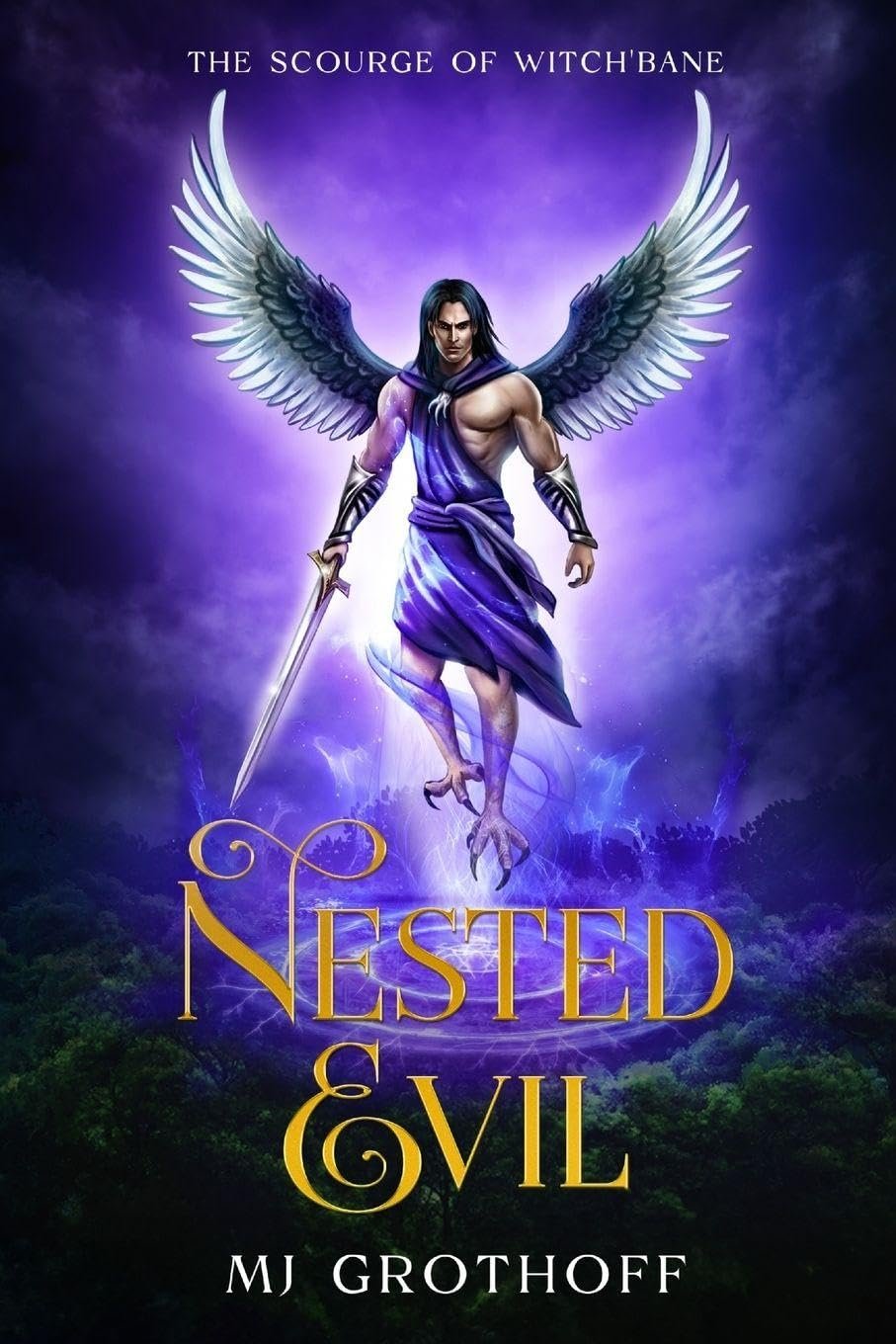
The Scourge of Witch’Bane: Nested Evil introduces the Five Islands, the protective ThunderBlood Guild, the Masura and an encroaching corruption. Its principal conflict is born from ambition within a…
Books worth discovering. Authors worth knowing.
The Scourge of Witch’Bane: Nested Evil introduces the Five Islands, the protective ThunderBlood Guild, the Masura and an encroaching corruption. Its principal conflict is born from ambition within a clan: Gavee watches the ruin of a home destroyed by his cousin's pursuit of supremacy. The setting of treetop settlements above a threatening forest is…
Considered reviews, grounded in the book’s documented promise.
The Scourge of Witch’Bane: Nested Evil introduces the Five Islands, the protective ThunderBlood Guild, the Masura and an encroaching corruption. Its principal conflict is born from ambition within a clan: Gavee watches the ruin of a home destroyed by his cousin's pursuit of supremacy. The setting of treetop settlements above a threatening forest is vividly specific, while the reported dilemma of a would-be King of Kings suggests a fantasy concerned with how power turns kinship into an instrument of harm.
A divided world with a vertical imagination
Treetop cities and the forest below supply an immediately legible visual grammar. Height may suggest safety, social prestige or the illusion of separation from danger; the ground below hides what the community fears to confront. This is an interpretive way to think about the published setting, not a claim that the novel states a fixed symbolism. The contrast matters because worldbuilding becomes memorable when physical geography participates in the story's moral imagination rather than appearing only as background.
The corruption comes from within
A villain outside the community is easier to identify than a family member whose hunger for authority has eaten through inherited loyalties. Gavee's cousin reportedly destroys clan peace in pursuit of dominance. Such betrayal can give an epic fantasy sharper stakes than an anonymous demonic invasion, provided that relationships are not sacrificed to lore. A reader should be able to feel what was lost before being asked to admire the scale of the war. The synopsis also mentions two outcast Masura who must confront darkness, allowing estrangement to become a source of moral insight.
Three sisters, one guild, and the danger of names
A protective oath associated with the ThunderBlood Guild and the menace of the three sisters promise mythic history. But fantasy names are not intrinsically meaningful. Each new institution needs a dramatic function: a rule that constrains conduct, a tradition someone obeys reluctantly, a story that determines who may belong. Grothoff's description offers a dense vocabulary. The full text must establish whether those elements enrich one another or become a barrier to entry. The promise of a secondary world is discovery, not homework.
A struggle over what peace costs
Nested Evil is described as a corrupting force and an opportunity for a royal clan member to attain higher authority. The important distinction is between temptation and inevitability. If the villain has a genuine choice, the story can examine responsibility rather than destiny alone. If ordinary beings must embrace some darkness to resist it, the division between righteous defender and tainted attacker becomes unstable. That moral complication is the most interesting promise of the premise, although the synopsis alone cannot tell us how far the novel pursues it.
The first encounter with an invented mythology
At more than three hundred pages, this is substantial introductory material. The ambition may delight readers who enjoy fantastical ecology, guilds, political claims and dark myth. It can also test patience if every paragraph introduces a new proper noun before the central injury becomes comprehensible. The clearest critical expectation is narrative orientation: the reader should understand Gavee's grief and the outcasts' peril even while the larger history remains mysterious.
A royal claim cannot heal a family
The notion of becoming King of Kings is so grandiose that it risks placing the villain beyond ordinary psychological recognition. Yet the published history begins with a cousin and the collapse of a family. That more intimate betrayal may be the narrative's best anchor. A person's greed is more chilling when readers can imagine the trust that existed beforehand. If Grothoff makes the road to sovereignty destroy a familiar relationship, conquest becomes an amplification of a domestic tragedy. Without verified scenes, this remains a critical reading of the setup rather than a claim about how fully the book develops the cousin's motivation.
Exile and the ability to see differently
The two outcast Masura are described as unlikely defenders. Exclusion can make characters vulnerable, but it can also give them knowledge that a settled hierarchy refuses to acknowledge. A community endangered by its own structures may need help from precisely those it has placed outside acceptable identity. This motif belongs to a long fantasy tradition, and it requires attention to individuality: the outsiders should be more than instruments created to prove the society wrong. Their particular ambitions, fears and attachments must be visible. The synopsis makes their role clear; only the text can establish whether they possess the necessary inner lives.
Ecology as more than ornament
The Urvara forest is described as lush, sinister and pulsing with strange life. That vividness presents an opportunity for the setting to impose real consequences. An invented species, a tree city or a shadowed route becomes meaningful when it changes what inhabitants can know or do. Otherwise exotic environments function as scenery surrounding a fairly ordinary struggle for a throne. The worldbuilding's best ambition would be to make the islands' physical systems inseparable from their politics. As with all densely imagined fantasy, comprehensibility is the governing discipline: readers need to care what happens before they are asked to memorize every name.
The cost of a rich mythic world
The most inviting part of the published mythology is its willingness to make a civilization feel inhabited by more than one kind of being. A reader may enjoy discovering Masura society, forest ecology and political ritual. But every fresh concept asks for attention, and attention is earned by relevance. A map, a creature or an institution becomes compelling when someone's need depends upon it. A full appraisal should therefore ask whether Grothoff balances descriptive ambition with a clear movement of grief, danger and decision. The premise has the materials for a dark tale about corrupt inheritance; the prose itself must give that architecture emotional life.
Who will value this book
Best suited to dark-fantasy readers comfortable with invented terminology, threatened ecosystems and clan politics. Readers who want understated realism or briskly self-explaining action may find the scale demanding. The synopsis verifies the named factions and settings, but this is a source-bounded review of the premise, not a scene-by-scene evaluation.
Scope of this assessment
This is a research-based editorial review drawn from identified bibliographic, author and publisher sources. It considers the work’s documented premise and the critical questions it invites, without claiming a complete firsthand reading. No unverified scene, character action or ending is asserted.
About the book.
An evidence-bounded critical introduction to secondary-world dark fantasy. Published descriptions support the stated premise; interpretations are identified as editorial analysis, not confirmed plot details.
This is an unsponsored, research-based editorial review, not a claim to firsthand reading of the complete book.
Found a book worth opening?
Books worth discovering. Authors worth knowing.
Return to the Journal →