
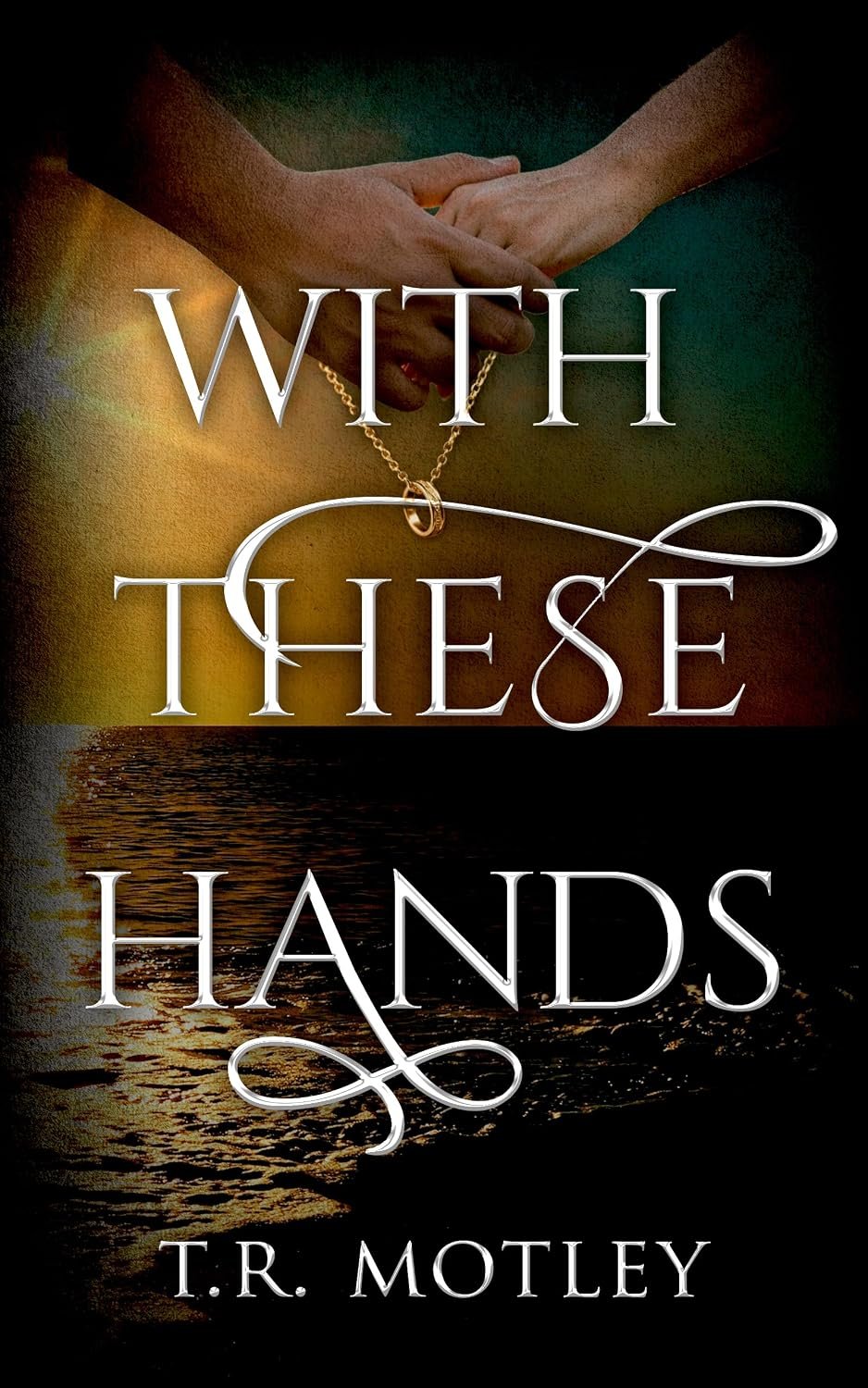
With These Hands
With These Hands uses the machinery of romantic suspense to ask whether a woman can reclaim her own life after other people have treated it as property. In T.R. Motley's public synopsis, Aurelia is…
Books worth discovering. Authors worth knowing.
With These Hands uses the machinery of romantic suspense to ask whether a woman can reclaim her own life after other people have treated it as property. In T.R. Motley's public synopsis, Aurelia is drawn into the Juarez cartel's violence at thirteen; years later, she turns evidence over to the FBI and enters witness protection. Her threatened safety…
Considered reviews, grounded in the book’s documented promise.
With These Hands uses the machinery of romantic suspense to ask whether a woman can reclaim her own life after other people have treated it as property. In T.R. Motley's public synopsis, Aurelia is drawn into the Juarez cartel's violence at thirteen; years later, she turns evidence over to the FBI and enters witness protection. Her threatened safety makes the romantic elements consequential rather than decorative. Love must exist alongside the danger of being found and the harder work of choosing what sort of person she can become.
A past that refuses to stay past
The cartel's continuing pursuit creates a classic suspense structure, but it also captures the persistence of traumatic control. Entering a protected identity is not the same as feeling safe. The novel's strongest thematic opportunity lies in the gap between institutional protection and the private labor of recovering a sense of agency. An author could simply use danger to keep the plot moving; a more emotionally convincing approach would allow Aurelia's decisions to change as her trust in herself changes. The accessible material identifies these pressures without revealing their particular expression in scenes.
Witness protection as an ethical complication
A witness-protection arrangement carries inherent paradoxes. To tell the truth about the past, someone may have to live under a carefully maintained falsehood in the present. That contradiction can affect friendships and intimacy: how can a relationship grow when candor is dangerous? Motley's thriller premise offers a natural site for examining that question. This review does not assume how Aurelia's protected identity is structured or whether the book depicts particular investigative procedures accurately. The interest here is the moral dilemma built into the public description.
Romance under pressure
Suspense fiction sometimes treats attraction as a reward for enduring danger. A stronger romance refuses that transaction. A person who has been controlled must be able to consent, hesitate and set the terms of closeness without the love plot demanding instant trust. The author's announced combination of survival, betrayal and intense love makes the distinction especially important. Readers should attend to whether the romantic partner respects boundaries when the thriller's stakes rise. That is a critical question about genre responsibility, not a claim about an unnamed character.
The danger of sensationalizing violence
A heroine's history can give a story deep moral urgency, but suffering should not function merely as the spectacle through which a reader learns that she is strong. The distinction is often one of narrative attention. Does the prose make space for ordinary preferences, humor, irritation and pleasure—or is a person visible only through what others did to her? Motley's premise promises a journey from escape toward resistance. Its value will depend on whether that movement preserves Aurelia's humanity beyond a familiar survivor archetype.
A series opening and its contract
The author's website presents the novel as the opening installment of a romantic suspense series. Such a beginning must offer enough emotional movement to satisfy a reader while making room for unfinished consequences. Escalation is easy; earned trust is harder. A responsible assessment of the first book would examine whether the danger expands because of the characters' actions rather than through arbitrary new threats. The published description is sufficient to establish the central premise, but not to judge its exact pacing or resolution.
A character not reducible to her case file
Aurelia's history intersects with an organized criminal network and a federal investigation, but her identity must not be composed solely of legal status and danger. Romantic suspense readers often remember a heroine for small acts of self-definition: a refusal, an ordinary desire, a private joke, or a decision made when nobody is watching. Those details are precisely what a plot dominated by pursuit can forget. The novel's strongest path would show how survival has affected the way Aurelia experiences freedom in moments that are not immediately violent. This is an evaluative lens, not a claim about specific domestic scenes in the novel.
The cost of telling the truth
Providing evidence against a dangerous organization may be understood as courage, but it also exposes a person to competing demands from law enforcement and the people she has left behind. A witness may be praised for cooperating while absorbing the practical consequences for years. In fiction, this tension can prevent a clean division between heroic institutions and villainous pursuers. The public synopsis does not describe the FBI as either protective or exploitative in detail. It does, however, create an opportunity to ask whether Aurelia's safety is genuinely defined on her terms.
Danger should change the love story
A suspense plot can intensify chemistry by keeping characters close together, but forced proximity alone does not prove that they understand one another. When a person has endured coercion, trust requires more than a dramatic declaration of loyalty. A partner's willingness to give space, accept disagreement and recognize fear may be as important as physical bravery. Whether Motley dramatizes those smaller choices cannot be established through marketing copy. They remain the criteria that distinguish a persuasive relationship from a thriller mechanism with kisses attached.
The obligation of a series to its heroine
The author advertises future books in this romantic-suspense world, which raises a question about narrative endurance. A heroine should not have to experience ever-greater injury merely so each installment can claim higher stakes. If the series follows related characters, it can broaden its world without reducing Aurelia's earlier struggle to an advertisement for the next danger. Readers can reasonably expect the first novel to grant meaningful movement even while the wider conflict remains active. This editorial review therefore weighs the announced opening on the clarity of its central choice, while leaving the exact ending unclaimed.
Who will value this book
With These Hands is an accessible prospect for romantic suspense readers who want high emotional stakes and a protagonist fighting for autonomy rather than a decorative action heroine. Content involving organized violence and childhood harm may be difficult for some readers. The author-facing synopsis offers a strong interpretive foundation, while the actual treatment of trauma, chemistry and suspense remains for a full reading to assess.
Scope of this assessment
This is a research-based editorial review drawn from identified bibliographic, author and publisher sources. It considers the work’s documented premise and the critical questions it invites, without claiming a complete firsthand reading. No unverified scene, character action or ending is asserted.
About the book.
An evidence-bounded critical introduction to romantic suspense and survival fiction. Published descriptions support the stated premise; interpretations are identified as editorial analysis, not confirmed plot details.
This is an unsponsored, research-based editorial review, not a claim to firsthand reading of the complete book.
Found a book worth opening?
Books worth discovering. Authors worth knowing.
Return to the Journal →