
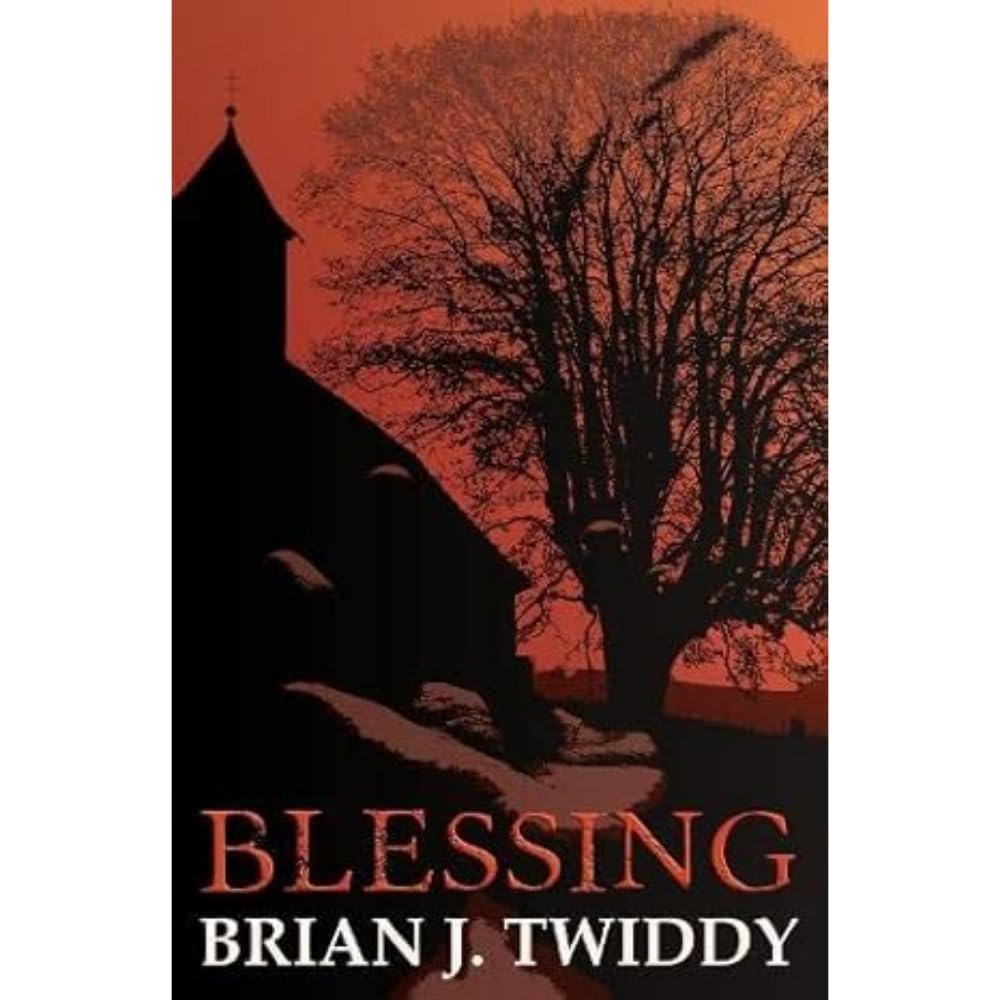
Blessing
Two migrants pursuing different ambitions in London become entangled with a powerful pastor and a troubling inherited blessing.
Books worth discovering. Authors worth knowing.
Two migrants pursuing different ambitions in London become entangled with a powerful pastor and a troubling inherited blessing.
Original editorial introduction, grounded in the verified book edition and public descriptions.
A blessing usually promises protection or good fortune. In Brian J. Twiddy's novel Blessing, the word carries a darker ambiguity. Published descriptions identify two young migrants, Dev and Adey, trying to establish their lives in London, alongside a powerful pastor and an extraordinary inheritance passed through a family line. Their ambitions become entangled with circumstances they cannot fully direct. The mixture of social struggle, moral compromise, and supernatural inheritance gives the novel a premise in which a gift may also function as a burden.
Two arrivals and two moral paths
The bookseller and publisher descriptions introduce Dev as charming, ambitious, and prepared to bend the law to advance his plans. Adey, his friend, is portrayed as more openly willing to break it for money. Their different responses to opportunity establish a human conflict before the supernatural element becomes central. Both are in London with uncertain prospects and considerable pressure to survive, but the public synopsis does not reduce them to interchangeable figures. Their choices suggest different relationships to risk, loyalty, and the costs they are willing to impose on others.
The description uses a legal label for their immigration situation. A thoughtful reading should recognize that migration status and individual moral character are different questions. The novel's opening circumstances may heighten insecurity, yet the ethical consequences of Dev's and Adey's choices belong to their actions, not simply to the fact that they are newcomers. Their ambitions can be understandable without being innocent. The book's premise creates space to ask how urgent practical need interacts with temptation, friendship, and the lure of wealth in an unfamiliar city.
Ambition and the price of getting ahead
Dev's dream of a business empire offers one kind of story: a person determined to move from vulnerability toward independence. But ambition becomes more unsettling when the methods used to reach a goal gradually redefine what success means. The promotional account sets Dev's desire for advancement beside Adey's greater willingness to violate rules, creating a comparison between compromise and calculation. It does not establish every business decision or later consequence, so those cannot be supplied as facts. The critical question is whether the pair's shared history makes one responsible for the other's conduct, or merely makes it harder to walk away.
London is important to this dynamic as a place of opportunity, anonymity, and potential exploitation. In a large city, new arrivals may find networks that help them survive while also encountering people whose promises are difficult to evaluate. That is a social interpretation of the novel's documented situation, not an assertion that a specific gang or employer appears. A story about ambition can be compelling precisely because success and security are not the same thing. What offers quick advancement may also increase a character's dependence on people or forces whose interests remain hidden.
A pastor and an inherited power
The publisher descriptions introduce a dominating pastor associated with a Blessing that has been transmitted through the firstborn of a family for many generations. This is the supernatural hinge of the premise. A religious leader is often expected to provide guidance or protection, but the description casts his influence as troubling and compromised. That contrast creates a moral question: how do people recognize when an authority figure uses a sacred language to demand obedience or conceal personal interests? The precise mechanics of the inherited power are matters for the novel; this feature does not invent ceremonies, miracles, or family revelations.
Inherited gifts are an established source of narrative tension because they precede the individual's choice. A character may receive a power without understanding its origin, cost, or intended use. Here the title raises the possibility that what one generation celebrates may weigh heavily on another. The published synopsis explicitly links fate, love, and circumstance with the pastor's influence, suggesting that the central conflict cannot be reduced to a simple pursuit of money. A reader may follow how the story tests the distance between a blessing freely given and a force controlled by someone else.
Good and evil without neat boundaries
In an interview-style promotional article, the novel is described as questioning whether anyone is wholly good or wholly evil. That is a useful frame for Dev and Adey's contrast. A character can be likable and selfish, or capable of loyalty while pursuing an unethical end. Another may appear menacing but still require the reader to understand how power and desire have shaped them. The concept does not absolve harmful behavior; it resists the convenience of treating a person as only one thing. The interplay of human weakness and supernatural influence could make this ambiguity the book's central emotional challenge.
The religious element also invites distinction between an institution's moral claims and the conduct of its representatives. A pastor's position does not make his actions automatically benevolent, just as a mysterious inheritance does not necessarily establish its bearer's virtue. These questions remain within the fictional world. A research-based feature can examine the ethical themes without presenting the novel's supernatural claims as factual or pretending to have checked its complete narrative resolution. The named characters and premise offer substantial ground for reflection even while major developments remain undisclosed.
Who might find Blessing compelling?
Blessing appears well suited to readers of morally complicated contemporary fiction with supernatural or religious elements. Its documented setup combines migration to London, friendship under strain, professional ambition, an influential pastor, and a power passed through generations. Readers who enjoy stories in which recognizable social pressures intersect with uncanny forces may be particularly interested. Those seeking a straightforward uplifting spiritual tale should be aware that the public descriptions emphasize menace and ambiguous morality. Readers concerned about portrayals of migrants and abuse of authority may wish to approach the book with attention to its ethical framing. Exact content warnings and the final course of the plot require access to the complete novel rather than inference from its sales description.
The gift that asks for an answer
A strong title can change meaning as its story unfolds. In Blessing, a word associated with hope is placed beside questionable means, unequal influence, and inherited obligation. Dev and Adey's different attitudes to rules give the opening an immediate human tension, while the pastor's family-linked power expands the scope into something more mysterious. Twiddy's published premise is sufficient to distinguish the work without manufacturing further action. The question worth carrying into the novel is what a character owes to a gift they did not choose, and whether ambition makes them more willing to accept conditions they do not yet understand.
About the book.
Two migrants pursuing different ambitions in London become entangled with a powerful pastor and a troubling inherited blessing. Public bibliographic details have been distinguished from editorial interpretation.
Sponsored book feature: the MarketAnyBook queue lists this book as sponsored. This original research-based editorial article is not a firsthand reading or an independent endorsement. Bibliographic descriptions and author or publisher statements are interpreted with clear source limits. The original purchase URL remains unchanged; WordPress cover media is added later by the owner’s publisher.
Found a book worth opening?
Books worth discovering. Authors worth knowing.
Return to the Journal →