
Britfield and the Lost Crown
Two orphans escape a cruel institution and race across England with one clue to a mystery involving the British crown.
Books worth discovering. Authors worth knowing.
One word—Britfield—turns a desperate escape into a search for a stolen history.
S.
Two Children Against an Entire System
In C. R. Stewart’s Britfield and the Lost Crown, Tom and Sarah have little power over the world in which they live. Weatherly Orphanage is an institution where education is suppressed, children work, and adults rule through intimidation. Yet the story’s central movement begins when one young person refuses to accept that his circumstances define all of his possibilities. Tom discovers that his parents may still be alive, and a single enigmatic word—Britfield—becomes the first fragile clue to their whereabouts and his hidden past.
Sarah, his closest friend, is essential to the escape. A plot about a lost crown could easily concentrate everything on a supposedly exceptional heir. Stewart instead starts with two children whose courage is expressed through trust and practical cooperation. They must get away from Weatherly before they can investigate the mystery, and every step requires inventiveness. That decision grounds the larger conspiracy in recognizable fears: separation, injustice, uncertainty and the urgent need to find someone who will believe them.
The book was introduced as the first entry in an adventure series for middle-grade readers, although its publicity also welcomes older audiences. Its blend of action and British landmarks gives readers multiple pleasures at once. There is the immediate question of whether Tom and Sarah can stay ahead of the authorities, the developing possibility that Tom has a royal connection, and the travel-book fascination of moving through historical places that genuinely exist. All three strands grow from the children’s determination to escape being treated as powerless.
Weatherly Orphanage and the Meaning of Freedom
Weatherly is more than a gloomy backdrop. Official series material describes children forced to work in a factory, managed by cruel caretakers and deprived of meaningful schooling. Tom and his friends resort to secretly borrowing books from the owners’ library. The situation makes intellectual curiosity a form of resistance. Before the story becomes a chase across England, the desire to read and learn has already become a challenge to the authority of people who prefer their charges obedient and uninformed.
This early setting lends force to the later adventures. A dramatic escape can be exciting on its own, but it matters more when readers understand what staying would mean. Tom’s discovery about his parents gives him a personal reason to flee; Sarah’s punishment makes the need for action immediate. The other orphans’ cooperation underscores that freedom is not merely a solitary achievement. The children build a fragile network of mutual care even inside a system designed to keep them apart and discourage independence.
Stewart’s approach evokes elements of classic orphan adventure while keeping the route through England recognizably modern. The adults who control Weatherly may resemble villains from an earlier literary era, but the geographical journey has cars, institutions and familiar civic landmarks. This contrast allows young readers to encounter a traditional story pattern without being confined to a historical fantasy. It also opens conversations about how unjust arrangements endure when the people affected are denied education, credibility and opportunities to tell their own stories.
A Hot-Air Balloon Across England
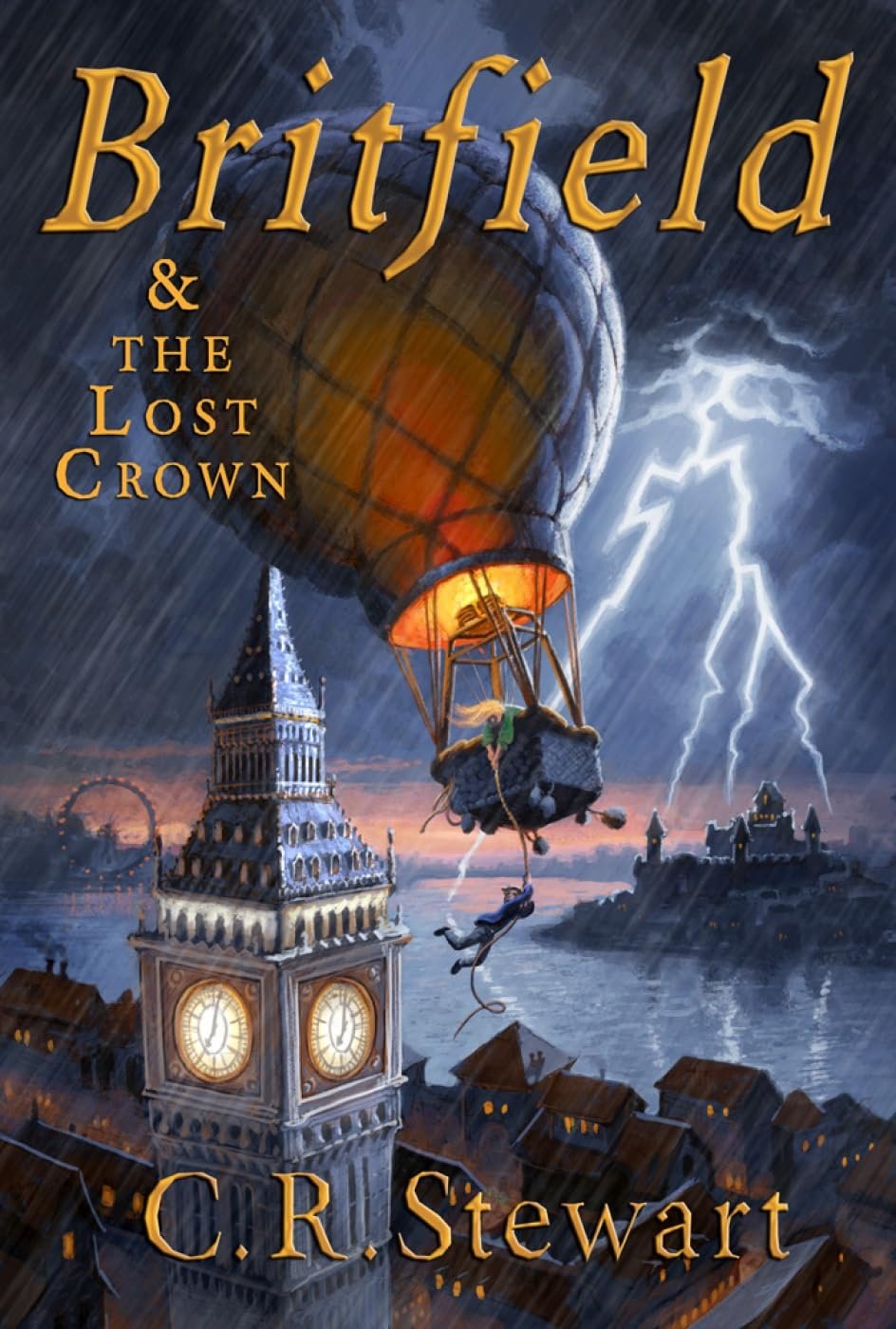
The children commandeer a hot-air balloon during their escape, a decision that announces the story’s taste for improbable but physically vivid adventure. An airborne route lets Stewart move the pair across recognizable landscapes while putting them in an unstable position: exposed above the ground, dependent on weather, and unable simply to blend into a crowd. The transport is memorable precisely because it is neither magical nor routine. It makes a daring imaginative leap within an otherwise real-world setting.
Official descriptions follow the journey from Yorkshire toward Oxford University, Windsor Castle, London, Canterbury and the southern coast. The sequence transforms England into a series of possible shelters and threats. Oxford brings connections with sympathetic academics; Windsor introduces the significance of royal history; London offers scale, complexity and new ways to disappear or be found. The places are more than names from a tourist itinerary because they organize the widening consequences of Tom’s mysterious identity.
Young readers can follow the action while learning why geography matters. Distance, buildings, rivers and transportation create particular opportunities and obstacles. Stewart’s series publicity makes education a deliberate part of the reading experience, with history and architectural references woven into the plot. That ambition works best when readers notice how real settings shape fictional decisions rather than treating the story as a disguised lesson. A chase is exciting first; questions about a cathedral or castle can follow naturally after the immediate peril has passed.
Detective Gowerstone and the Pressure of Pursuit
Detective Gowerstone pursues the escapees across the country, turning an institutional injustice into a broader confrontation with authority. A famous Scotland Yard detective brings resources and public legitimacy that two runaway orphans cannot match. The imbalance is central to the suspense. Tom and Sarah may know why they left Weatherly, but the people dispatched to capture them have the reach of a system that can frame the children’s flight as wrongdoing.
That premise raises a question middle-grade adventure handles especially well: when should a young person distrust the adults who insist they know best? Tom and Sarah cannot assume every authority figure is safe. Nor can they survive without help. Official material identifies professors who offer assistance, so the book’s moral world is not simply children versus grown-ups. Instead, it contrasts power exercised to control with expertise and influence used to protect. This distinction gives the search for allies a larger ethical significance.
The chase also limits the amount of certainty the protagonists can afford. They must act on partial information. The word Britfield is a clue, not an explanation, and the possibility of a royal birthright remains bound up with a larger conspiracy. An adventure structured around incomplete knowledge encourages readers to connect clues while remembering that the children do not know everything the reader would like to know. The best suspense comes from that gap between an urgent decision and the evidence still missing.
Friendship Before Royal Destiny
A lost-crown mystery naturally promises revelations about lineage, inheritance and national history. Stewart makes the question of Tom’s family important from the first pages, but Sarah’s place in the journey prevents the plot from becoming only an exercise in proving a special bloodline. Her friendship is already real when the possibility of royalty is no more than rumor. In that sense, the personal relationships have firmer foundations than the grand claims that draw pursuit and danger.
Tom’s search is also a search for reliable knowledge about who he is. The people who ran Weatherly controlled important information, and the word Britfield punctures that control. The adventure asks whether identity can be hidden from a child by the institutions around him, and what happens when he begins collecting facts for himself. Royal intrigue amplifies this concern, yet the emotion begins with a question any child can understand: where is my family, and why have I not been told the truth?
Sarah adds another dimension to the book’s treatment of courage. A courageous friend is not simply someone who follows the main character into danger. The escape requires judgments about trust, sacrifice and the limits of what children should have to endure. Their partnership suggests that resilience depends less on fearlessness than on people choosing not to abandon one another. Readers need not share Tom’s extraordinary possible ancestry to recognize the value of that loyalty.
What the Adventure Offers Its Readers
Britfield and the Lost Crown is a natural choice for readers who enjoy brisk mysteries, secret histories, close friendships and geographically expansive escapes. Its action is designed to entertain, while the real landmarks may invite curiosity about England beyond the novel. A reader drawn to more fantastical adventure may appreciate that the central thrills do not require spells or magical beings: human decisions, hidden documents, determined pursuers and a borrowed balloon are enough to generate a remarkable journey.
Parents, teachers and young book clubs may find several entry points for conversation. Why were the children at Weatherly denied books? When is it courageous to disobey an authority figure? How do Tom and Sarah decide whether a stranger can be trusted? What difference does knowing the geography of a place make when trying to navigate it? These discussions can emerge from the narrative without demanding that the book function as a textbook or a formal lesson in civic history.
The story’s promise is ultimately larger than the possibility of a crown. It begins with young people who have been deprived of choice and follows them as they exercise judgment under frightening conditions. The historical clues and breathless travel make the plot engaging, but the friendship gives it warmth. Stewart’s opening volume offers an energetic invitation into a series where a single word can open the door to national mystery, and where two children prove that freedom begins long before all the answers arrive.
About the book.
Tom and Sarah flee Weatherly Orphanage by hot-air balloon and evade Detective Gowerstone while searching for the truth about Tom’s family and possible royal identity.
Sponsored book feature. Research-based original commentary from public author, publisher, retailer and bibliographic sources; not a first-hand complete-book review. A cover placeholder will be resolved by the owner’s publishing automation.
Found a book worth opening?
Books worth discovering. Authors worth knowing.
Return to the Journal →