
Theatre, Dance & Poetry
Wilfred Kanu Jr. merges poetry, prose and performance-minded reflections in a provocative exploration of modern romance.
Books worth discovering. Authors worth knowing.
What happens when the vocabulary of dating becomes the raw material for poetry, theater and cultural debate?
S.
Romance as a Public Conversation
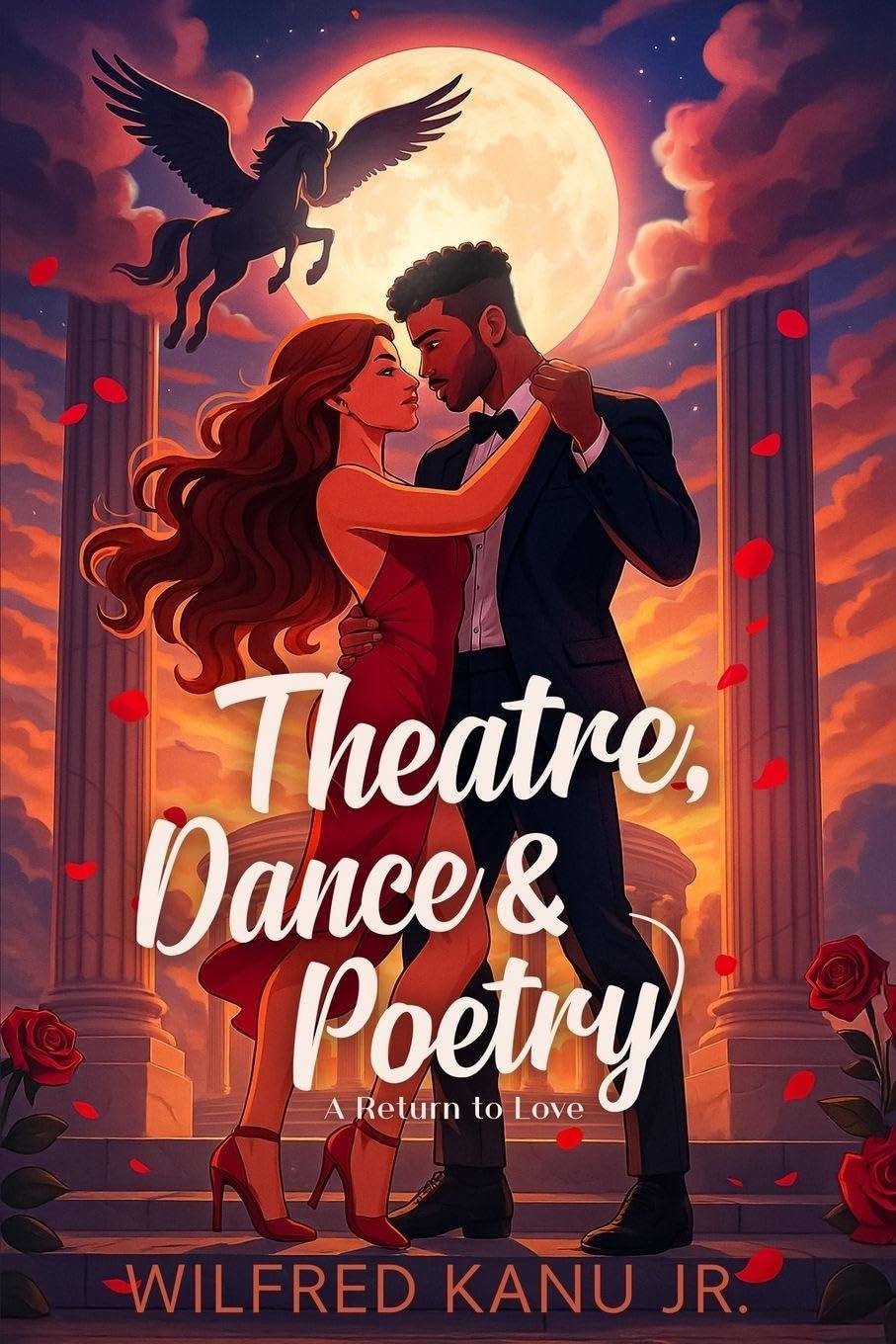
Wilfred Kanu Jr.’s Theatre, Dance & Poetry: A Return to Love approaches modern relationships as something larger than a private exchange between two people. Courtship takes place inside cultures that supply expectations, fashion, music, arguments and unspoken rules. The anthology brings those surrounding influences into view through poetry, prose and a performance-minded voice. Its publisher describes a collection interested in romantic attraction, loneliness, nightlife and cultural change, not a single continuous fictional plot. That distinction helps set expectations for its blend of personal and social commentary.
The title itself is unusually revealing. Theatre suggests performance and the roles people adopt before others. Dance evokes timing, reciprocity and the distance between partners moving together. Poetry offers a space where conflicting feelings can be expressed without resolving into a fixed instruction. By joining these forms, Kanu invites readers to consider how people perform and interpret desire. The book’s interest extends from affection and companionship to more contentious questions about gender norms and what contemporary dating culture asks of men and women.
Some of the volume’s public descriptions use provocative language about feminism, the so-called passport-bro movement, and the search for partners across cultures. Readers should regard those as topics and positions explored by the author, not settled explanations of society. A collection can be intellectually stimulating without its generalizations becoming universally true. Approaching the book with that distinction allows its more contentious material to serve as an occasion for comparison, disagreement and self-examination rather than a substitute for listening to the lived experience of others.
A Collection Built for More Than Silent Reading
African Books Collective and the author’s own site describe a practice of bringing literary expression together with music. Kanu, who also performs as Freddy Will, has connected previous projects to recorded work. With Theatre, Dance & Poetry, the invitation broadens toward readers’ own sense of rhythm and musical imagination. A piece of poetry can be read silently, spoken aloud, imagined alongside a melody or discussed after a performance. The book’s title signals that its material aims to cross those boundaries of expression.
This matters because speech and performance change the experience of argument. A claim made in a prose essay may invite factual evaluation, while the same concern shaped into a dramatic monologue foregrounds the speaker’s feelings and perspective. A poem compresses emotion into images and rhythm; an extended reflection can explain why a person holds a position. Kanu’s genre-crossing method invites movement among these modes. It also makes the reader’s role unusually active: hearing a voice does not require agreement, but it does require attention to how the voice has been constructed.
The published table of contents indicates a sweeping range of material, with sections on loneliness, nightlife, dating applications, masculinity, relationships and cultural debates. These are named areas of discussion rather than proof that the author resolves every disagreement he raises. The collection’s breadth will appeal to readers interested in popular culture as a field of competing stories about intimacy. It may challenge those who prefer a quiet, narrowly personal love lyric, because many of the selected themes enter unmistakably public and disputed territory.
When Loneliness Meets Modern Dating
One of the collection’s most understandable concerns is how difficult people can find it to build connection while surrounded by opportunities to communicate. Applications, nightlife spaces, social expectations and cross-border relationships promise access to potential partners, yet access does not guarantee intimacy. Public descriptions emphasize the gap between desire for companionship and the often exhausting business of seeking it. That tension offers fertile material for poetic reflection because loneliness is felt privately even when its conditions are widely discussed.
The book’s contents look back toward dating culture in the 2000s and consider changes associated with more recent decades. That historical contrast can provoke useful questions: which expectations genuinely changed, and which merely acquired new vocabulary? How much do digital platforms alter the way people present themselves? Are cultural stories about romance helping people communicate or simply dividing them into rival camps? The available descriptions do not warrant a claim that the book gives definitive answers. Its appeal lies in staging the debate with emotional intensity.
The Relationship Between Art and Argument
Poetry about romance often seeks universality through personal detail. A speaker’s hesitation, the memory of a date, or an encounter with rejection can resonate far beyond its initial context. Cultural argument moves in another direction, drawing larger conclusions from patterns in public behavior. Theatre, Dance & Poetry combines these impulses and consequently asks readers to shift between identification and critical scrutiny. An expressive line may succeed as art even when the social claim behind it is contestable.
This distinction is especially important in a volume that advertises controversial issues. The emotions of disappointment and hope are legitimate regardless of someone’s theory about their causes. Art can give those feelings shape without demonstrating that a particular group deserves blame. Readers may appreciate Kanu’s willingness to speak directly while examining whether a particular generalization illuminates the problem or simplifies it. A plural reading keeps the human questions in focus even when one disagrees with an answer proposed in the text.
The subtitle A Return to Love suggests a destination rather than a final verdict. Returning to love could mean rebuilding trust, approaching dating with more patience, making room for self-respect or reconsidering the cultural scripts one has inherited. Different readers will place different emphases on these possibilities. The collection’s published aims include connection, self-love and companionship. Those constructive themes offer an alternative center of gravity to its disputes: beyond arguments over dating trends lies a desire for relationships in which people feel respected and seen.
Wilfred Kanu Jr. and the Crossroads of Forms
Kanu’s account of his creative path helps explain why the collection refuses neat genre boundaries. In an interview with African Books Collective, he describes founding Badson Publishing and developing an independent practice that includes recording, writing and support for other creatives. He also discusses life across African and North American settings and the influence of music on his authorship. The public interview establishes those broad biographical connections without requiring readers to treat every artistic persona as a transparent autobiography.
The publishing history also requires care. Listings for related editions show different page totals and subtitles. Rather than presume every available copy is identical, readers should use the linked listing to confirm which edition they are considering. This is not a minor bibliographic detail for an anthology: altered organization or additional pieces can change the rhythm of a collection. Our discussion concerns themes supported by public material about A Return to Love, not an invented comparison of unseen edition contents.
Kanu’s combination of social commentary and performance may be most satisfying to readers who enjoy expressive voices with visible opinions. It may feel less comfortable to those seeking a restrained scholarly account of relationship research. That is a matter of literary expectation, not a reason to dismiss the form. Poems and performance texts can communicate uncertainty, frustration and longing in ways that conventional advice books rarely attempt, provided the audience remembers that emotional candor is not the same as evidence for broad social claims.
Returning to the Human Question
Theatre, Dance & Poetry is best approached as an anthology of voices and ideas around love rather than a guide promising a formula for romance. Its declared themes include affection, tension, nightlife, cultural change, gender expectations and the need for companionship. A reader intrigued by the overlap of spoken word and contemporary debate has concrete reasons to look inside. Someone seeking a step-by-step relationship manual should know that the book advertises artistic expression and contentious reflection instead of a tested program.
A generous but critical reading listens for the longing beneath the controversy. People want connection but fear rejection; they seek independence but also hope for partnership; they use inherited language that sometimes fails to describe newer social realities. Kanu’s title gathers those contradictions on an imagined stage, where a line can provoke, a rhythm can soften, and a scene can leave an argument deliberately unfinished. Readers have space to bring their own histories and challenges to what they encounter.
At its strongest as a concept, A Return to Love names a movement away from treating romance merely as a contest between opposing camps. Whether a particular poem succeeds in reaching that ideal is for readers to decide. The collection offers an energetic entry into difficult questions, asking that they be considered not only through headlines and grievances but also through artistic forms built to register desire, vulnerability and the complicated wish to belong with another person.
About the book.
This anthology explores courtship, loneliness, nightlife, gender expectations and romance through performance-oriented writing and topical reflections.
Editorial book feature, not paid sponsorship. Research-based original commentary from public author, publisher, retailer and bibliographic sources; not a first-hand complete-book review. A cover placeholder will be resolved by the owner’s publishing automation.
Found a book worth opening?
Books worth discovering. Authors worth knowing.
Return to the Journal →