
Neurodiversity Playbook
Matthew Zakreski offers strategies for social-emotional communication and relationships for neurodivergent readers.
Books worth discovering. Authors worth knowing.
Matthew Zakreski offers strategies for social-emotional communication and relationships for neurodivergent readers.
Source-based review: verified bibliographic facts and independent interpretation, without a claim to full-text reading.
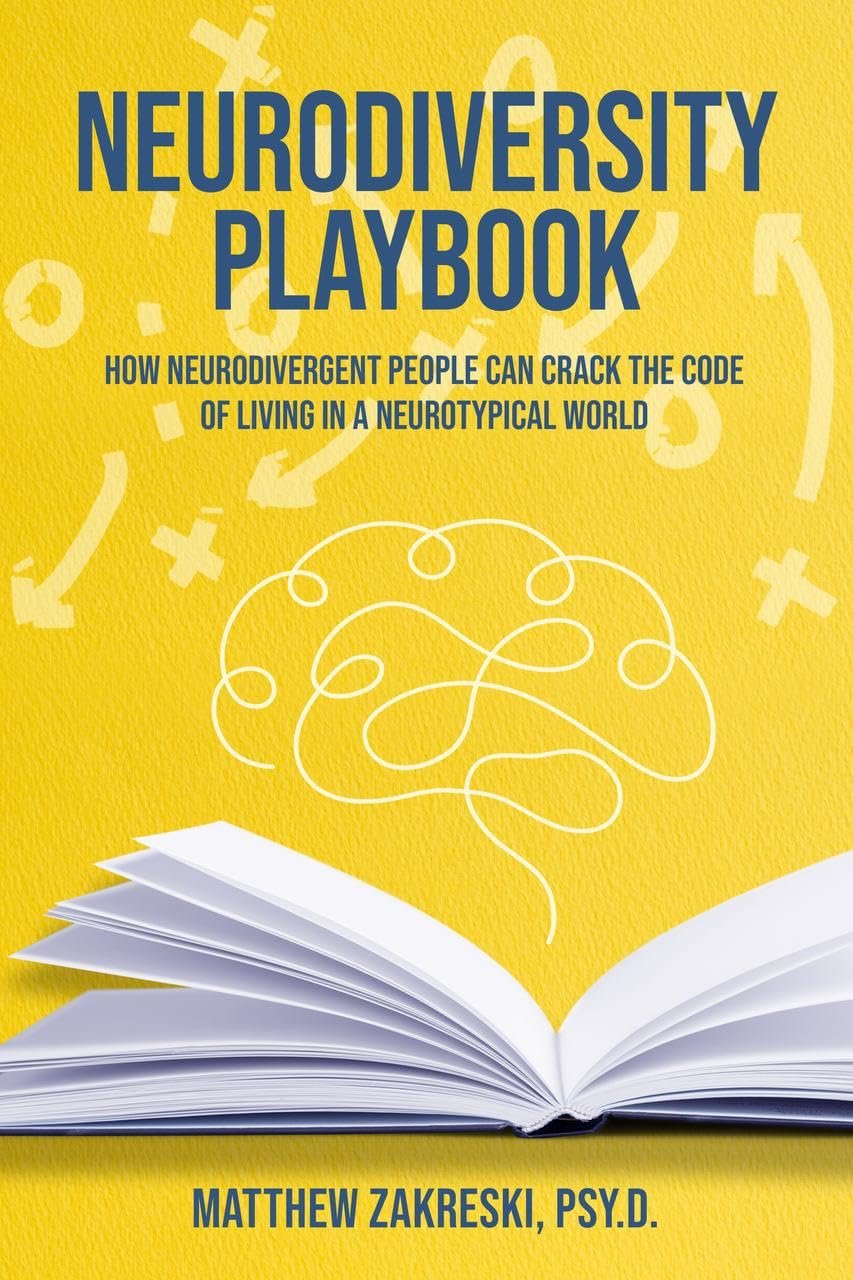
The Neurodiversity Playbook by Matthew Zakreski, Psy.D., is a practical nonfiction guide about navigating social and emotional life in environments often designed around neurotypical expectations. Its publisher and bibliographic descriptions identify a foundation in the author’s experience as a child psychologist working with neurodivergent people. The book specifically addresses making friends, regulating emotions, communicating needs, sustaining relationships and reading social contexts; it promises examples and usable strategies. The Google Sheet calls the title The Neurodivergent Playbook, but the supplied cover and identified ISBN 195336036X say Neurodiversity Playbook. This review uses the supported edition title while preserving that discrepancy for editorial correction.
Understanding the word playbook
A playbook suggests more than a collection of encouraging statements. It promises approaches a reader can try, reconsider and adapt when facing a recurring challenge. That word is useful for a subject too often discussed only in abstract labels. The author’s stated concern is how differences in brain functioning can influence thought, feeling, behaviour and social experience. A practical guide can acknowledge those differences while offering readers language for situations that have previously felt confusing. The important distinction is that a playbook should provide options, not demand that everybody with a particular diagnosis behaves in the same way.
The book is presented as drawing on therapy, research, workshops and professional speaking. That background is relevant, but it does not remove the need for readers to consider their own contexts. Neurodivergence is not one uniform experience. A person navigating giftedness, ADHD, autism or another neurotype may have overlapping needs with others and also very different priorities. An approach that helps one reader understand a conversation may not be right for another. The author’s promise is strongest when understood as a set of ideas and skills, not an instruction to become indistinguishable from the majority.
Social understanding without self-erasure
The subtitle frames life in a neurotypical world as a code that can be understood. That metaphor might feel empowering to someone who has repeatedly been told that social expectations are obvious when they are not. It also has a possible limit: describing other people as a code must not imply that one person’s way of communicating is naturally superior. The most thoughtful use of such a guide is to improve mutual understanding. Learning how particular situations tend to be interpreted can be helpful; it does not mean that readers must continually mask discomfort, surrender boundaries, or accept exclusion.
Consider the topic of friendship, explicitly included in the published description. Friendships require both personal expression and attention to another person’s needs. A practical book might help readers recognize confusing signals or decide when clarification is better than guessing. We cannot claim that a particular exercise appears in the work unless a sample confirms it. What we can say is that the author has chosen an area of life where broad advice frequently fails because individuals need room for different communication styles and sensory or emotional needs.
Emotions as information
Emotional regulation is another documented subject. The term is sometimes misunderstood to mean suppressing what one feels. A more humane reading treats emotion as information that can be named, interpreted and addressed. The publisher says the book addresses social-emotional development with examples and tangible skills. The claim of effectiveness remains part of the book’s promotional description; this article does not independently establish clinical results. Readers will be best served by considering which approaches are feasible for them and by seeking individualized professional support when appropriate.
The distinction between a helpful framework and a rigid rule is particularly significant for young people. A student may want more confidence in a classroom conversation, but they may also need teachers and peers to make the environment more accessible. A book about individual strategies can be read alongside the question of what institutions should change. It should not become an excuse to put every burden of adjustment on the person who already experiences the greatest difficulty.
Making room for communication
The book’s descriptions mention identifying contextual factors and communicating feelings and needs appropriately. Context is often the missing element in social advice. A statement can sound different depending on who says it, where, and under what pressure. The value of a practical resource lies partly in making such invisible expectations visible enough to examine. Readers might find it useful to ask which behaviours express genuine care, which are merely conventions, and when direct language serves everyone better than subtle inference.
For families and educators, the same questions work in the other direction. Instead of treating every misunderstanding as a deficit in the neurodivergent person, they can consider how their own speech, routines and assumptions contribute to confusion. The most constructive interpretation of a playbook is collaborative: insight should travel between people. The publisher identifies the guide as usable in school, home and community contexts, but individual outcomes will vary.
Who should read it
The Neurodiversity Playbook is an appropriate prospect for neurodivergent adolescents and adults, parents, teachers and professionals seeking a practical, social-emotional framework. Readers interested in friendships, communication, self-advocacy and everyday misunderstandings will find those topics specifically described in the available publication materials. People seeking diagnosis or therapy should not treat the book as a replacement for qualified, individualized assessment. Some readers may be wary of a title suggesting that they must decode or adapt to other people’s norms; that concern is a useful question to bring to the text rather than a reason to assume its approach is harmful. The edition’s scope is broad enough to reward thoughtful, selective use.
The central promise is practical understanding without denying difference. It is supported by a substantive publisher synopsis, unlike many sparse-source titles in this batch. Still, this is a research-based review, not a claim to have evaluated every case example or clinical recommendation. The cover-versus-queue title discrepancy requires correction before publishing, and the book’s strategies should always be interpreted in light of readers’ individual circumstances. Its most useful invitation is to replace automatic assumptions about social behaviour with curiosity, language and more deliberate choices.
About the book.
Matthew Zakreski offers strategies for social-emotional communication and relationships for neurodivergent readers. Review framing reflects documented descriptions and clearly limited sources.
Sponsored book: the MarketAnyBook source queue marks this listing as sponsored. This is a research-based review-style editorial discussion and not an assertion that the writer read the complete book. When interior text was unavailable, analysis of themes or possible reading questions is explicitly interpretive and not presented as documented plot. The source queue uses an inconsistent title; the cover and publisher ISBN show Neurodiversity Playbook, and the owner should correct the queue title before publishing.
Found a book worth opening?
Books worth discovering. Authors worth knowing.
Return to the Journal →