
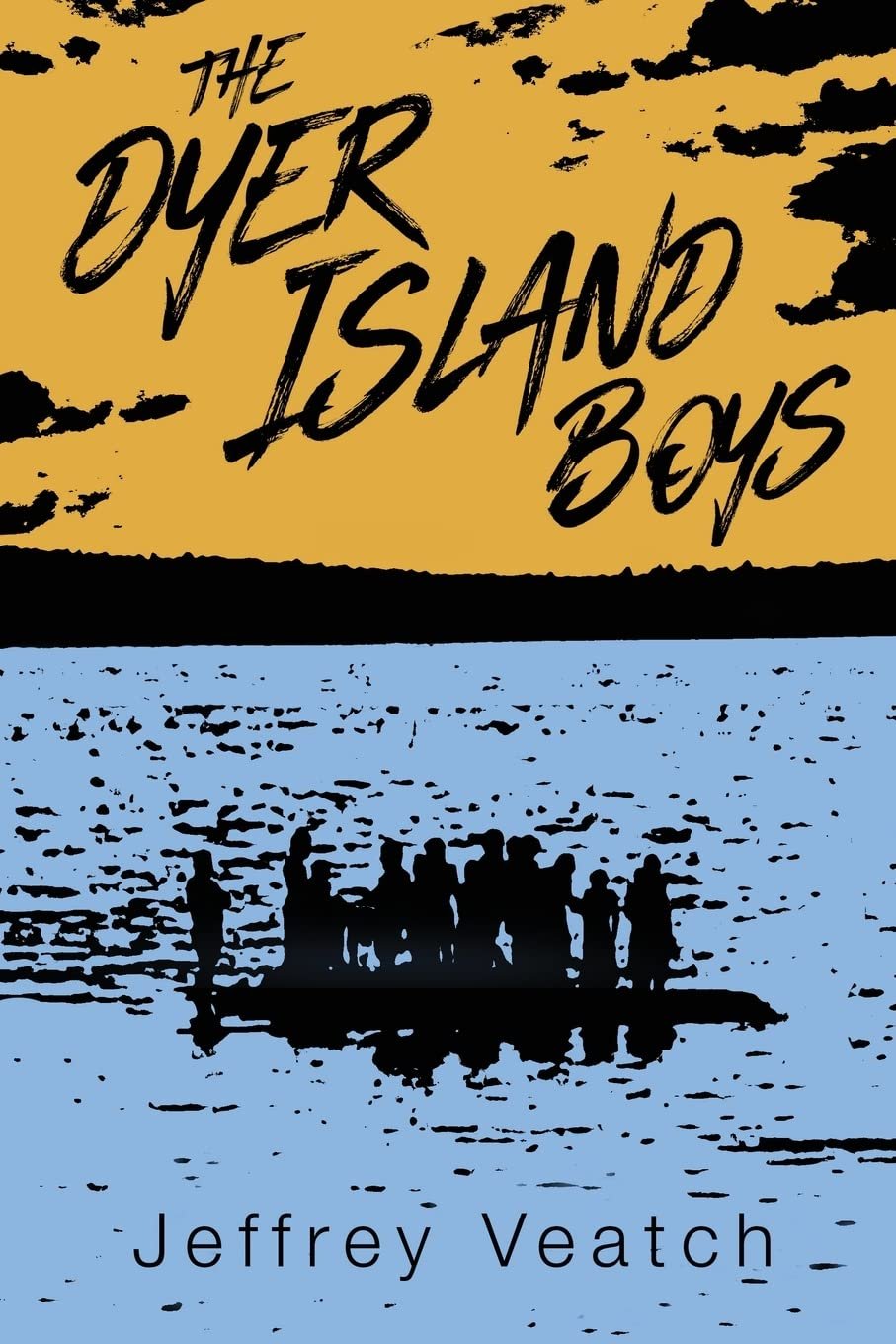
The Dyer Island Boys
A Maine island summer camp, a chance for one troubled boy and fifty years of mentorship intersect in Jeffrey Veatch’s intergenerational story.
Books worth discovering. Authors worth knowing.
A Maine island summer camp, a chance for one troubled boy and fifty years of mentorship intersect in Jeffrey Veatch’s intergenerational story.
Original editorial introduction, grounded in the verified book edition and public descriptions.
The Dyer Island Boys begins with an idea that changes meaning across fifty years. In the publicly documented premise, two young surgical residents in postwar New York buy an undeveloped island off the coast of Maine with summer adventure in mind. Instead, the island becomes a community camp organized around adolescent boys learning responsibility through work and shared life. Jeffrey Veatch's novel, described by its author as based on true events, links the project's origin to a chance encounter between Walter Wickson and a young offender, Harry Thompson. Decades later, the older Harry returns to speak with another troubled teenager, and the story asks what a community can pass from one generation to the next.
An island that becomes an experiment in belonging
An island can be a refuge, a limit, or a place of reinvention. The author’s published account identifies Dyer Island as a small, initially undeveloped space purchased by two medical residents, Walter Wickson and Meredith Jones. What begins as a hoped-for summer retreat becomes a more demanding enterprise. The two men, alongside medical intern Anne Dobson, establish a plan for Harry involving work, solitude and growth after Walter persuades a judge to send him to the island instead of pursuing a conventional punishment. The premise raises complex questions about rehabilitation without making the camp into a clinically proven model. Its methods are part of a novel's story, not treatment advice.
The setting supplies physical work and shared responsibility, a useful contrast with the urban encounter that starts Harry's involvement. A remote camp can make daily consequences visible: someone must maintain buildings, plan tasks and depend on others. The public synopsis says the community eventually becomes run by adolescent boys, which suggests a transition from adult-led instruction toward young people's participation in governance. Exactly how this transition unfolds in scenes is not available from the summary, but its stated end point gives readers a concrete measure of the project's ambitions.
A crime that becomes a turning point
The opening encounter, as described by the author, is stark: Harry robs Walter at knifepoint. Walter responds by seeking a different outcome through the justice system and the opportunity offered by the island. A lesser story might treat a single act of generosity as sufficient to transform a life. Here the much longer time scale is important. A fifty-year story implies that choices have to be lived with, repeated and reinterpreted. The author describes the men and their community working to offer adolescent boys skills and direction over generations, but this account should not be converted into a claim that all the camp's choices were unquestionably wise.
That ambiguity makes the premise more interesting. What obligations does Walter take on by intervening? What voice does Harry have in the plan made for him? Does hard work create dignity because it is useful, because it builds competence, or because someone has trusted a young person with responsibility? These are ethical questions the published setup makes possible. Readers can attend to how the book depicts agency rather than assume rehabilitation operates as a magical switch.
The second timeline gives the first a witness
Half a century later, the author’s synopsis places Harry back at the now-established camp. He comes to help a fifteen-year-old camper, Johnny Miller, who has rebelled against the community. Walter has called him back, and a tour through the island's history brings past and present into contact. This frame is a compelling way to approach intergenerational fiction. Harry is no longer simply the boy who once needed help. He is someone whose experience may have become a resource for a younger person who is not yet ready to accept the camp's rules.
There is a difference between telling Johnny that the camp works and letting him hear what its institutions cost to create. The public description says the older men take Johnny through the history of their friendship and the camp's evolution. That suggests storytelling as a kind of mentorship, though it does not provide enough detail to evaluate the dialogue or Johnny's response. Stories about the past can transmit values without making those values immune to challenge. The interesting possibility is that Johnny may hear both the ideal and the compromises behind it.
The people behind a communal project
The book's named adult figures are not interchangeable. Walter and Meredith begin as surgical residents; Walter is described as a recent veteran in the author’s account. Anne is a medical intern whose ambitions are interrupted by a tuberculosis diagnosis. These details are significant because they place the island project within lives already shaped by profession, illness, obligation and postwar change. A camp for boys is not simply their hobby. It develops amid circumstances in which they must negotiate other identities and responsibilities.
Anne's interrupted career is an especially important detail to treat carefully. The summary names both her professional ambition and the illness affecting it; it does not establish how much narrative space she receives or how she interprets her situation. Readers may want to pay attention to whether the novel affords her ambitions independent weight. The historical background also raises questions about medical training and society after World War II. Because the book is based on true events rather than presented as a full documentary history, an editor should distinguish the novel's described framework from independently verified claims about the original camp and its participants.
Work as education, not a shortcut
The camp's structure places adolescents in roles where they help run a community. That can be read as an argument for education beyond classrooms: learning to cooperate, build skills and take responsibility for a shared place. But it is worth keeping the idea open to scrutiny. Work alone is not proof of growth; community rules can empower or exclude; and guidance from an adult can be generous while still carrying authority that deserves examination. A strong reading will look for the young people's perspective alongside the adults' ideals.
The fifty-year span keeps this concern alive. What begins as an unusual intervention for Harry apparently develops into an enduring institution. When Johnny resists the camp years later, the story’s central question resurfaces in a new context. A structure that benefited one person in one era may need to explain its value again to the next. That is a meaningful fictional conflict, not an inconvenience to the camp's uplifting mission.
Who may want to read it
The Dyer Island Boys is suited to readers drawn to intergenerational stories, community-centered historical fiction and novels about second chances that unfold through patient effort rather than a single dramatic revelation. Its postwar beginnings, Maine island setting and fifty-year frame distinguish it from a straightforward coming-of-age summer story. Educators, mentors and readers interested in youth development may find its questions about trust, responsibility and opportunities for change especially engaging, while recognizing that a fictional rehabilitation approach is not an evidence-based clinical prescription. Readers seeking primarily fast action or a closely observed contemporary teenage voice should check a preview to see how the framing narrative balances its generations. This research-based feature cannot authenticate every historical inspiration or the exact treatment of its characters, but it can identify the shared concern linking them: what turns help given once into a durable culture of mutual responsibility?
The author’s larger purpose
Jeffrey Veatch's official account describes him as a longtime radio journalist and documents advocacy and education projects that followed the loss of his son Justin. These facts offer public context for his interest in young people, but they should not be used to assign a private motive to every scene of the novel. The book's stated structure is sufficient to explain its appeal: one boy's encounter with an adult who chooses intervention over punishment echoes across decades, until that boy returns as a possible mentor himself. Whether Johnny accepts the lesson is not something the public synopsis should decide for a reader. The novel offers a chance to think about how institutions earn trust and how people who were once helped might choose to help others.
About the book.
A Maine island summer camp, a chance for one troubled boy and fifty years of mentorship intersect in Jeffrey Veatch’s intergenerational story. Public bibliographic details have been distinguished from editorial interpretation.
Independent editorial feature: this is a source-based introduction, not a firsthand review of the complete book. Bibliographic descriptions and author or publisher statements are interpreted with clear source limits. The original purchase URL remains unchanged; WordPress cover media is added later by the owner’s publisher.
Found a book worth opening?
Books worth discovering. Authors worth knowing.
Return to the Journal →