
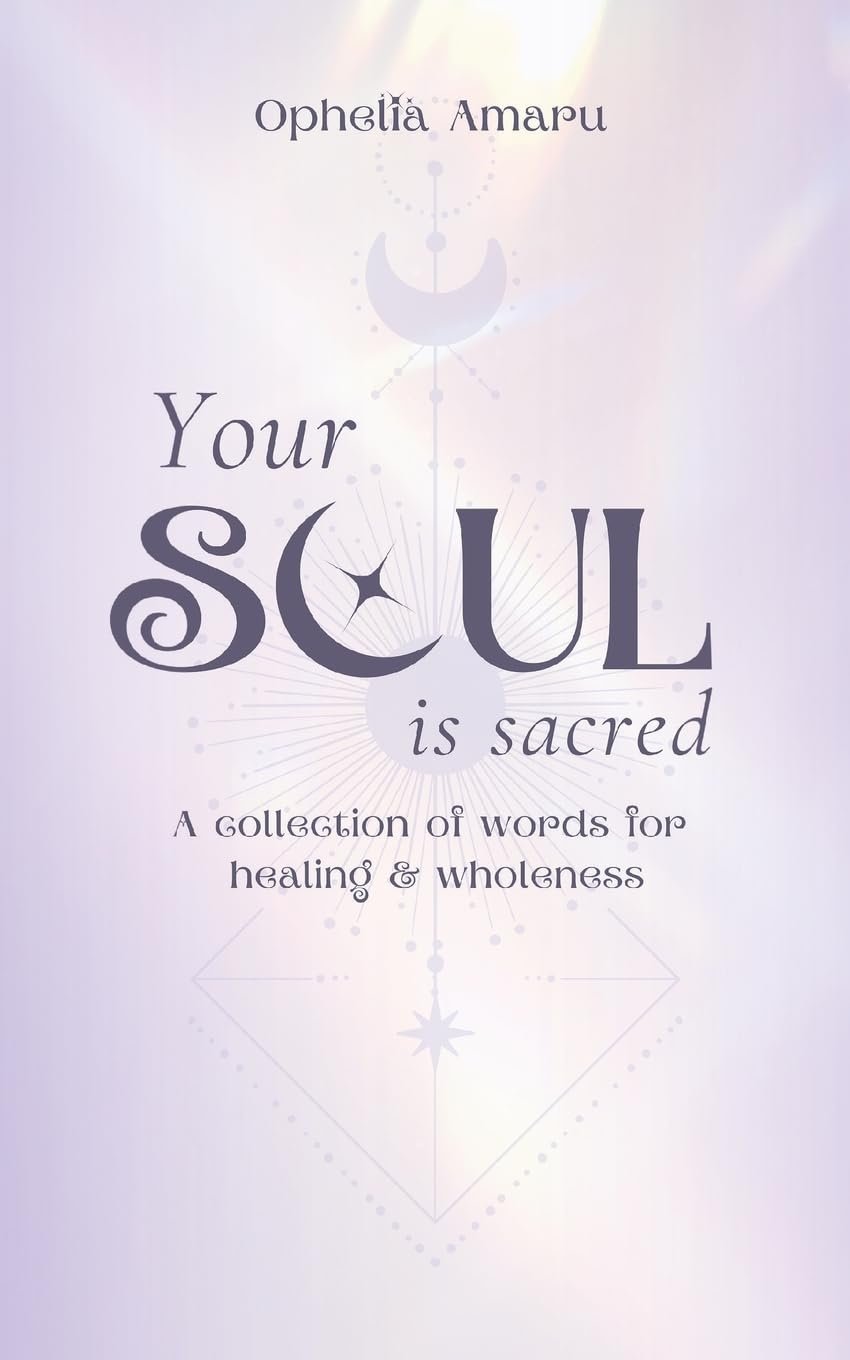
Your Soul is Sacred: A Collection of Words
Poetry, prayers, reflections, and prompts invite a compassionate pause for spiritual self-discovery.
Books worth discovering. Authors worth knowing.
Poetry, prayers, reflections, and prompts invite a compassionate pause for spiritual self-discovery.
Your Soul is Sacred: A Collection of Words for healing & wholeness by Ophelia Amaru is presented by its publisher as a mix of poetry, prayers, reflections, and journaling prompts.
A book intended to make room rather than impose answers
Your Soul is Sacred: A Collection of Words for healing & wholeness by Ophelia Amaru is presented by its publisher as a mix of poetry, prayers, reflections, and journaling prompts. That combination matters. It positions the book not as a single continuous argument or a novel with a sequence of revelations, but as a collection readers may approach in different moods and at different speeds. Some pages may invite quiet attention, others a response in writing. The publisher uses spiritual language about returning to oneself and making room for difficult feelings alongside hope. Readers should understand that this is the author’s spiritual framing, not a clinical finding that any particular practice produces a guaranteed result. The meaningful editorial question is what a book can offer when its purpose is companionship rather than mastery. A good reflective collection can create space for a person to consider what matters without demanding an immediate declaration of change. Amaru’s stated orientation favors gentleness, and the mixture of forms suggests an experience shaped as much by pauses as by answers.
Poetry, prayer, reflection, and the page
The book description identifies four kinds of content: poems, prayers, essays or reflections, and prompts for journaling. Each form asks for a different kind of attention. Poetry often works through compression and image, leaving feelings partially open. Prayer frames a response through a spiritual relationship or tradition. Reflection can explain an idea in more discursive language. A writing prompt offers the reader a chance to supply the missing story. This feature does not attribute particular lines or prompts to the book, because the available sources do not provide a comprehensive text sample. Still, the published contents categories help readers decide whether the format suits them. Someone who prefers to read straight through may appreciate the variety; another person may choose one form according to their energy on a given day. A journal alongside the book could be useful for recording insights, provided readers treat the prompts as optional invitations rather than assignments they must complete correctly. The point is an individual encounter with language, not a standardized measure of wellness.
Wholeness does not require a perfect mood
Amaru’s publisher description speaks repeatedly of embracing light and shadow and returning to a sense of inner wholeness. Such language belongs to a broad spiritual vocabulary, but it can also be examined carefully. A person’s difficult feelings are not automatically evidence that they have failed at healing. The wish to feel seen can coexist with grief, uncertainty, anger, or exhaustion. The book appears designed to hold those tensions in compassionate language, rather than insisting that unpleasant experiences disappear. A reader may find comfort in that posture even without adopting all the metaphysical assumptions behind it. Respectful engagement means recognizing that spiritual practice is personal. What feels expansive to one reader may sound abstract to another. The existence of prayers does not mean the work promises religious authority for everyone, and the mention of shadow work does not establish a scientifically validated treatment. It is better to appreciate the author’s invitation to reflect while leaving readers free to decide which words meaningfully connect with their lives.
The role of journaling in reflective reading
The public description specifically mentions prompts that encourage readers to explore an inner landscape. A prompt differs from a declaration because it acknowledges that the person’s experience is not known in advance. A reader might use a question to name a difficult emotion, remember a moment of kindness, or consider what support would make a day more manageable. Those are examples of possible reflective uses, not claims about the book’s actual questions. Journaling can also remain private. The value of a written response need not depend on sharing it online, turning it into a goal, or demonstrating progress to other people. For a collection about self-discovery, that privacy is worth preserving. Readers may choose to skip a prompt that feels invasive or too intense. A compassionate book should not become an obligation. This distinction is especially relevant when spiritual texts address vulnerability. The reader retains control over how deeply to engage and when to seek help from trusted people or qualified professionals rather than relying exclusively on solitary reflection.
Spiritual imagery and the limits of promises
The book’s language includes sacredness, soul, and transformation. Amaru’s author biography describes her interest in astrology, spirituality, and reflective writing. These terms may be meaningful parts of the author’s worldview, but a book feature should not convert them into empirical claims about health or human psychology. Readers can understand spirituality here as a mode of expressing values, belonging, and significance. Someone might accept the poetry’s sense of wonder while questioning other assumptions. That is a legitimate reading position, not a failure to connect. The publisher promises a compassionate companion; it cannot guarantee the effects on every reader. A responsible recommendation avoids language suggesting that the collection cures trauma, anxiety, or depression. Its function is literary and reflective. It may help someone articulate feelings or feel accompanied by another person’s words, but ongoing distress can require care beyond any book. The ethical line between inspiration and treatment matters whenever the subject is healing.
Reading in fragments without losing coherence
Collections like this often work well when read briefly rather than treated as a task to finish in the shortest time. A page of poetry may offer a different rhythm from a page of prose; a prayer may invite silence; a prompt may ask for time. The public description makes those forms available without giving a precise table of contents, so this feature does not invent an internal order. Readers can approach the book with curiosity about which mode feels right at a particular moment. A person who is skeptical of spiritual vocabulary might start with reflections, while a reader who values devotional language may gravitate toward prayers. Neither path establishes a superior reader. The title’s claim that the soul is sacred functions as an invitation to treat oneself with dignity rather than a thesis this article can scientifically verify. That can be a generous idea, so long as the reader has permission to interpret it personally and leave aside whatever does not serve them.
Who should read Your Soul is Sacred
This collection is suited to readers who enjoy spiritually inflected poetry, gentle reflection, and optional journaling. It may appeal to those who want brief reading moments rather than a densely argued self-help system. Readers looking for practical, evidence-based psychological techniques or a secular medical guide should understand that the book is described through a spiritual and literary lens. Its language of shadows, wholeness, and self-discovery may feel inviting to some and too esoteric to others. Sampling the tone before purchasing is sensible. Approach it as a collection to converse with, not a checklist of emotional achievements, and allow yourself to set the pace and boundaries of that conversation.
About the author
Ophelia Amaru identifies herself publicly as an independent author interested in poetry, spirituality, astrology, and reflection. The publisher Books on Demand confirms Your Soul is Sacred and lists poetry, prayers, essays, and journaling prompts in its description. Those sources support the bibliographic and thematic introduction here; they do not support claims of clinical expertise or guaranteed healing outcomes. The article intentionally preserves that distinction.
About the book.
Spiritual poetry and reflective nonfiction with journaling prompts. Poetry, prayers, reflections, and prompts invite a compassionate pause for spiritual self-discovery.
Editorial book feature, not paid sponsorship. Original research-based commentary, not firsthand complete-book reading. The owner’s Python automation will resolve the cover placeholder.
Found a book worth opening?
Books worth discovering. Authors worth knowing.
Return to the Journal →